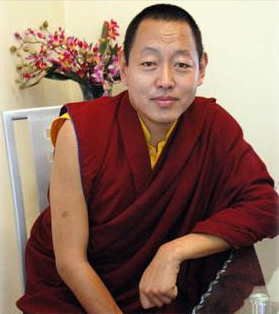
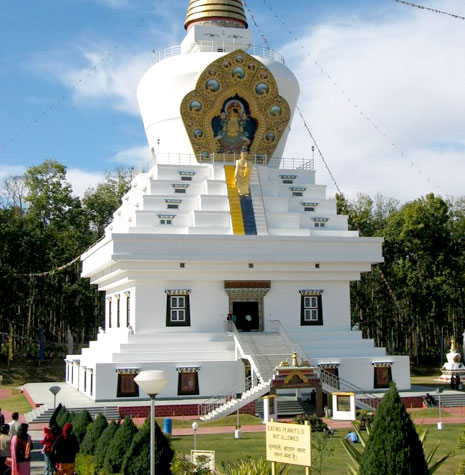
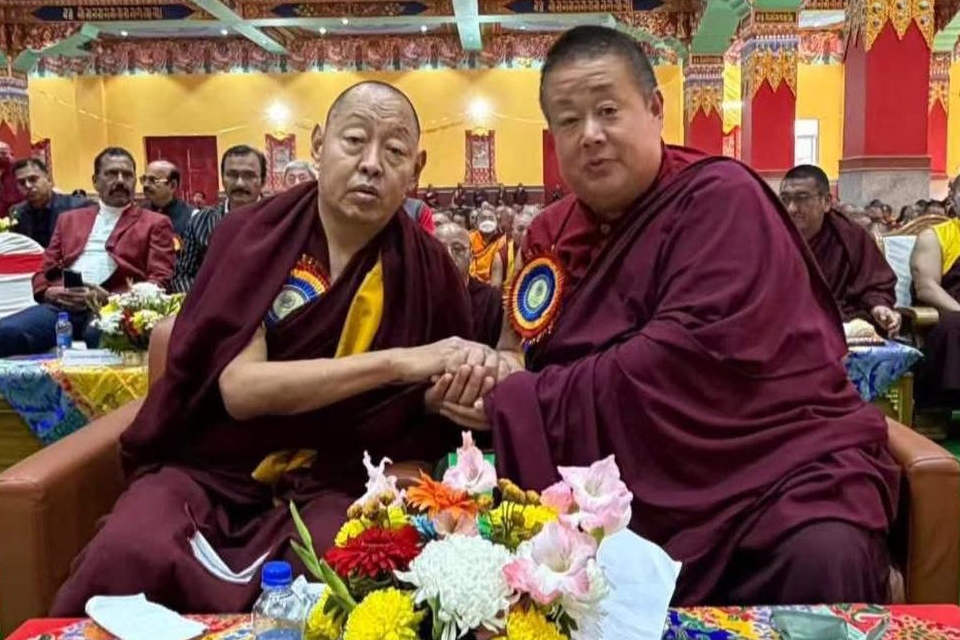
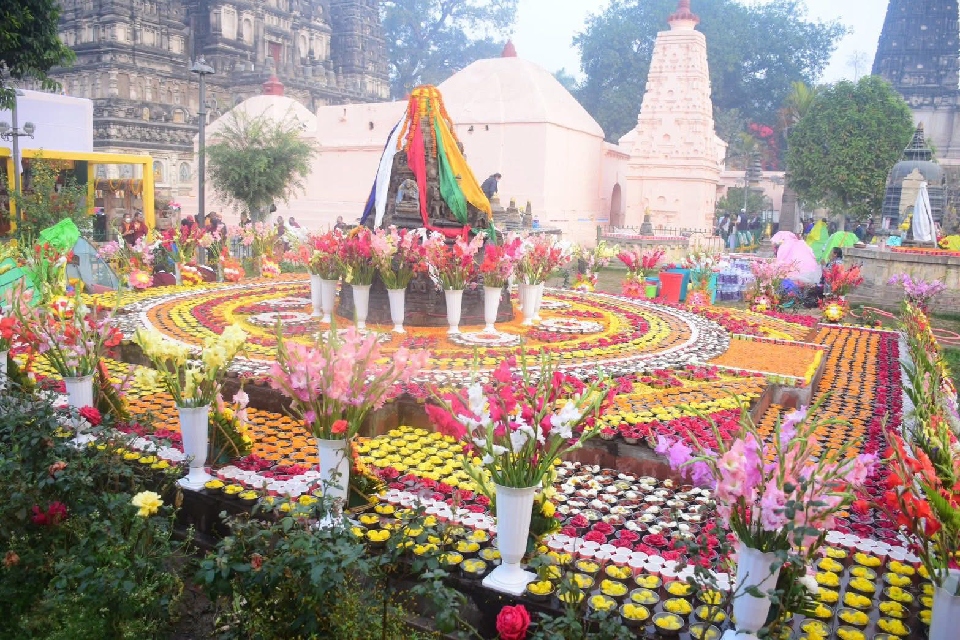
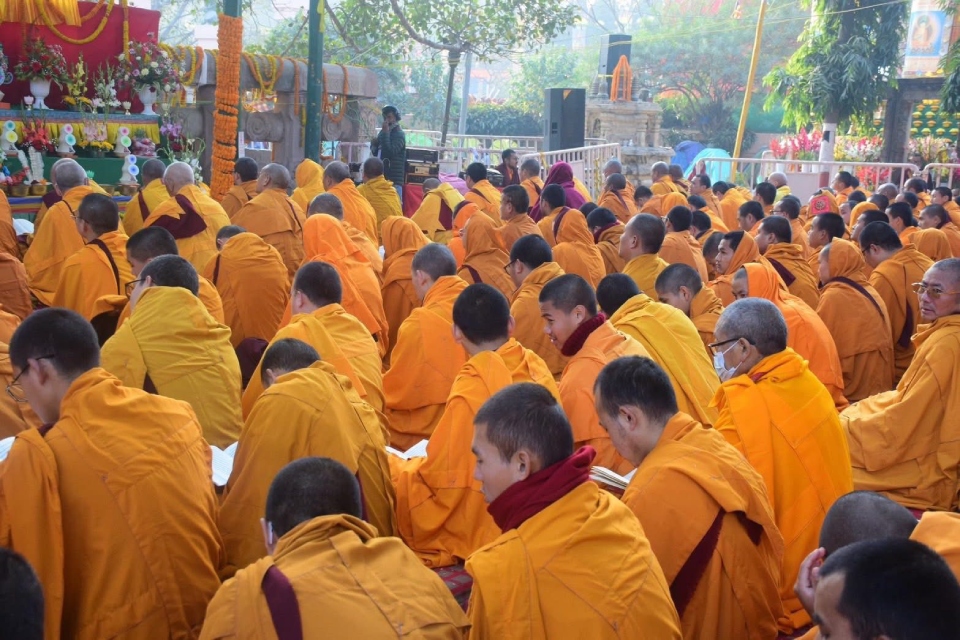
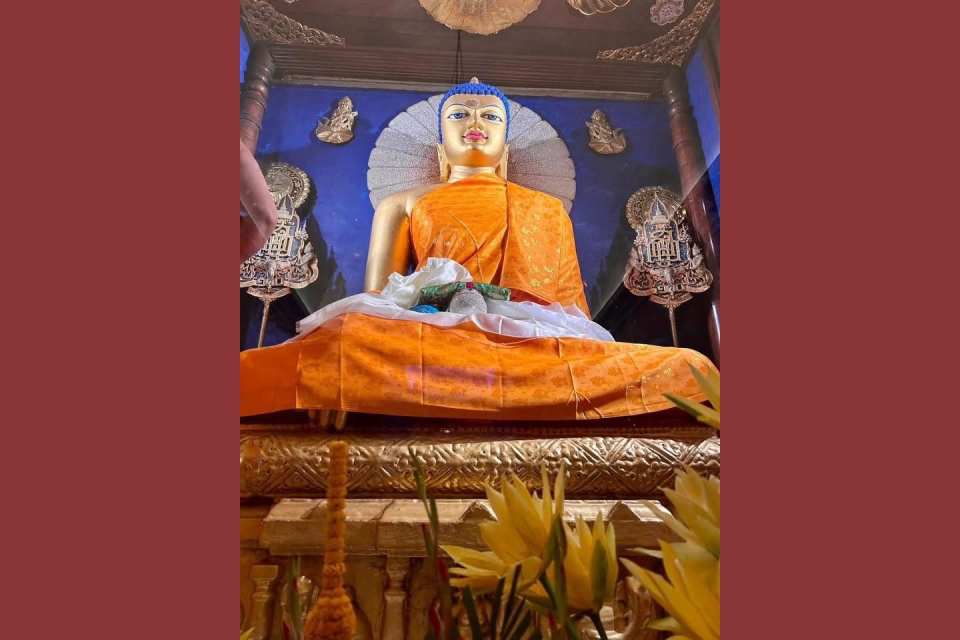
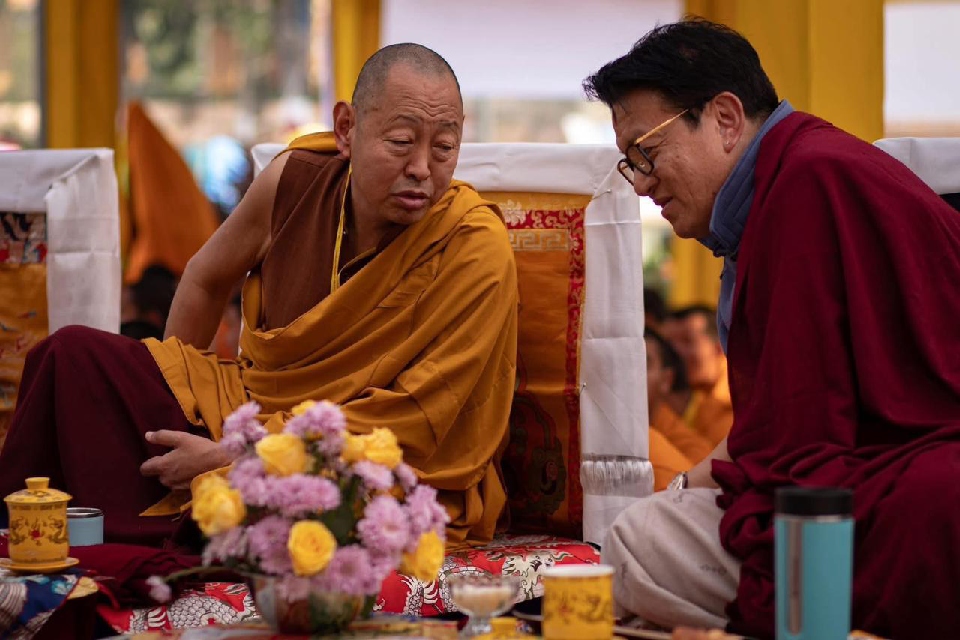
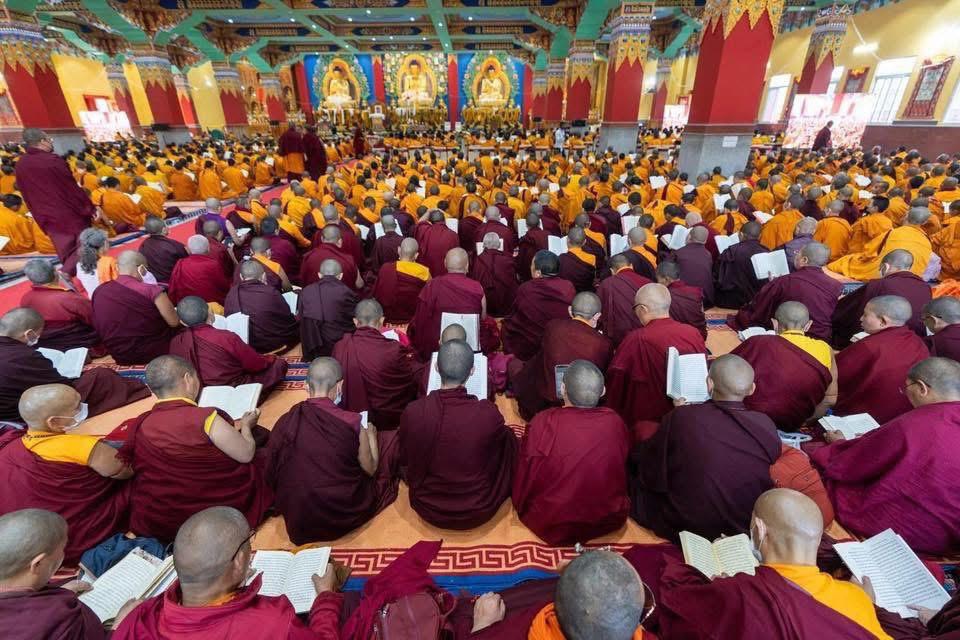
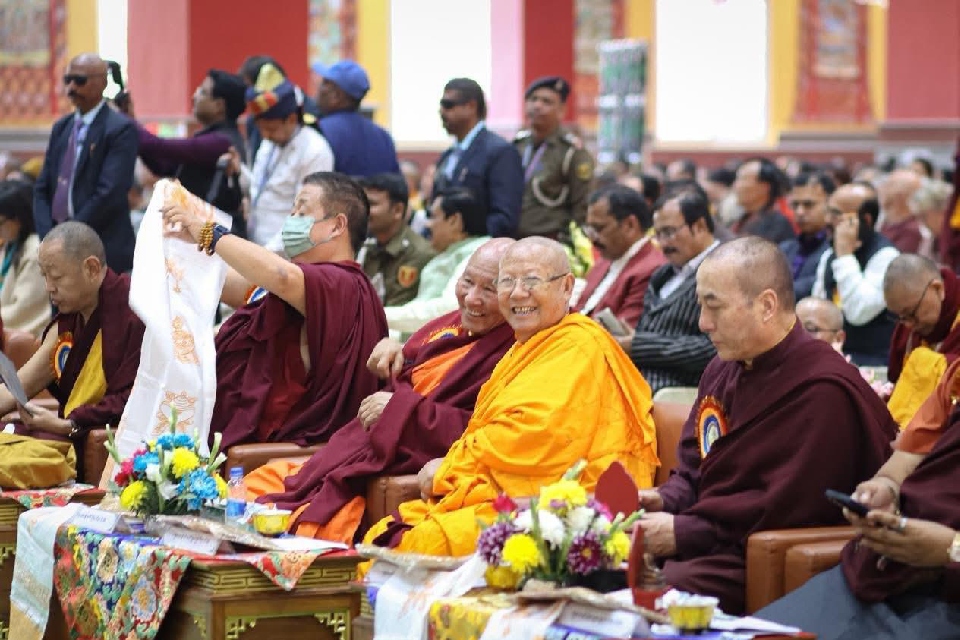
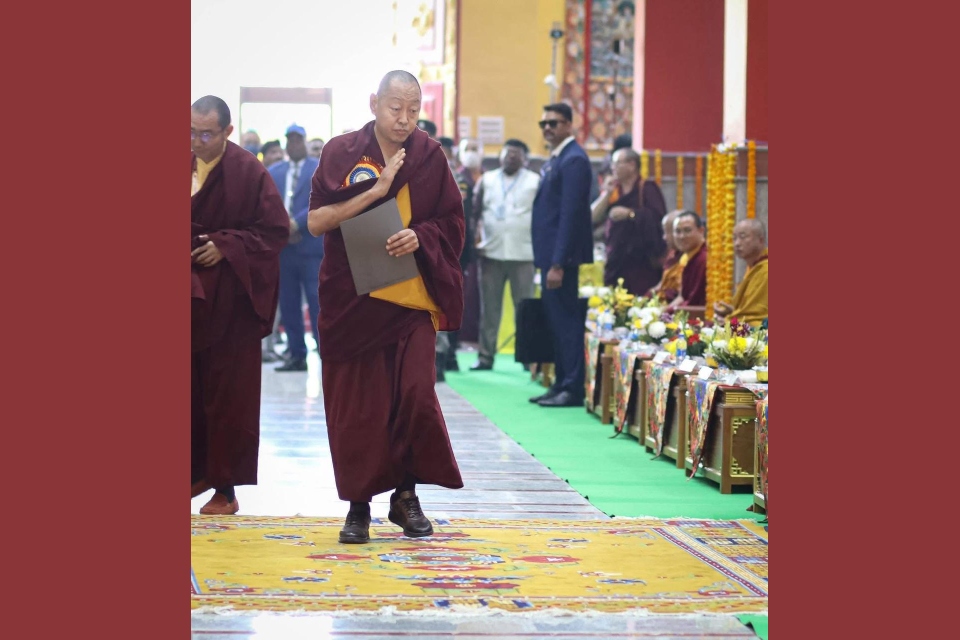
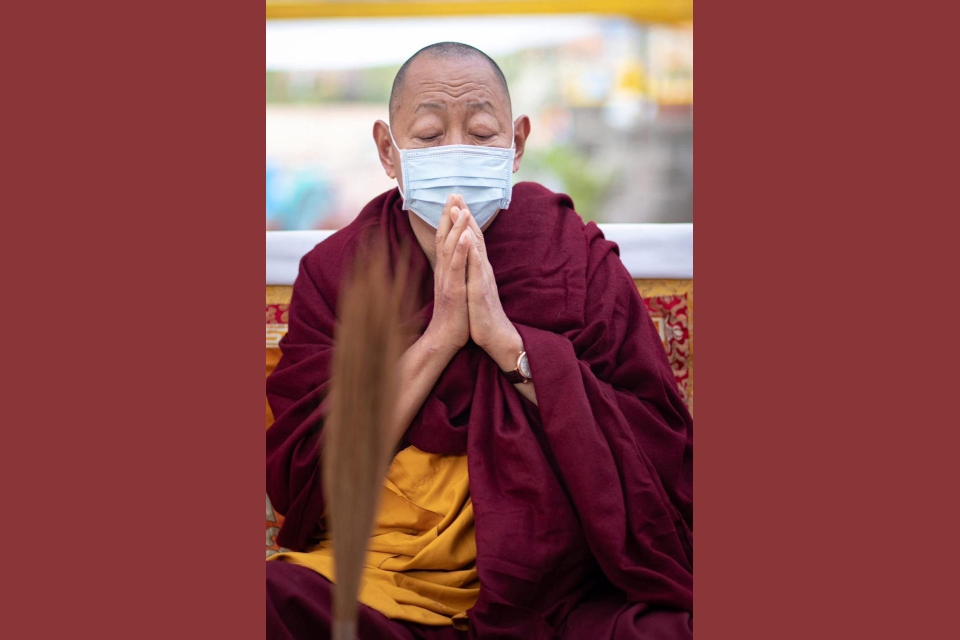
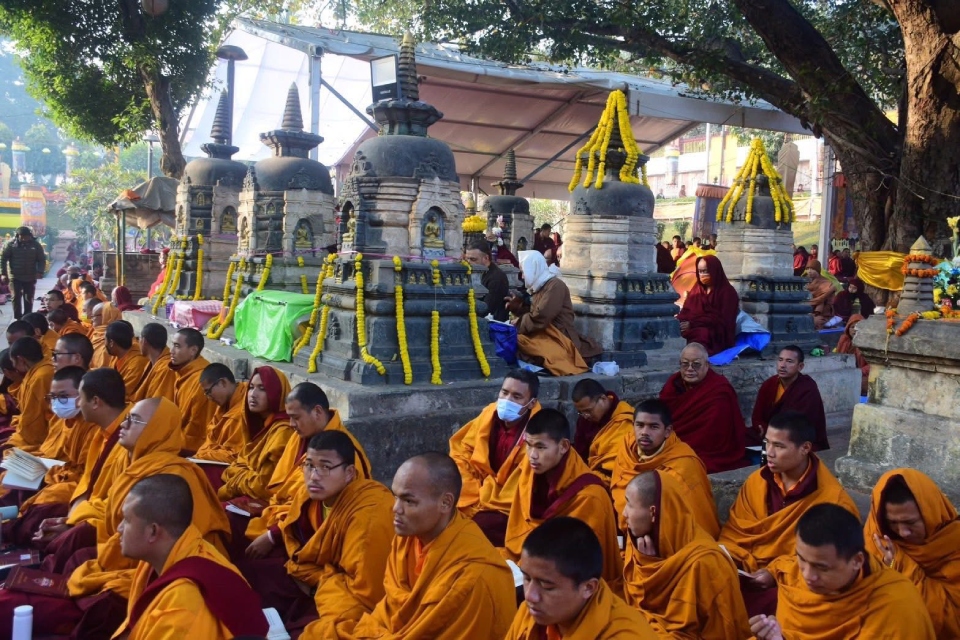
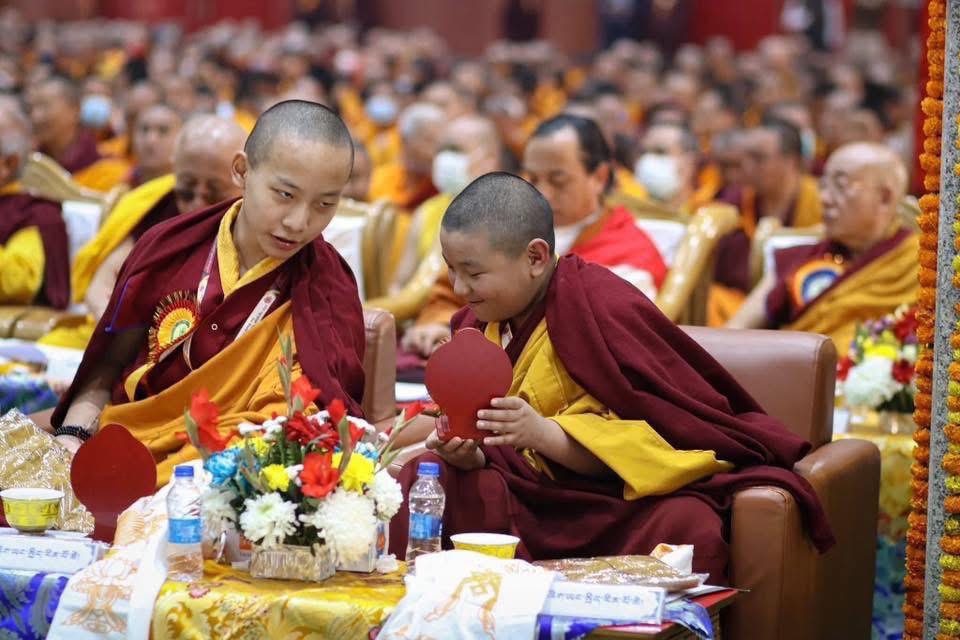
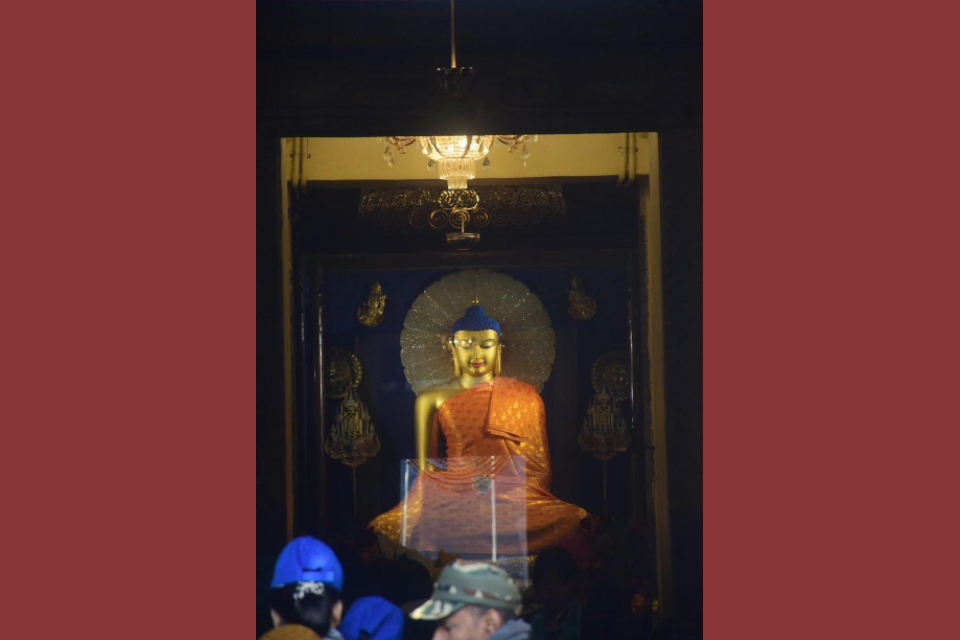
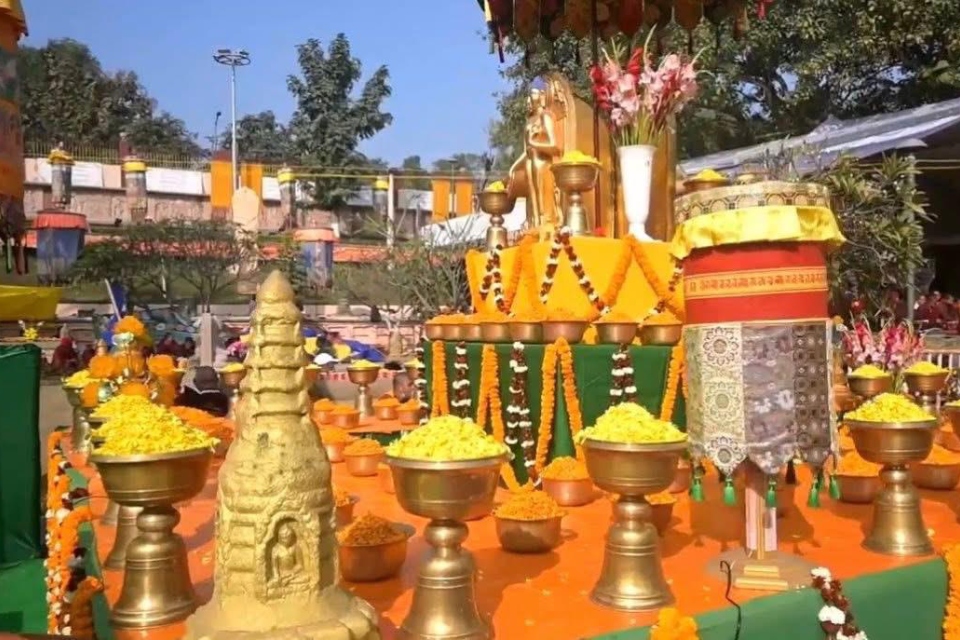
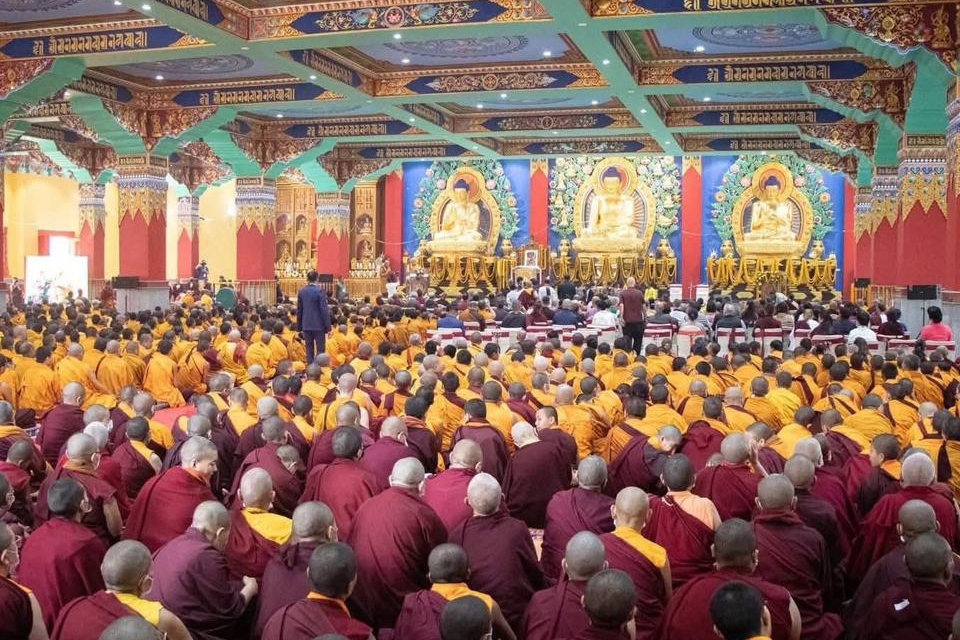
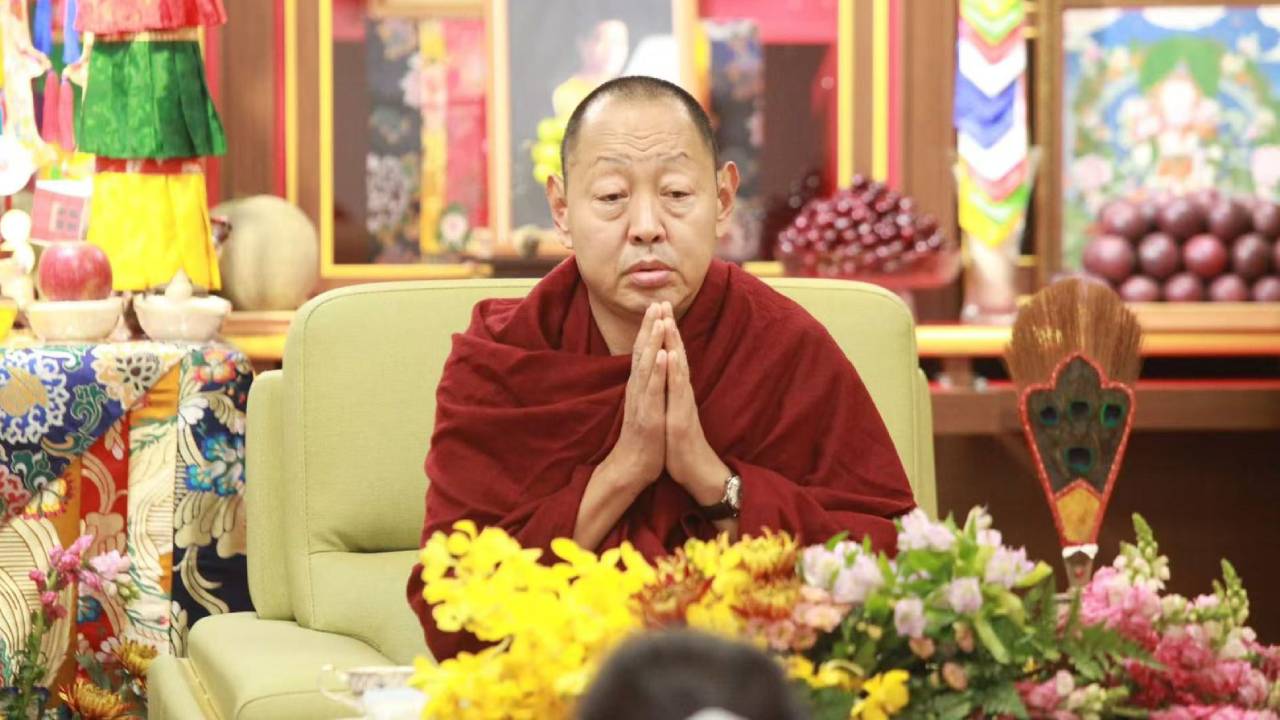
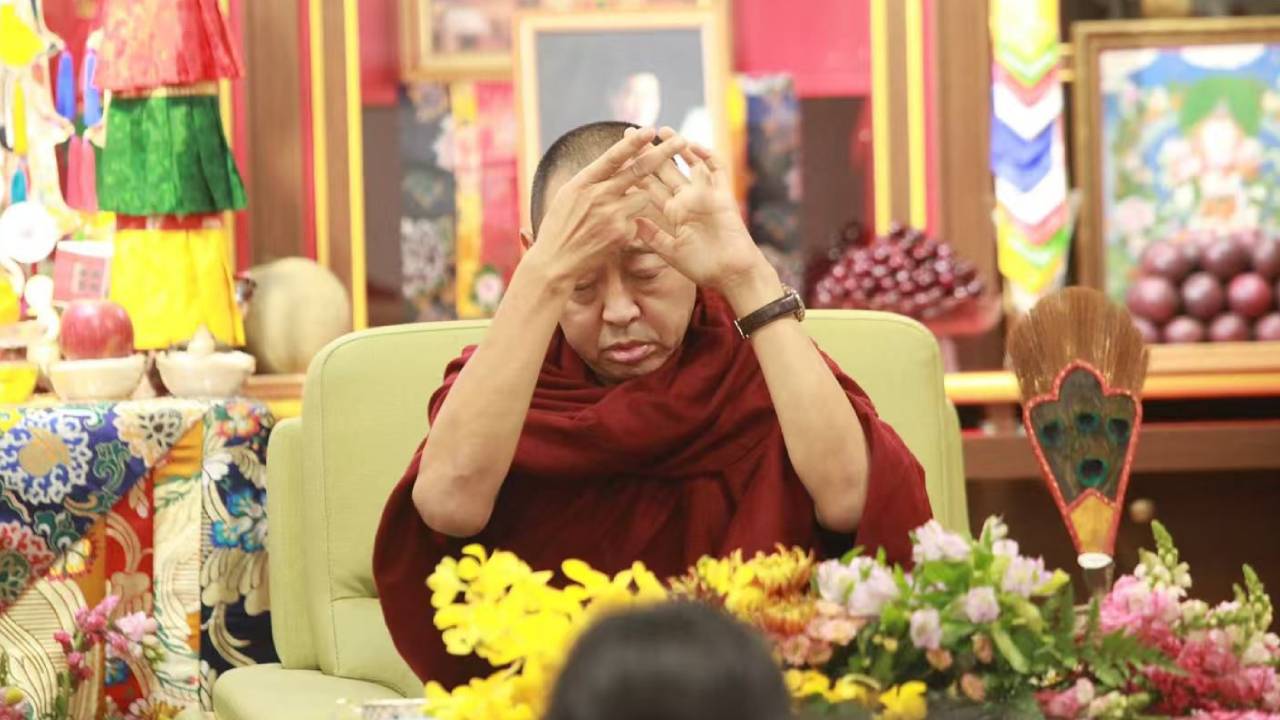
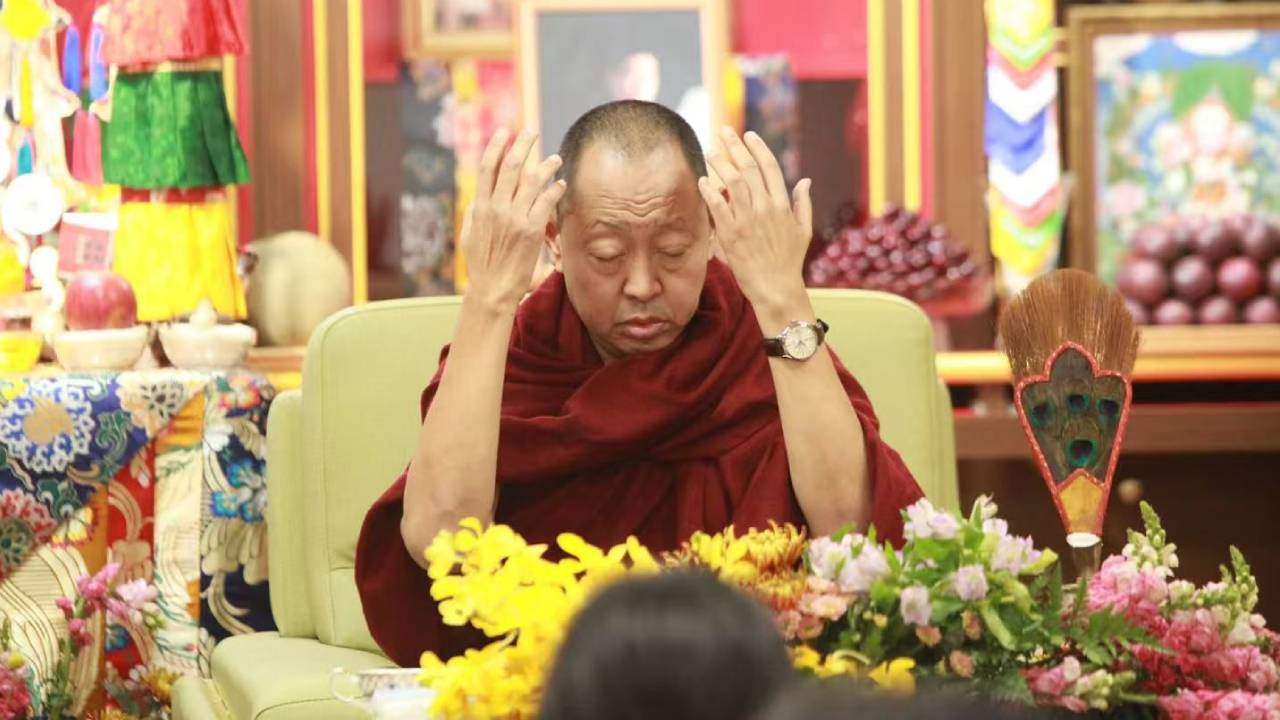
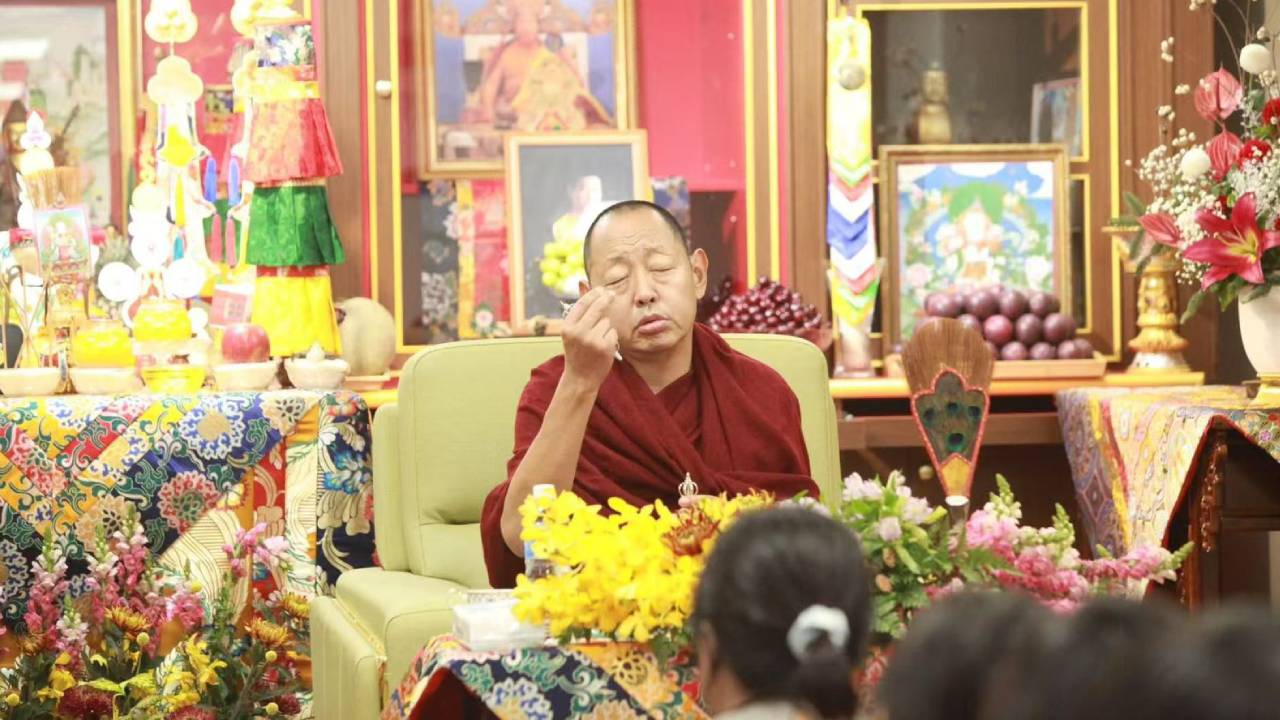
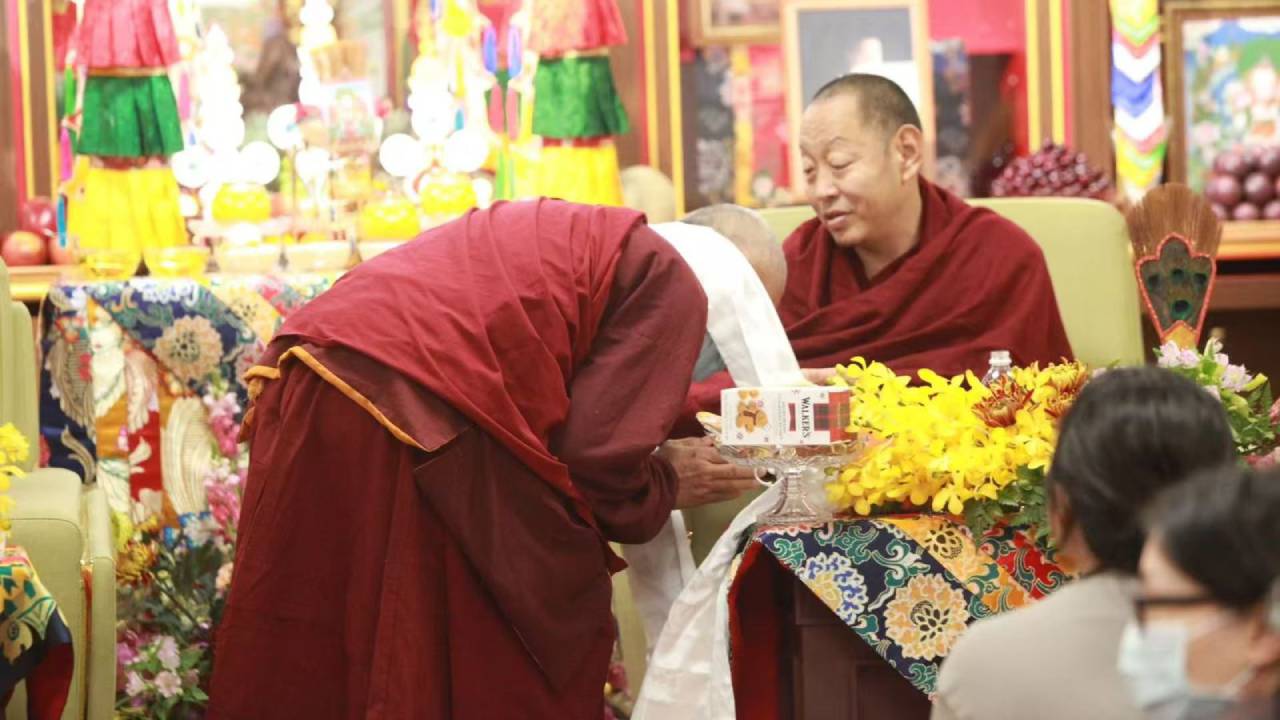
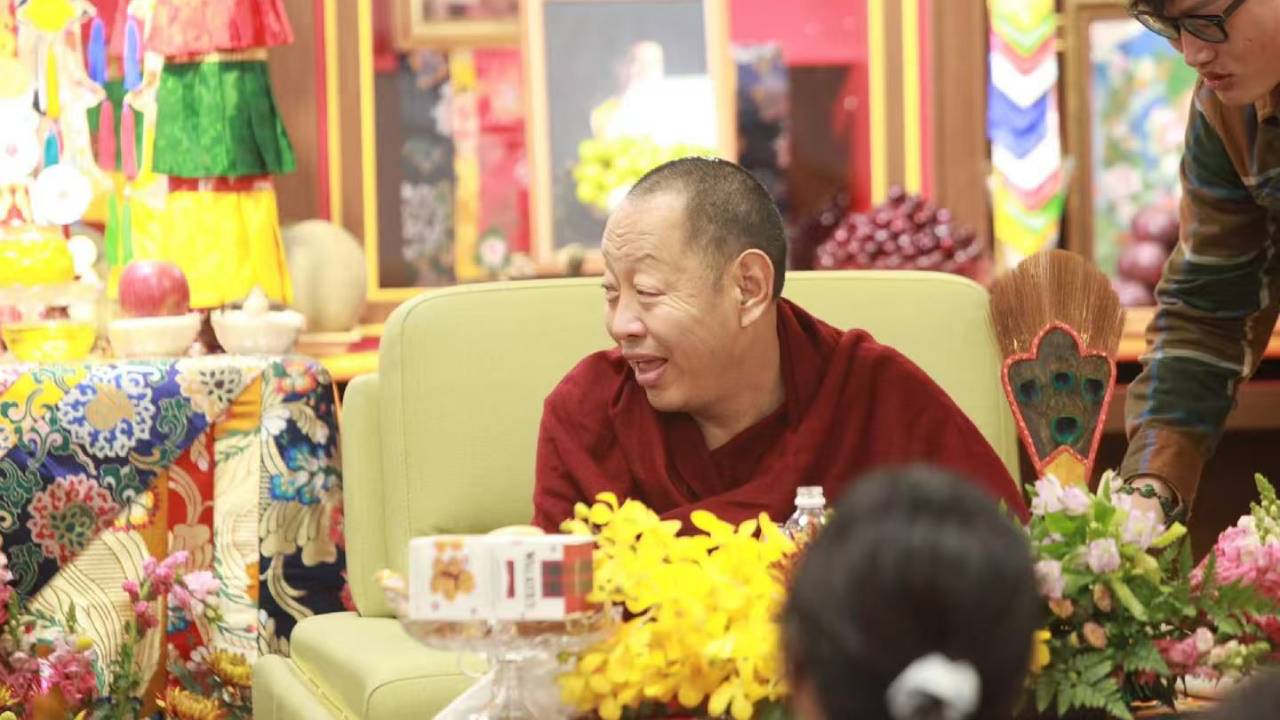
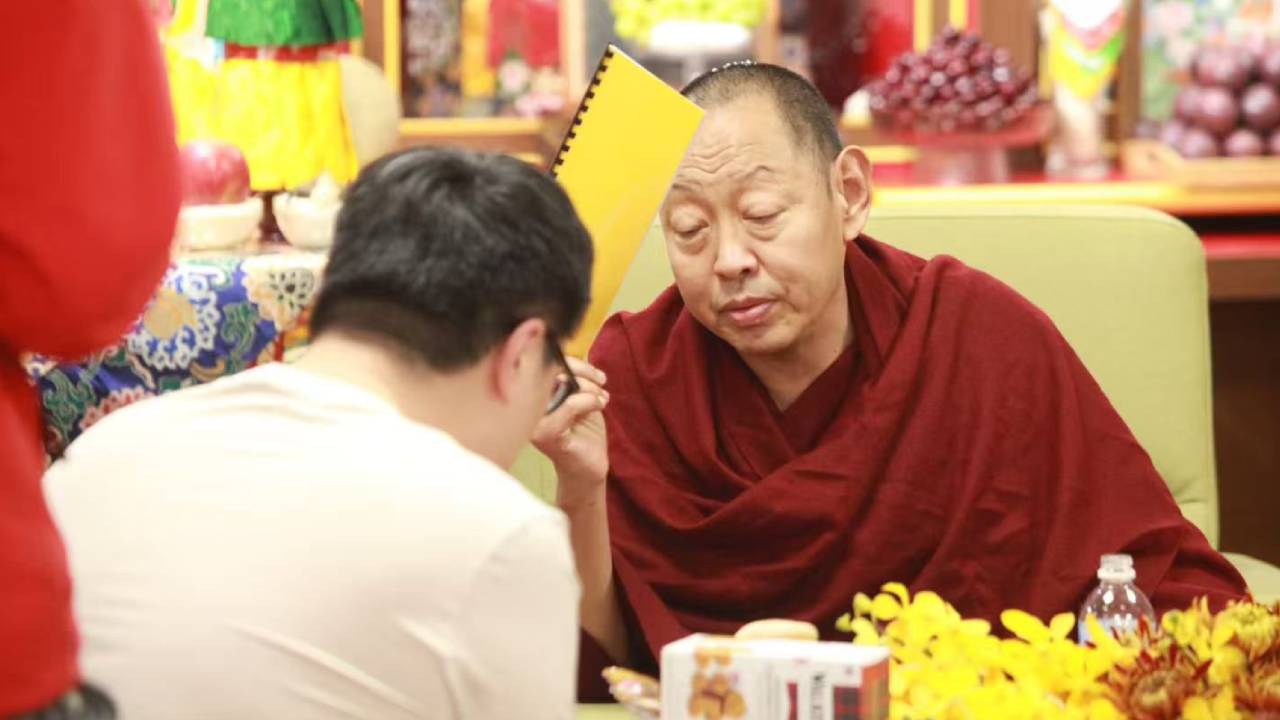
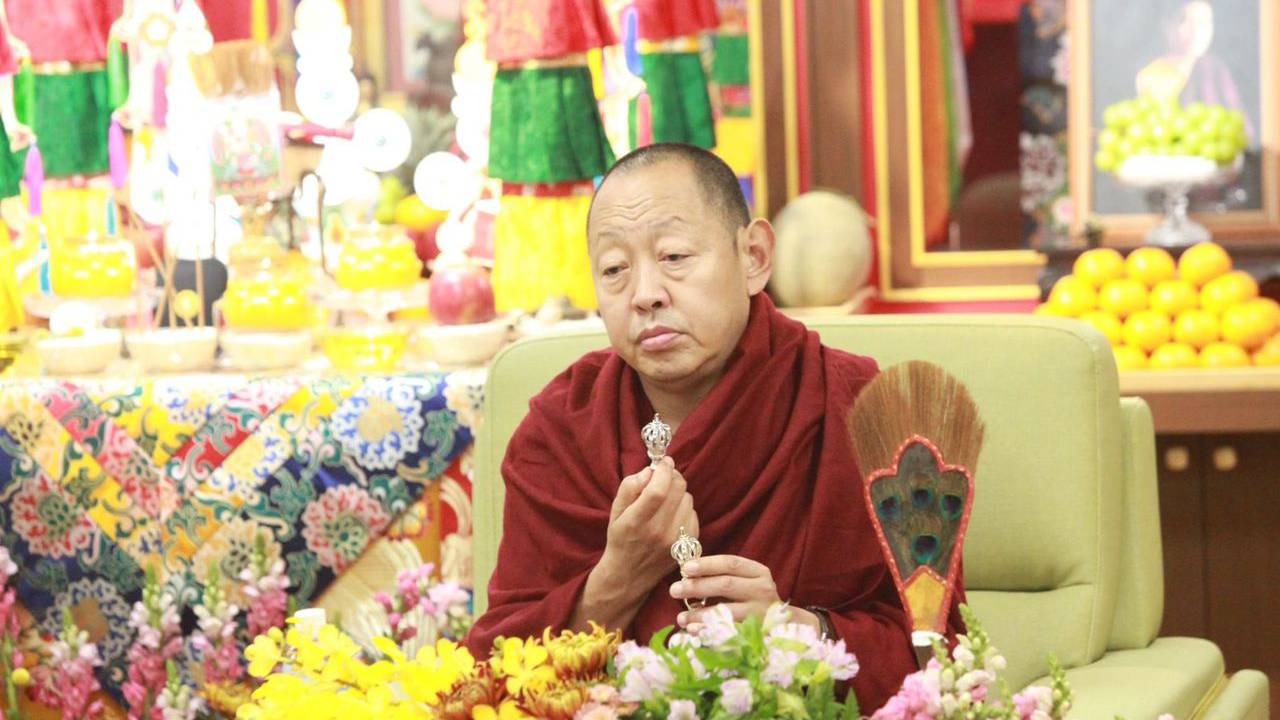
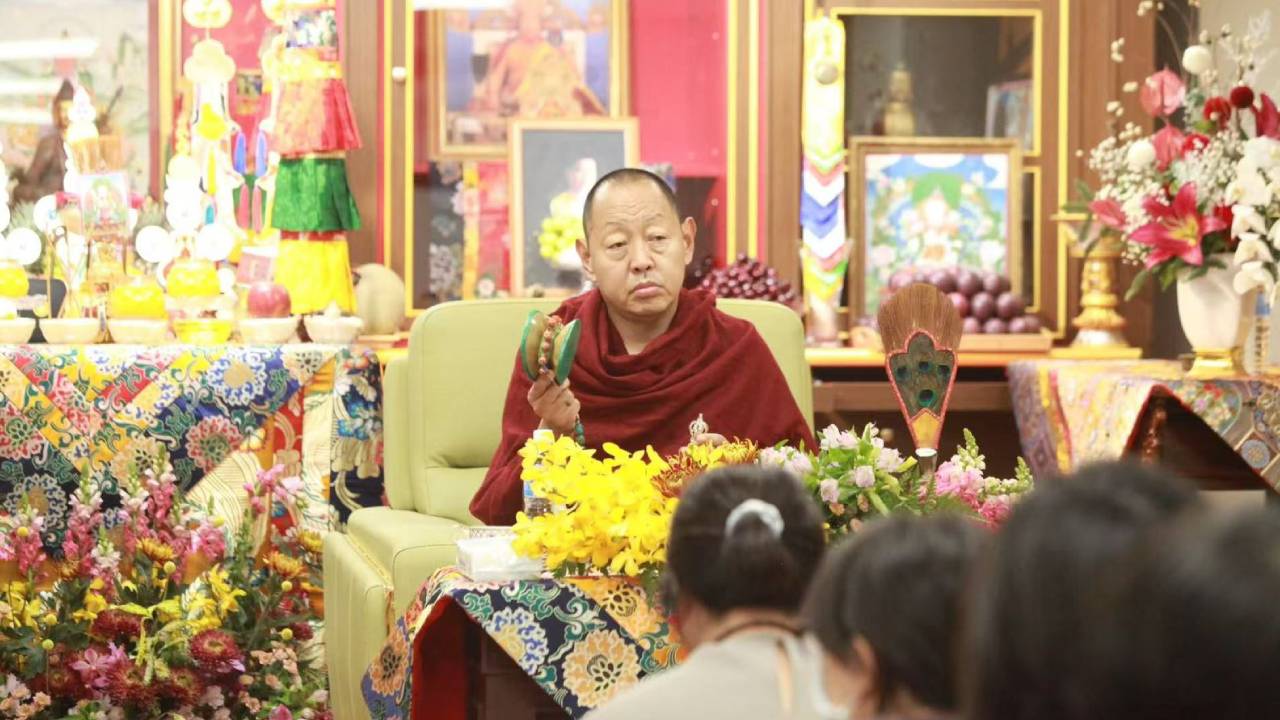
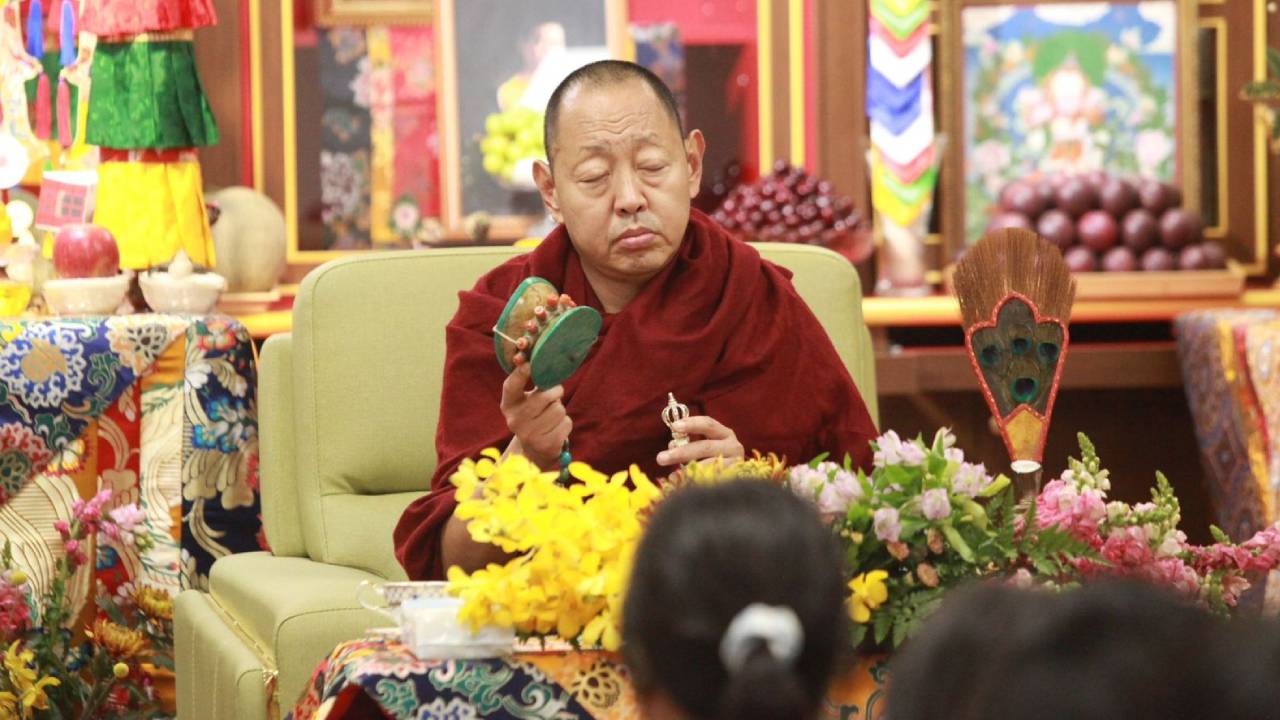
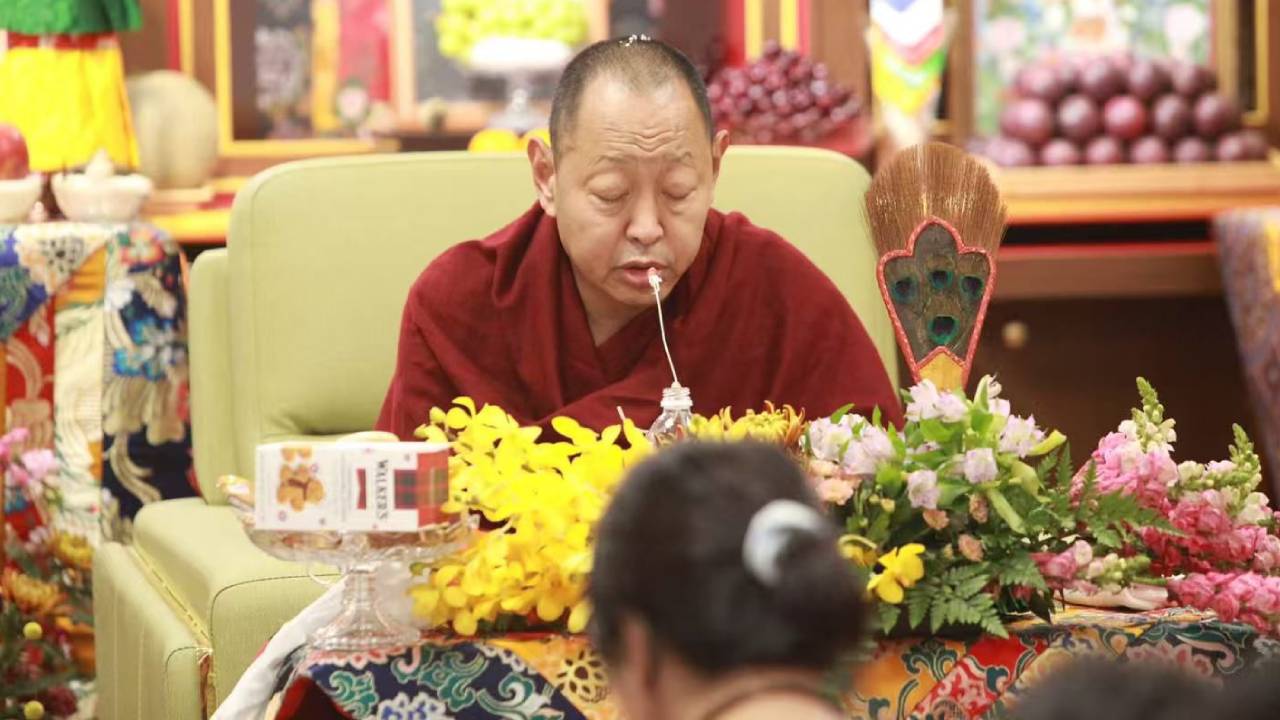
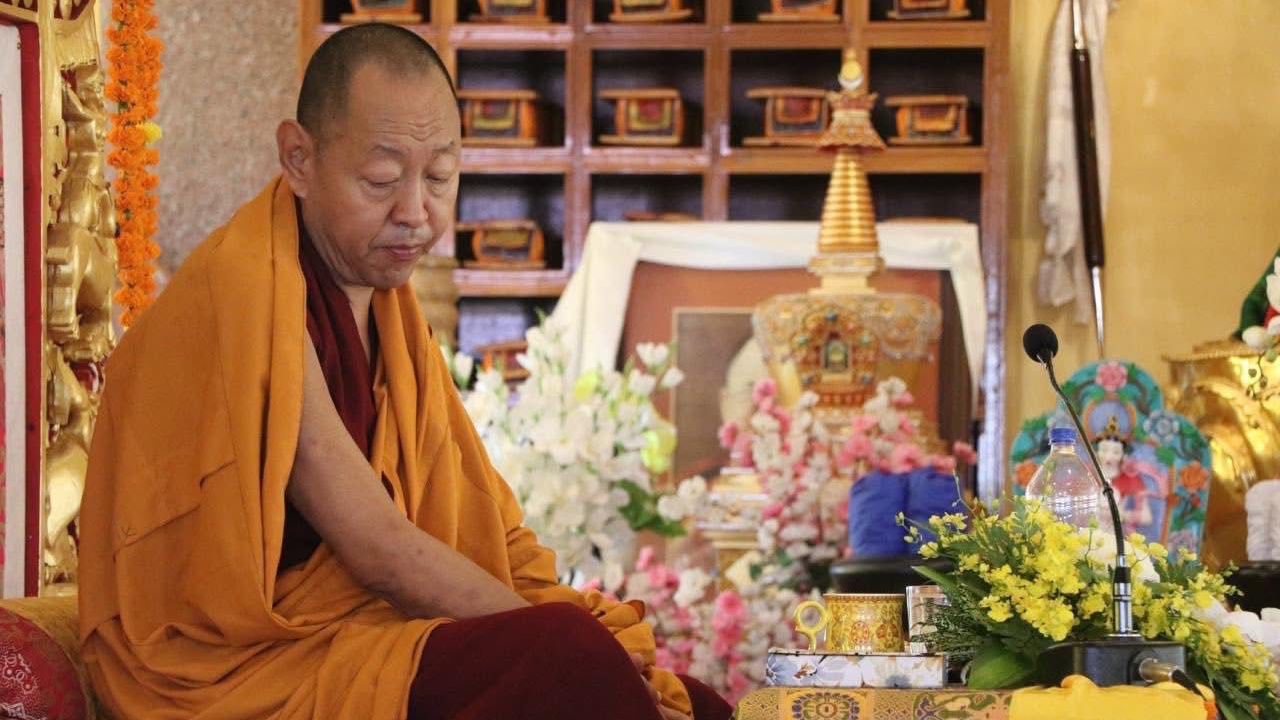
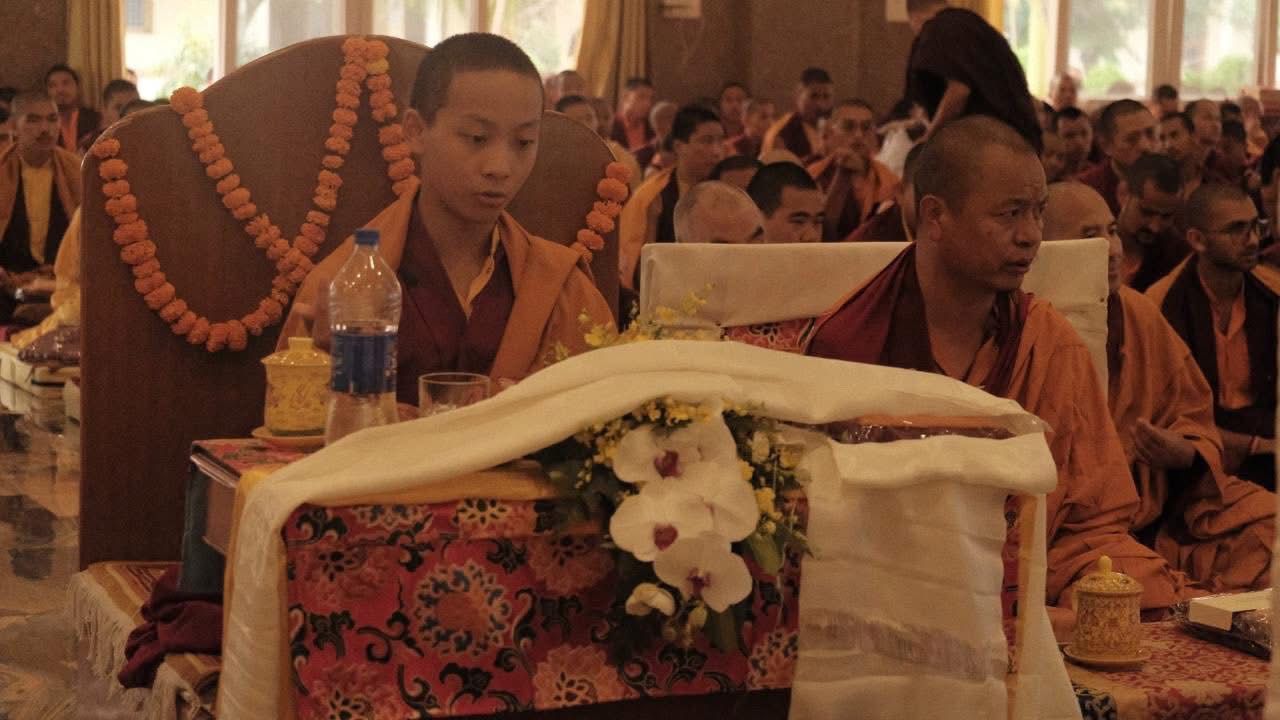
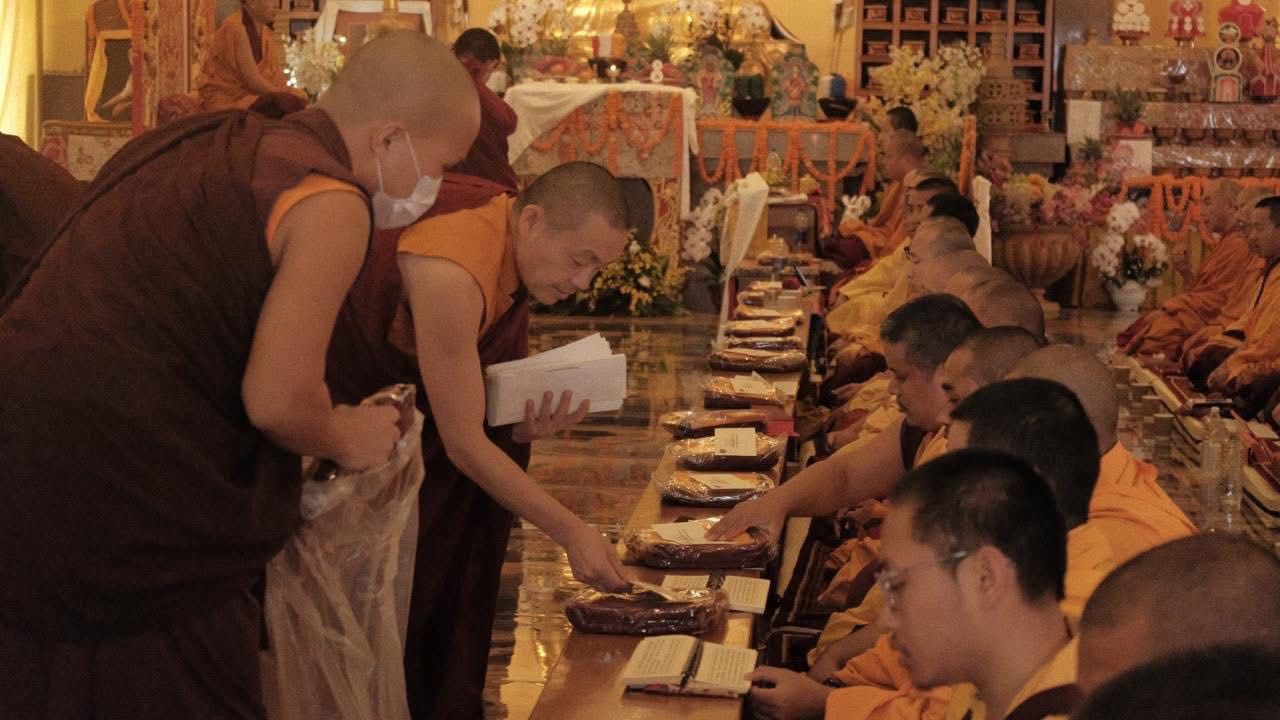
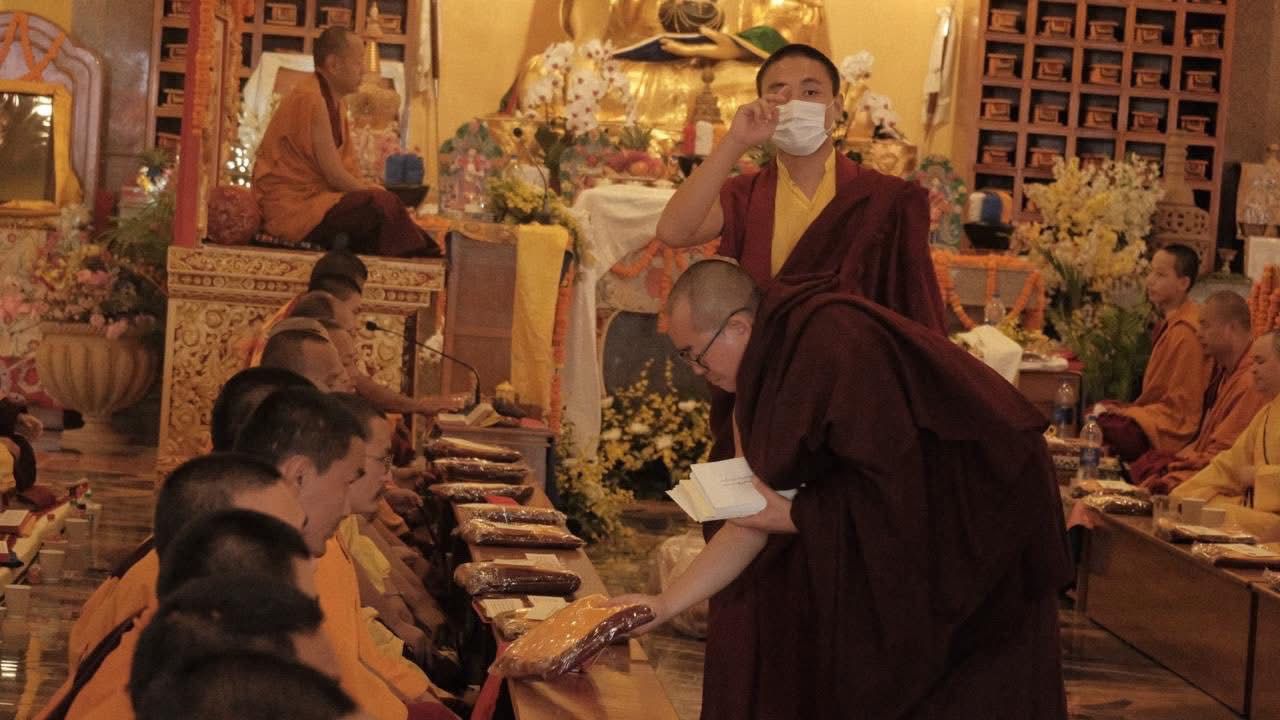
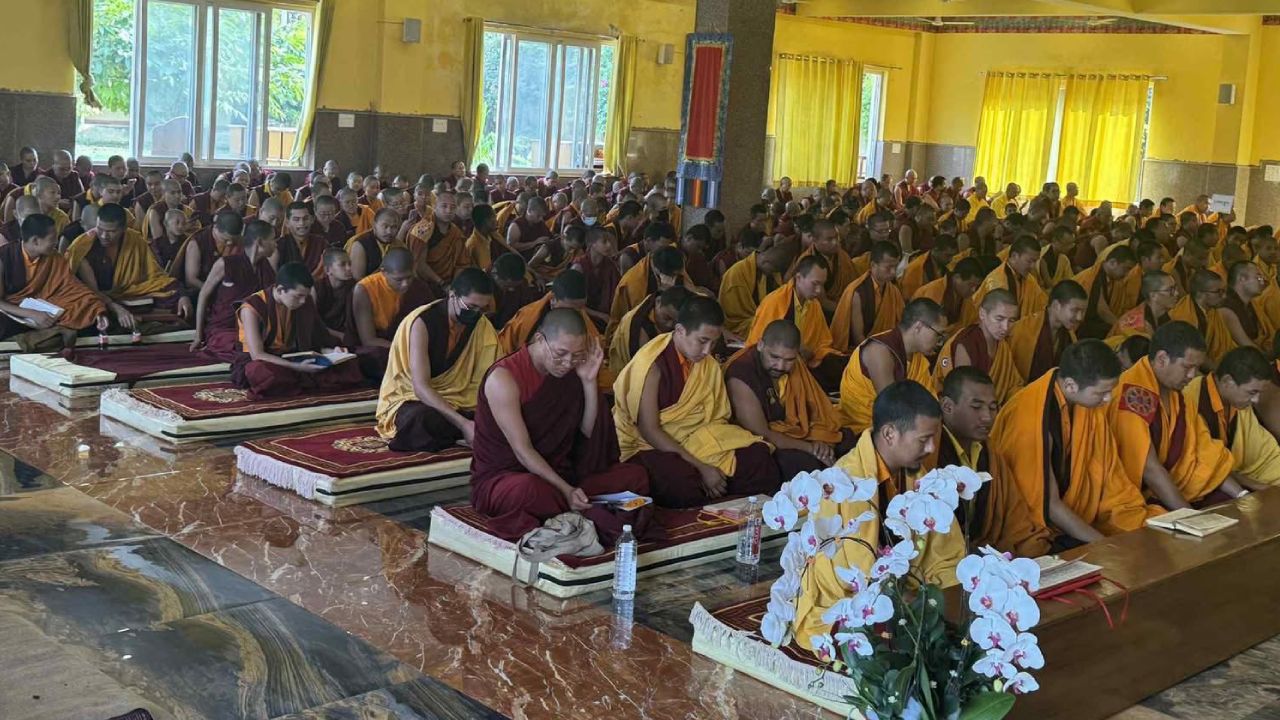
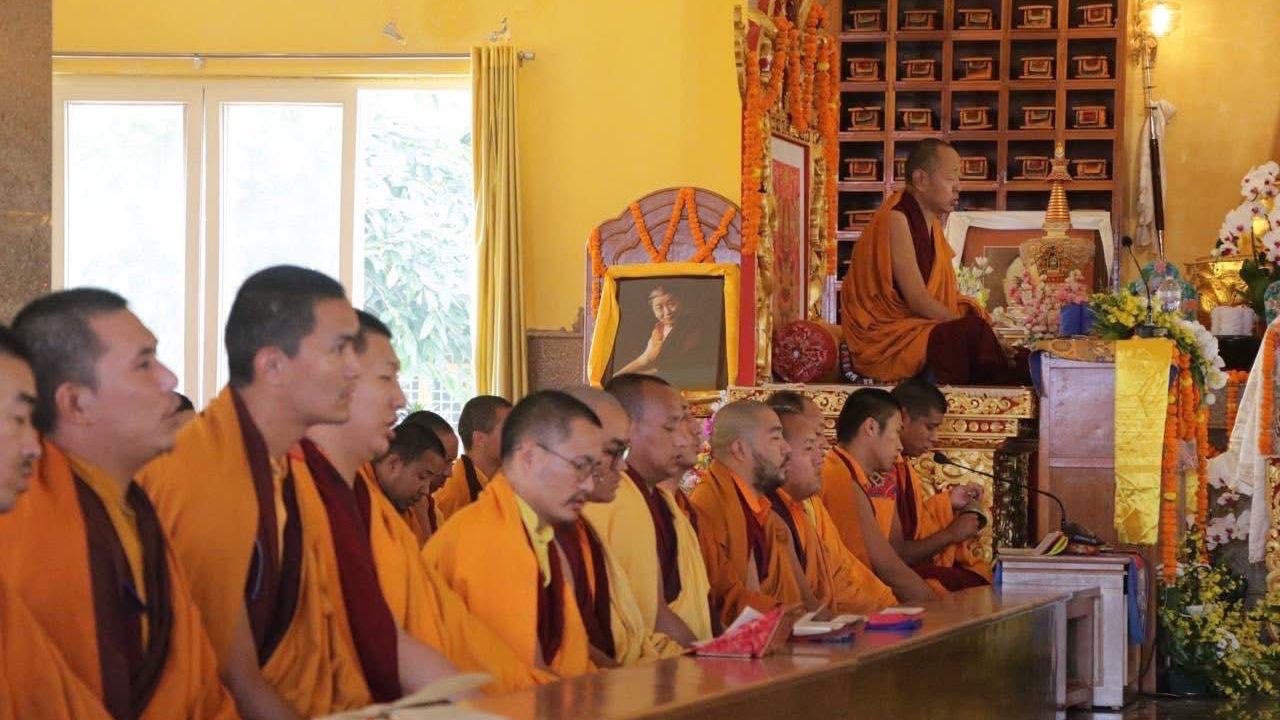
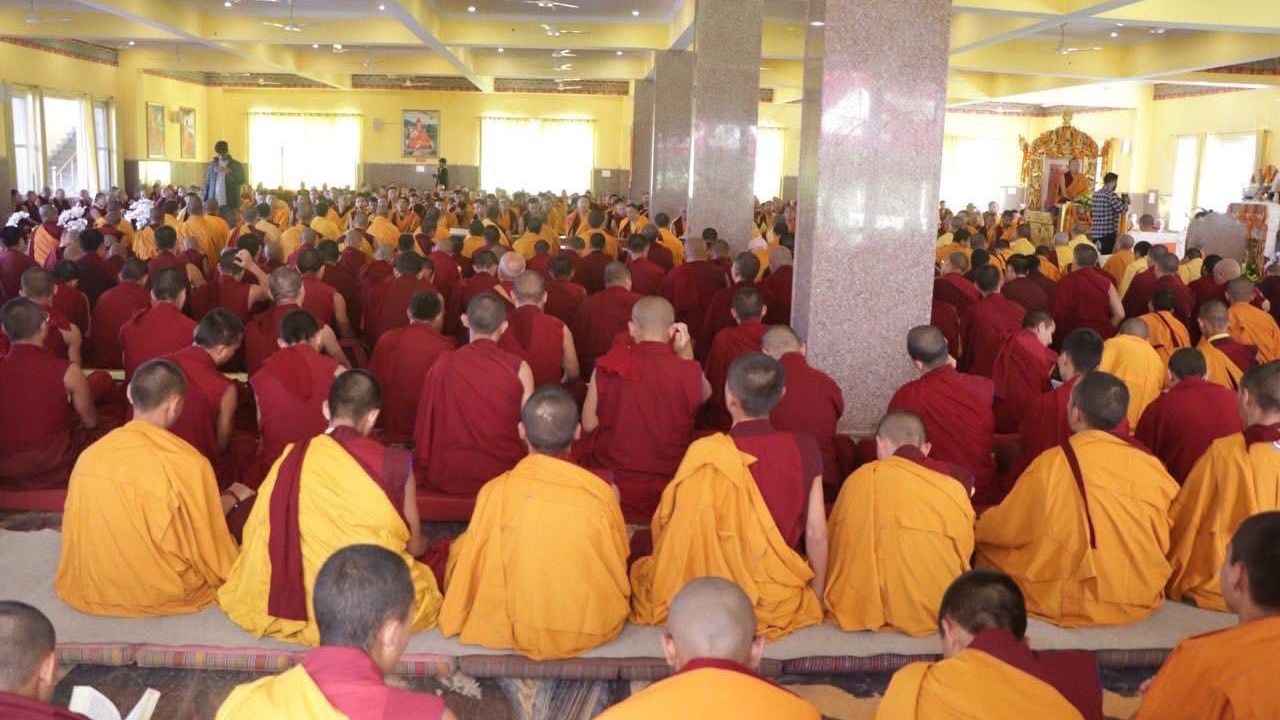
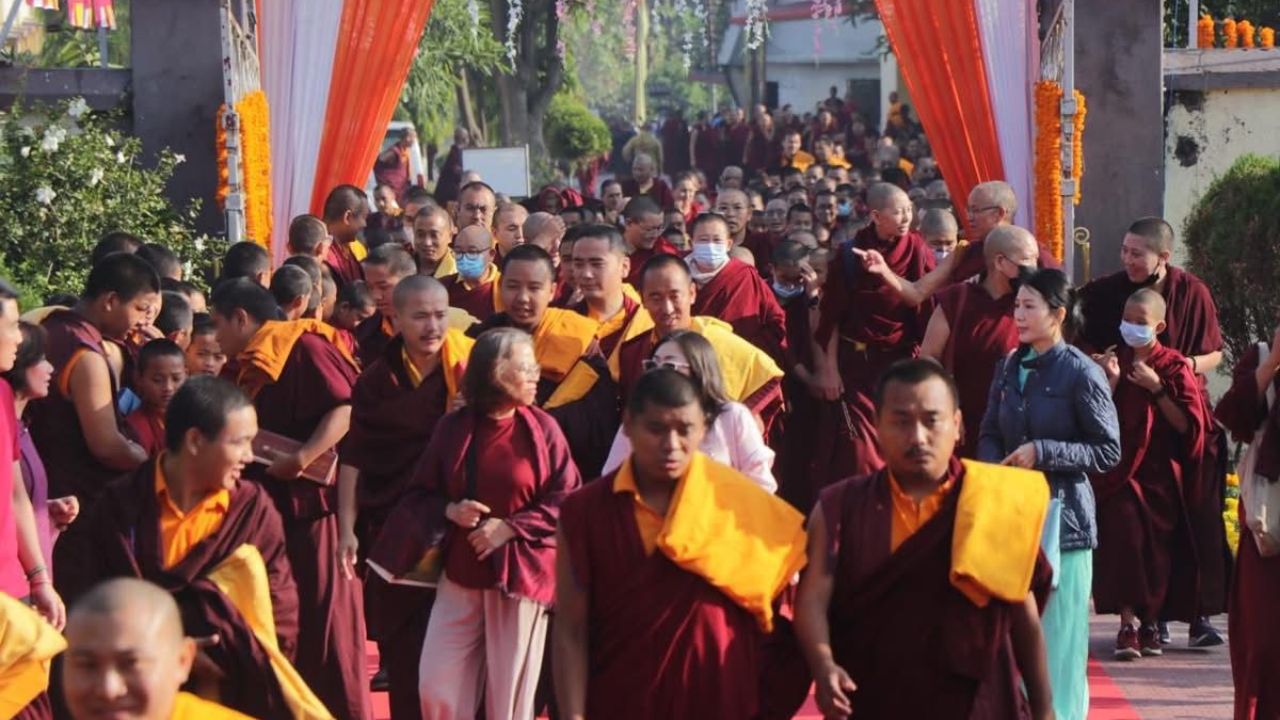
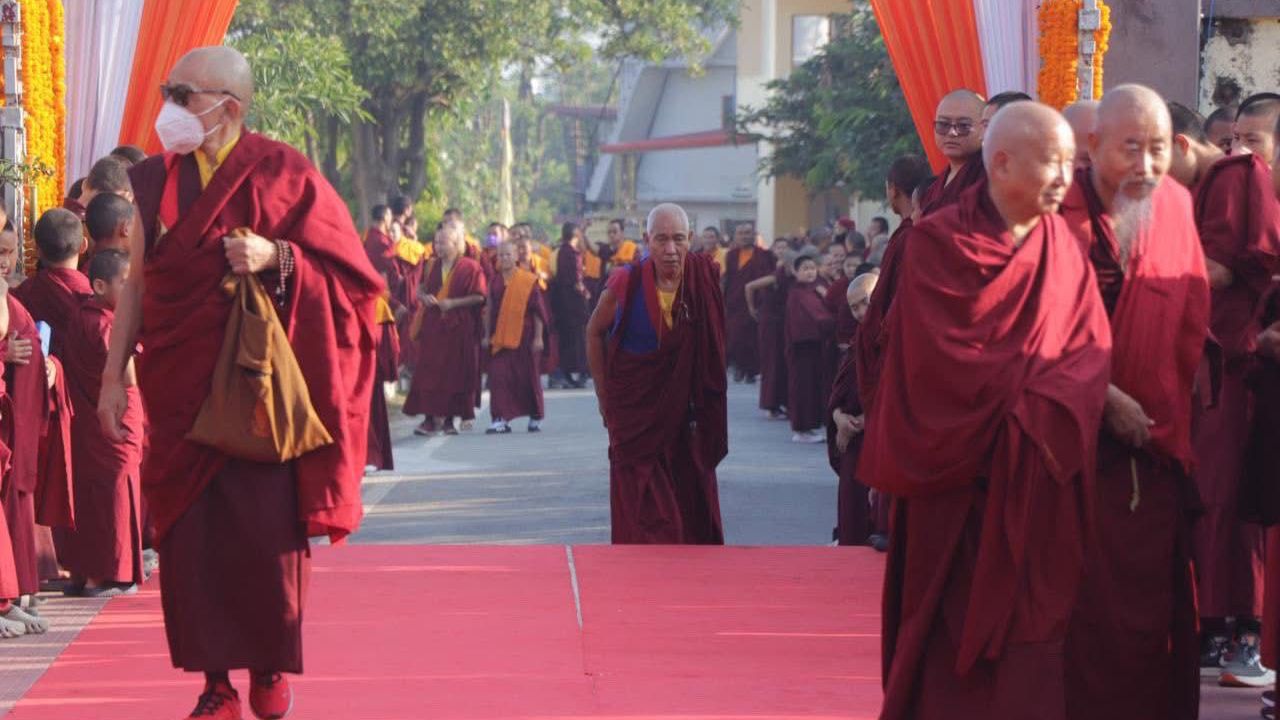
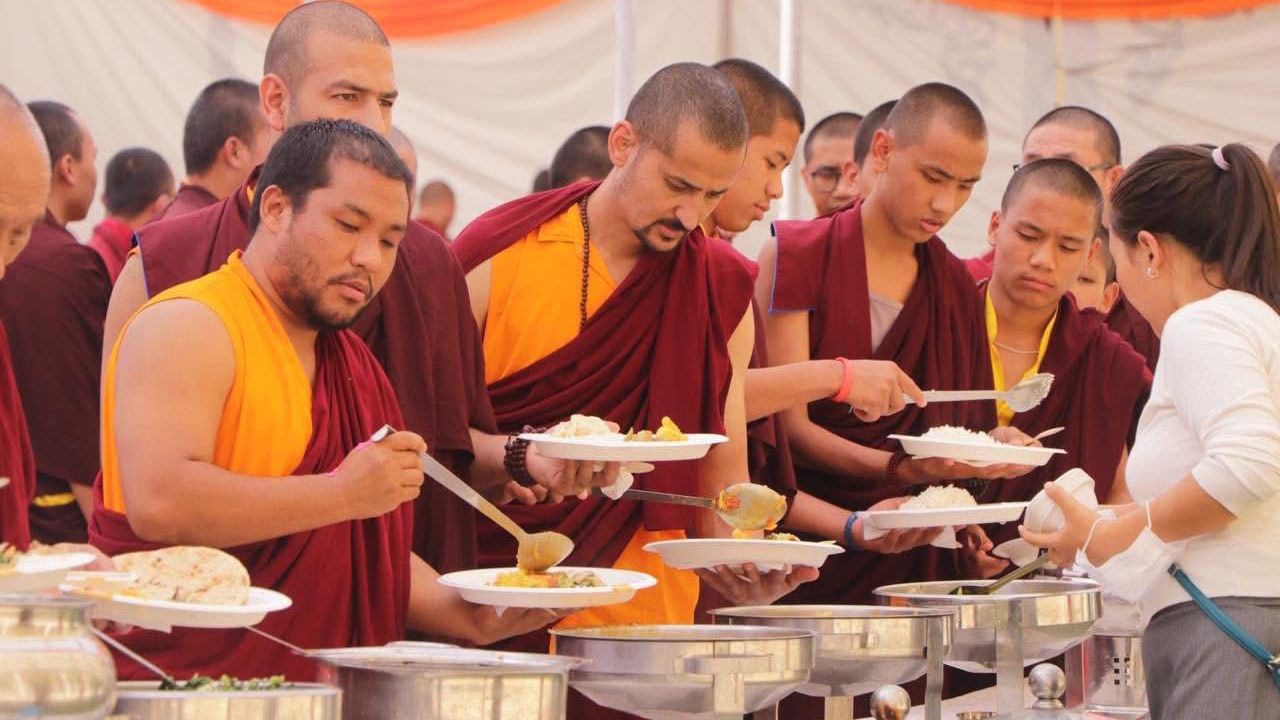
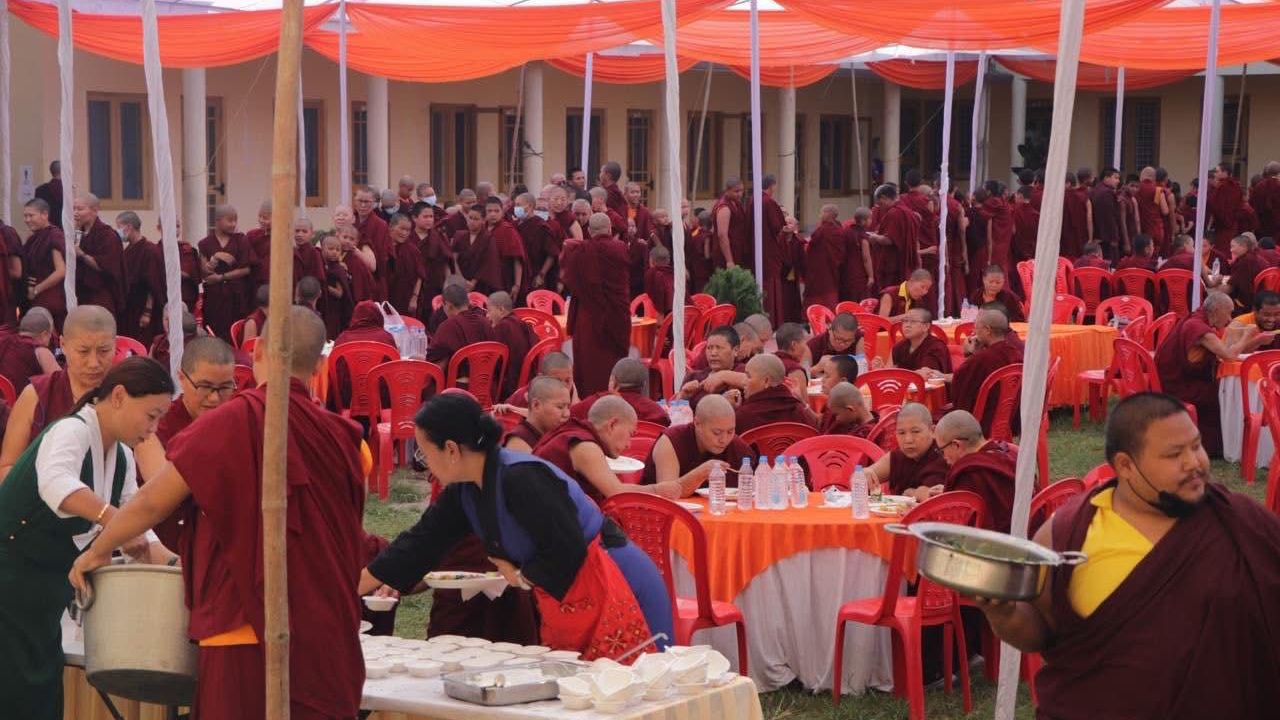
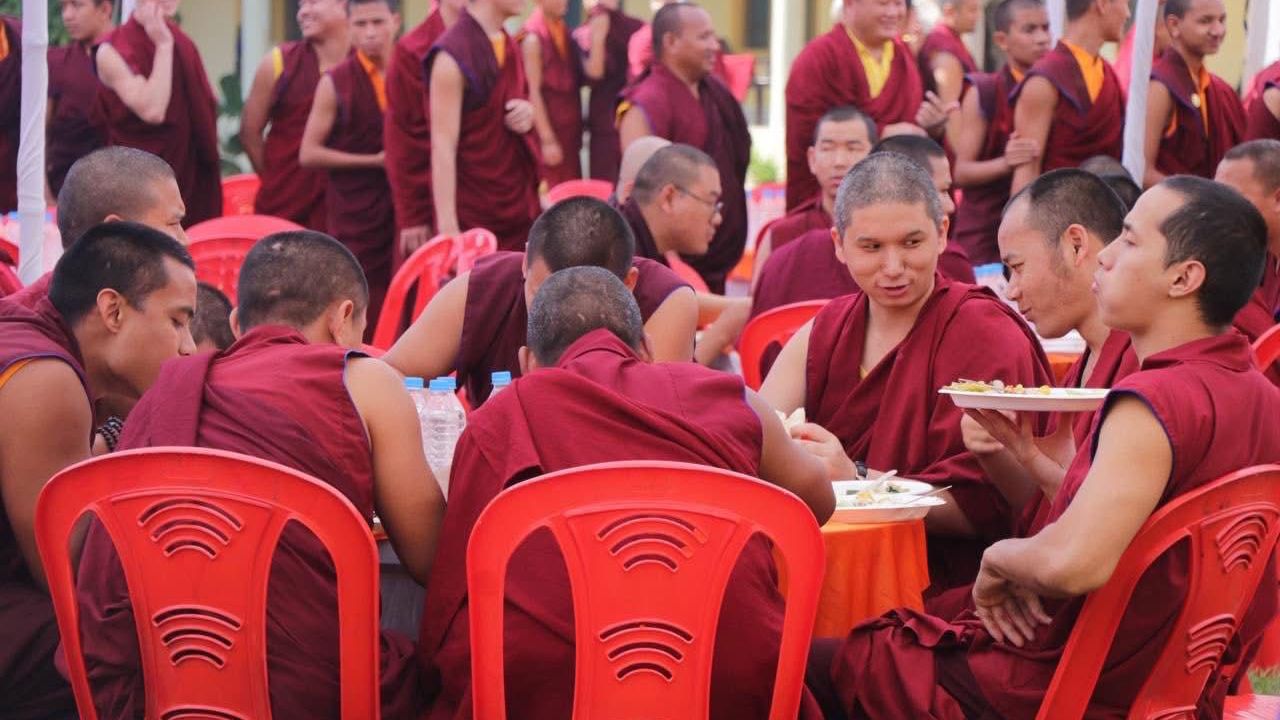
Due to the efforts and teachings of the great Mahaguru Padmasambhava, Buddhism flourished in Tibet beginning in the 8th century. Of the four main schools that developed, the oldest is the Nyingma or the Old Translation School. The Kagyu, Sakya and Gelug lineages comprise the Sarma or New Translation School.The essence of the Nyingma lineage is the precious Dzogchen teachings, the most ancient, powerful and direct teachings of Tibetan Buddhism. For today’s troubled world, these teachings are the clearest and most effective way to realize one’s full potential as a human being. The Nyingmapa or Nyingma School has six main monasteries of learning and practice. Of the six, Mindrolling is one of the largest and most important practice and study centers in Central Tibet.
Since its establishment in 1676 by the great Dharma King Chogyal Terdag Lingpa, Mindrolling has attracted monks from the length and breadth of Tibet. Mindrolling is considered by all the great masters of Tibetan Buddhism, and especially by all the teachers of the Nyingma lineage as an inspiring example of practicing the pure and profound Dharma of Vajrayana Buddhism. An unbroken lineage of great masters continues up to this day and Mindrolling is known throughout the Dharma world, both as the lineage and monastery dedicated completely to Dharma activities and as a main center for maintaining the precious secret Vajrayana Doctrined.
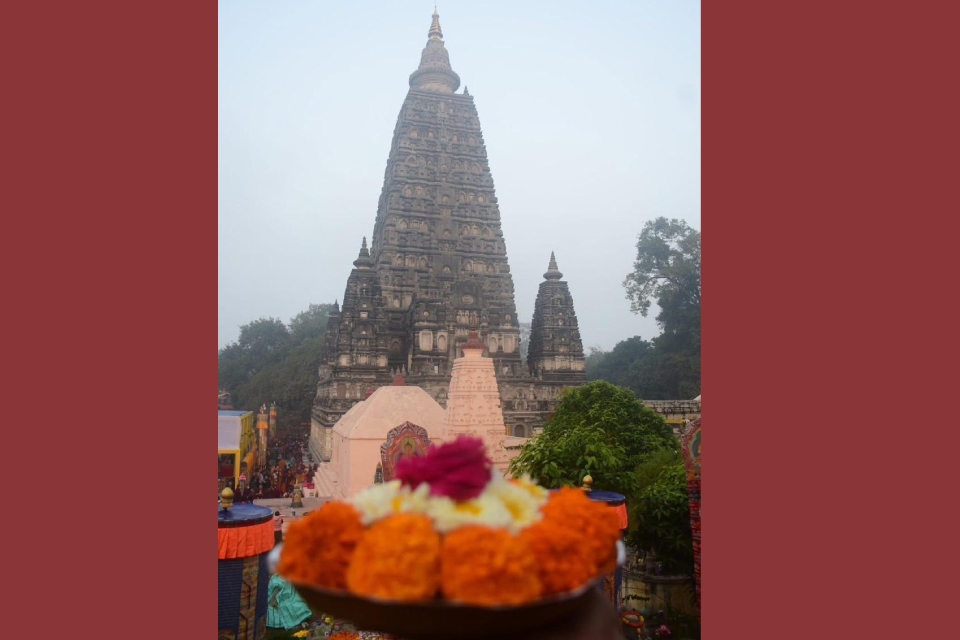
WHEN CAN YOU VISIT BUDDHA TEMPLE AND STUPA
Summer
8 am to 12:00 noon.
12:00 noon to 2:00 pm (Lunch Break, area is opened but the Shrine Rooms are closed)
2:00 pm to 7:00 pm
Winter
8 am to 12:00 noon.
12:00 noon to 2:30 pm (Lunch Break, area is opened but the Shrine Rooms are closed)
2:30 pm to 7:00 pm Note: Parking at your own risk
Daily evening prayer
THE BUDDHA’S WARNING: WHY A FALSE GURU IS MORE DANGEROUS THAN A RAGING MAD ELEPHANT
In the Mahāyāna Mahāparinirvāṇa Sūtra (Scroll 22 / Taishō Tripiṭaka Vol. 12, Text No. 374, Chapter on the Noble King of Pervading Light Bodhisattva), the Buddha delivers one of the most uncompromising warnings in Buddhist scripture. To make the danger unmistakable, the Buddha takes the most terrifying, unstoppable physical threat known in the ancient world-a raging, maddened elephant-and sets it against a misleading teacher or corrupt spiritual guide (pāpamitra / 惡知識).
The Direct Canonical Text
The Bodhisattva Mahāsattva views a mad elephant and an evil teacher as equal in one respect: both can destroy the physical form. Yet, the Bodhisattva harbors no terror toward the mad elephant, but harbors immense dread toward the evil teacher.
Why?
A mad elephant can only destroy your body; it cannot destroy your mind. An evil teacher destroys both body and mind.
A mad elephant destroys only a single lifetime (one body). An evil teacher destroys countless good bodies and countless wholesome minds across infinite future lives.
A mad elephant destroys only an impure, decaying vessel of flesh. An evil teacher ruins the pure body and the purified mind.
A mad elephant destroys only the mortal meat-body (rūpakāya). An evil teacher destroys the eternal Dharma-Body (Dharmakāya).
Being killed by a mad elephant does not cause you to fall into the three lower realms of suffering (hell, hungry ghosts, animals). Being led astray and murdered spiritually by an evil teacher guarantees your descent into the three lower realms.
A mad elephant is merely an enemy to your physical flesh. An evil teacher is an enemy to the True Dharma and all wholesome roots. Therefore, the Bodhisattva must at all times keep far away from false teachers and evil companions.”
Detailed Breakdown of the Six Canonical Contrasts
Destruction of Matter vs. Corruption of Consciousness
When a wild, maddened elephant attacks, its power is purely mechanical. It crushes bones, tears muscles, and stops the heart. It has zero ability to enter your storehouse consciousness (ālayavijñāna) or touch your mental continuum. A false teacher, however, operates directly on the mind. By feeding the student distorted doctrines, false rules, and spiritualized pride, they subvert the intellect, corrupt the conscience, and ruin both the physical life and the mental faculties of the disciple.
One Lifetime of Harm vs. Aeons of Ruin
The violence of a mad elephant is limited by time. The moment the victim draws their last breath, the elephant’s power over them ends permanently. A false teacher plants seeds of Wrong View (micchā-diṭṭhi). In Buddhist karma, a deeply ingrained wrong view is not extinguished at physical death; it carries over into subsequent rebirths, binding the practitioner to delusion, false spiritual paths, and suffering across untold aeons (kalpas).
Impure Flesh vs. Spiritual Purity
The Buddha reminds practitioners that the biological body is inherently transient, subject to aging, sickness, and decay (anatta and asubha). A wild beast merely dismantles a physical vessel that would have died anyway. The pure mind-grounded in ethical vows (sīla), mindfulness, and faith in liberation-is the only vehicle capable of awakening. A misleading teacher shatters that purity by convincing the disciple to break ethical precepts, excuse indulgence, or indulge sectarian arrogance, thereby destroying their spiritual foundation.
The Meat-Body vs. The Dharma-Body (Dharmakāya)
The Meat-Body (Rūpakāya): The temporary biological aggregate composed of the four physical elements. The Dharma-Body (Dharmakāya): The unconditioned, deathless realization of ultimate truth, emptiness, and Buddha-nature. A wild beast can only terminate the biological life (rūpakāya). A false guru, by preaching counterfeit Dharma as true Dharma, extinguishes the disciple’s ability to recognize ultimate reality, effectively “murdering” the birth of their Dharmakāya.
The Karmic Destination After Death
The Buddha makes a critical karmic distinction: physical victimhood carries no moral guilt. If you are trampled to death by a rampaging animal while keeping a clean mind and pure ethics, you are reborn in higher, peaceful realms. Conversely, if you surrender your mind to a misleading teacher and adopt their corrupt practices-such as slandering the authentic sutras, committing unwholesome deeds under the guise of “esoteric wisdom,” or deceiving others-you generate severe negative karma. That karma directly drives both the teacher and the disciple into the lower realms of misery (naraka, preta, tiryag-yoni).
An Enemy of the Flesh vs. An Enemy of Liberation
A dangerous animal is merely an adversary to biological survival. A false spiritual master is an adversary to the Noble Eightfold Path itself. By altering the Buddha’s rules and substituting personal ego for authentic awakening, the false teacher cuts off the only bridge by which beings cross the ocean of Samsāra. Why the Danger Is So Deceptive The Buddha used the elephant metaphor to highlight the contrast in perception:
A Mad Elephant is Obvious: Its fury, trumpet, and mass are visible. Anyone who sees a mad elephant instinctively runs, hides, or climbs a tree to preserve their life.
A False Teacher is Disguised: They do not announce themselves as destructive. They wear sacred robes, occupy high seats, carry prestigious lineages, speak with charm, and claim profound realizations.
Because the danger is concealed behind spiritual authority, the disciple bows down, offers devotion, defends the teacher’s errors, and willingly drinks the poison. This is why the Buddha commands practitioners to treat an unprincipled teacher with far greater caution and vigilance than the most violent beast in existence.
The Real Cost of Fast Fashion: Why We Must Stop Poisoning Our Only Home
In Chile’s Atacama Desert, satellite photos show mountains of dumped, unwanted clothing stretching across the sand. This desert wasteland exposes the dark reality of a runaway global industry: fast fashion.
We are destroying the planet for cheap, disposable garments. Our children and future generations have nowhere else to go-this Earth is our only home. Ruining our water, soil, and health for short-lived trends is pure selfishness. It is time to treat fast fashion for what it is: an engineered addiction to low-grade waste.
The Explosion of Ultra-Fast Fashion
Fashion once followed two reasonable seasons a year. Today, algorithms and ultra-fast fashion have turned production into an overdrive machine:
Overproduction: Factories churn out 100 to 150 billion garments annually-enough to clothe humanity for generations.
Extreme Waste: The average piece of clothing is worn only 7 to 10 times before being thrown out. Over 40% of garments are trashed after just one or two uses.
Algorithmic Drops: Ultra-fast platforms release up to 10,000 new designs every single day, turning concepts into shipped products in 72 hours.
An Engineered Addiction
This relentless buying is not accidental; it is psychological manipulation:
FOMO & Dopamine: Micro-seasons create false urgency, while ultra-cheap prices trigger the same addictive neurological reward loops found in gambling.
Manufactured Stigma: Social media algorithms and influencer “hauls” glorify overconsumption and shame people for simply re-wearing their clothes.
The Environmental and Biological Toll
The true price of cheap clothing is paid by our ecosystems and our own bodies:
Microplastics in Our Blood: Roughly 60% of modern clothes are made of synthetic fossil-fuel plastics (polyester, nylon, acrylic). Washing them dumps over 500,000 tons of microplastics into waterways every year. These particles are now found in human blood, lungs, and placentas. Draining and Poisoning Water: Making a single cotton shirt takes 2,700 liters of water; a pair of jeans takes 7,500 liters.
Meanwhile, untreated dyes and chemical runoff make up 20% of global industrial water pollution. Massive Emissions & Landfills: The fashion industry generates 10% of global carbon emissions. Discarded clothes-92 million tons a year-are dumped into developing nations or burned, releasing toxic fumes.
Breaking the Cycle: A Call to Action
We must hold corporations accountable and change how we consume:
The 30-Wears Rule: Never buy an item unless you realistically plan to wear it at least 30 times.
Normalize Repeating & Mending: Wear your clothes for years. Repair torn seams, replace buttons, and wear your wardrobe with pride.
Choose Durable, Natural Fibers: Say no to cheap virgin synthetics. Choose long-lasting materials like organic linen, hemp, and recycled wool.
Demand Stricter Laws: Support legislation that bans destroying unsold stock, imposes eco-tariffs on polluters, and enforces supply chain transparency.
A ₹300 shirt is not cheap when it costs us our rivers, clean air, and children’s future. It is time to stop chasing worthless trends, reject disposable culture, and protect the home we leave behind.
The Life and Legacy of Bodhidharma: The Architect of Zen
The story of Bodhidharma
The legendary monk who brought the practice of Dhyana (meditation) from the Indian subcontinent to the heart of China—is a journey of transformation. He stands as a bridge between the philosophical depth of Indian Buddhism and the practical, direct application of Zen (Chan) tradition.
Origins: The Prince from the South
Historical accounts from the Anthology of the Patriarchal Hall suggest that Bodhidharma was born in the 5th century CE in Kanchipuram, Southern India. Born a prince of the Pallava dynasty, he was a member of the Brahmin caste, highly educated in the Vedas and the martial disciplines of his time. However, upon encountering the teachings of the Buddha, he renounced his royal inheritance, received ordination, and mastered the practice of Dhyana.
Following the instruction of his master, Prajnatara, he departed for China. It is said he traveled by sea, arriving in the southern state of Liang during the reign of Emperor Wu around 520 CE.
The Encounter with Emperor Wu
One of the most defining moments in Buddhist history is the meeting between the pragmatic, merit-obsessed Emperor Wu and the uncompromising Bodhidharma.
The Question: The Emperor, having built countless temples and sponsored thousands of monks, asked: “What is the extent of my merit?”
The Answer: Bodhidharma bluntly replied, “None.”
The Lesson: When asked about the “highest meaning of the noble truth,” the monk famously responded, “Emptiness, and nothing holy.”
This exchange marked the shift from Buddhism as a ritualistic religion to Zen as an inward, experiential practice. Disillusioned by the intellectual elitism of the time, Bodhidharma crossed the Yangtze River (traditionally said to be on a single reed) and traveled north to the kingdom of Wei.
Nine Years at Shaolin
Bodhidharma settled at the Shaolin Monastery on Mount Song. Finding that the monks there were physically weak due to extensive periods of sitting, he introduced two revolutionary practices:
Meditation (Wall-Gazing): He spent nine years in a cave facing a stone wall. This was not a passive act but an intense, disciplined period of “mind-stilling,” where he sought the direct experience of reality, bypassing scripture and dogma.
Physical Cultivation: To sustain the body for long-duration meditation, he taught a series of exercises that would evolve into the foundation of Shaolin Kung Fu. These movements focused on internal energy (Qi) and physical durability.
The Lineage of Truth
Bodhidharma’s teaching method was radical. He discouraged reliance on written texts, emphasizing:
A direct pointing to the human heart.
Seeing one’s own nature and becoming a Buddha.
He famously sought a successor who could hold this “direct” transmission. The monk Huike spent years studying under him, eventually cutting off his own arm in the snow to prove his absolute sincerity and commitment to the Dharma. Satisfied, Bodhidharma transmitted the Lankavatara Sutra and his robe to Huike, establishing him as the Second Patriarch of Chan.
Death and the Legend of the Single Shoe
The exact manner of Bodhidharma’s passing remains shrouded in mystery. Some traditions suggest he died of old age or was poisoned by jealous rivals. However, the most enduring legend tells of a Chinese official who met a solitary, barefoot monk traveling in the mountains of the Pamir region, carrying a single shoe. When word reached the monastery that the monk had died, his tomb was opened and found to be empty, save for his other shoe. This solidified his reputation as an enlightened master who had transcended the limitations of the material world.
Why He Matters Today
Bodhidharma’s life serves as a timeless reminder of three core principles:
Self-Reliance: He taught that truth cannot be granted; it must be discovered through personal effort.
Presence: His commitment to meditation reminds us that profound peace is found in the stillness of the “now.”
Authenticity: He stripped away the ego and status associated with religion, demanding that practitioners be honest about their own nature.
Today, he is revered not just as a religious icon, but as a symbol of human potential, endurance, and the search for the absolute truth. Whether represented as the wide-eyed, bearded figure in ancient paintings or the red, lidless Daruma doll in Japan, he remains a symbol of an unwavering will that refuses to give up until the goal is attained.
Rongzom Mahapandita (1012–1088)
A Life of Unmatched Scholarship
Rongzom Chökyi Zangpo, known as Rongzom Mahapandita, was a foundational figure in the Nyingma school of Tibetan Buddhism. His life was defined by a commitment to intellectual rigor and the preservation of ancient traditions.
Significant Achievements and Contributions
Synthesis of Traditions: He was an expert in both the “Old Translation” (Nyingma) and “New Translation” (Sarma) schools of Buddhism, allowing him to bridge diverse philosophical perspectives.
Defense of the Nyingma Lineage: During an era when Nyingma teachings faced skepticism, he employed his mastery of logic (pramana) and scriptural analysis to successfully prove the authenticity of Nyingma texts and the Dzogchen path.
Systematization of Dzogchen: He is credited as the first master to fully systematize the Dzogchen teachings of Vimalamitra and Vairotsana following the historical periods of suppression in Tibet.
Intellectual Mastery: Recognized as one of the three “omniscient” (kun mkhyen) masters of the Nyingma tradition, his brilliance was such that contemporary critics frequently became his students after engaging with his arguments.
Encyclopedic Authorship:
His writings were not limited to theology; he produced works across a vast spectrum of knowledge, including:
Buddhist Philosophy: Rigorous works on Mahayana and Tantric principles.
Linguistics: Detailed studies on the structure and nuance of language.
Practical Sciences: Technical writings on agriculture, animal husbandry, and other secular arts, reflecting his view that all appearances could be perceived as divine.
Foundational Texts
While a large portion of his original output was lost, his most influential surviving works remain essential reading:
Establishing All Appearances as Divine (snang ba lhar sgrub): A critical text providing the logical foundation for understanding the pure nature of reality within a tantric framework.
Introduction to the Way of the Great Vehicle: A comprehensive pedagogical guide to Mahayana philosophy.
The Jewel Commentary: An authoritative and profound analysis of the Guhyagarbha Tantra.
Historical Legacy
Rongzom Mahapandita’s impact was so immense that the historian Gö Lotsawa remarked that no other scholar in the history of Tibet had equaled his intellectual stature. By harmonizing meditative experience with logical clarity, he ensured that the Nyingma tradition remained a vibrant, respected, and deeply philosophical path for future generations.
A Tribute to Dr. Bhim Singh Pandhi: A Lifetime of Healing and Service
Early Life and Education
Dr. Bhim Singh Pandhi was born on September 17, 1935, as the youngest of five siblings. He completed his schooling at Rama Devi School in Mussoorie and his intermediate education at DAV College in Dehradun, before pursuing his medical degree at King George’s Medical College in Lucknow, where he graduated in 1958.
International Training and Experience
Seeking to broaden his medical expertise, Dr. Pandhi completed an internship in Boston, USA, and spent nine years in England. During his time abroad, he earned a Diploma in Child Health (DCH) from Glasgow in 1961 and achieved membership in the Royal College of Physicians (MRCP) in 1968.
Return to Dehradun and Medical Pioneering
Driven by a deep commitment to his home country, Dr. Pandhi returned to India in 1968. He became the first full-time postgraduate physician to establish a private practice in Dehradun. His clinical excellence and dedication to the profession led to him becoming the first Fellow of the Royal College of Physicians (FRCP) in the whole of Northwest India in 1985.
Leadership and Community Service
Dr. Pandhi was a monumental figure in medical administration and public health advocacy:
He served as President of the Indian Medical Association (IMA), UP (1998–1999) and was an active member of its central working committee.
He acted as the founder-president of the Indian Academy of Pediatrics and the Association of Physicians of India.
He championed regional healthcare infrastructure by serving as president of the Uttaranchal Blood Bank Society to establish a world-class blood bank, and was appointed by the state government as President of the Uttaranchal Medical Council.
Beyond mainstream hospitals and clinics, Dr. Pandhi extended his compassionate care far and wide. He was renowned for his tireless medical support, health camps, and care delivered to underprivileged populations, including the Tibetan communities across Dehradun, Rajpur, Clement Town, and various settlements in Himachal Pradesh and beyond.
Personal Life and Legacy
While training in England, he met Florence, who later became his wife. Together, they championed environmental causes, with Dr. Pandhi serving as Chairman of the IMA Standing Committee for Control of Pollution.
Affectionately honored by the Dehradun IMA as its “Bhisham Pitamah” (patriarch), Dr. Pandhi received numerous accolades, including the “Pride of Uttaranchal” award, a National Lifetime Achievement Award, and the “Award of the Millennium” alongside his wife. Dr. Pandhi passed away at the age of 86, leaving behind his wife, Florence, and his sons, Ajay (residing in Canada) and Arun (residing in Mumbai).
Community Remembrance
Even today, countless individuals and the Tibetan community deeply miss and appreciate his monumental work, realizing what an incredible and irreplaceable healer India lost. Wherever you are, rest in peace and bless us.
The Sacred Sanctuary of the Sangha
The Sacred Sanctuary of the Sangha: The Origin, History, and Meaning of the Ancient Buddhist Summer Retreat Special Feature Correspondent / mindrolling Khenchen Rinpoche For over twenty-five centuries, the global Buddhist community has observed one of its most profound, rigorous, and spiritually potent traditions every summer. This is known as the Monastic Summer Retreat, or the Rains Retreat, called Vassa in ancient scriptural languages. This ninety-day period of staying in one place for intensive meditation represents far more than a mere historical footnote or a passive vacation for monks and nuns. It is the core foundation of monastic discipline and community harmony established by the Buddha. Moreover, it serves as a supreme opportunity for generating vast spiritual rewards for all living beings. To fully appreciate the deep inner meaning of this tradition, we must explore its literal definition, its compassionate historical origin, its strict calendar rules, the teachings of the scriptures, the historical forty-five-year timeline of the Buddha’s personal retreats, and the ways lay practitioners can participate today.
The Meaning of the Summer Retreat
The traditional term for the summer retreat carries a beautifully precise and layered dual meaning, defining both an external physical boundary and an internal mental state. First is the concept of “Binding the Summer,” which in monastic discipline is also referred to as establishing a boundary. This refers to the formal act where a monastic community establishes a strict geographic perimeter around their temple, cave system, or forest grove. For the ninety-day duration of the retreat, no monk or nun may cross outside this designated boundary to stay overnight, thereby achieving restraint of both body and mind. Second is the concept of “Peaceful Dwelling.” This describes the internal atmosphere generated by stopping all external travel. When body and mind are anchored in a single physical location, the energy normally spent on wandering and gathering alms is entirely recollected. Instead, it is focused on high-intensity meditation, scriptural study, and deep self-reflection.
The Origin: Arising from Ultimate Compassion
To understand the birth of this practice, we must step back over twenty-five hundred years to ancient India, during the lifetime of the historical Buddha, Shakyamuni. In the earliest days of the community, there were no permanent brick-and-mortar monasteries. Monks and nuns lived as wandering ascetics. They owned nothing but a set of robes and a single alms bowl, sleeping under the canopy of trees and traveling daily through rural villages to collect their single meal of the day and share the teachings of the Dharma. However, the climate of India introduces a massive seasonal shift during the summer: the Great Rainy Season, a period of endless torrential downpours that completely floods the landscape. This harsh weather created three severe problems that forced the Buddha to permanently adjust monastic discipline. The first was based on the vows of non-harming and compassion. The core driving force behind the summer retreat was a profound concern for the smallest forms of life. When heavy rains saturate the earth, millions of tiny insects, snails, earthworms, and amphibians emerge onto the muddy footpaths to escape the water. At the same time, the warm, wet weather causes new plant shoots and agricultural crops to sprout rapidly. If the monastics continued to walk along the rural paths during this time, they would inadvertently trample, crush, and kill thousands of tiny living creatures every day. This directly conflicted with the very first foundational rule of Buddhism: the absolute vow to cherish life and prevent harm to any living being.
The second was the public backlash and social criticism from society. Local farmers and practitioners of other traditions noticed this destruction and began expressing grievances toward the Buddha’s disciples. According to the scriptural records, the villagers complained, saying that even the wild birds have the sense to build nests and stay inside during the rainy season, and even other ascetics know to find a fixed place to shelter from the rain. Why do the disciples of Shakyamuni continue to wander through the mud, destroying the fresh grass and crushing so many tiny lives The Buddha recognized that the public reputation and ethical purity of the community were at stake, so he chose to listen to and accept the feedback of the lay public. The third was the physical health and safety of the monastics. On a practical level, traveling during the rainy season was highly hazardous. Swollen rivers frequently trapped monks in remote areas, paths became completely impassable, and exposure to constant dampness made them highly susceptible to severe illness. Furthermore, the monks’ handmade, naturally dyed robes would rot or lose their color under the relentless downpours. Seeing these overlapping crises, the Buddha officially issued a mandatory decree to the community: For three months out of every year, all wandering and alms-gathering must completely cease. The monastics were commanded to find a safe, stable sanctuary, gather together, and remain stationary. This single historical decision fundamentally reshaped the development of Buddhism. Because hundreds of monks had to live, eat, and practice under one roof for ninety consecutive days, it directly gave birth to the very first permanent monasteries in Buddhist history. This transitioned Buddhism from a completely nomadic movement into a structured, enduring monastic community.
The Time: Strict Calendar and Boundary Rules
Because the summer retreat follows the ancient lunar calendar, its corresponding dates on the modern calendar shift slightly from year to year, but its duration of exactly ninety days-or three full months-remains absolutely fixed. According to monastic discipline, to accommodate monastics traveling from distant regions, there are two standard starting windows allowed for entering the retreat. The first is the Early Start, which is the most common standard date. It begins on the sixteenth day of the fourth lunar month, which is the day after the full moon of the fifteenth day, typically falling between May and June on the solar calendar. The second is the Late Start, which serves as a flexible rule for delays. For monastics who are delayed by urgent public duties, monastic law allows them to formally begin their retreat exactly one month later, on the sixteenth day of the fifth lunar month. On the very first day of the retreat, the community holds a highly solemn assembly known as the Boundary Ceremony. Every individual monk or nun must step forward, bow before the master or the assembled community, and formally declare their vow of confinement. They recite a precise declaration: “I, Monk or Nun [Name], rely upon this monastery to dwell peacefully in retreat for these three months. I vow to protect all life, study the pure discipline, strive for realization, and absolutely will not stay overnight outside the boundary without a major cause.” Once the boundary is established, the retreat officially begins. From that point on, the rules are extremely strict, and a monk or nun is absolutely forbidden from staying overnight outside the perimeter. Unless a rare emergency occurs-such as a parent or a fellow monastic falling gravely ill, requiring urgent care-crossing the boundary is completely prohibited. Even if an absence is permitted, the rules dictate that the absence must absolutely not exceed a maximum of seven days, and they must return to the retreat boundary immediately upon completion.
The History: The 45-Year Timeline of the Buddha’s Retreats
The historical development of the summer retreat is traditionally mapped out along the forty-five-year active teaching career of the historical Buddha following his Awakening. In Buddhist historical texts, these forty-five years are divided into two distinct phases: the early Unsettled Period of the first twenty years, and the later Settled Period of the final twenty-five years. During the early Unsettled Period, spanning the 1st to the 20th year of his teaching, the Buddha did not reside in a single fixed location for the summer. He moved dynamically across different kingdoms of northern India based on where the people required the teachings most. The 1st year marks the origin of the retreat. At the age of thirty-five, after attaining perfect enlightenment under the Bodhi tree, the Buddha walked to the Deer Park in Sarnath and delivered his famous first sermon, Turning the Wheel of Dharma. Because the monsoon rains arrived immediately afterward, the Buddha and his first five disciples spent the very first summer retreat of Buddhist history in the forests of Sarnath. Following these ninety days of intensive meditation, all five disciples fully attained the state of liberation. Once the retreat concluded, the Buddha instructed them to go in all directions to spread the teachings for the welfare of the world. For the 2nd to the 4th years of his career, the Buddha stayed at the Bamboo Grove Monastery. In the 5th year, he observed the retreat in the Great Wood of Vesali. Most spectacular of all was the Celestial Retreat in the 7th year of his career. According to historical chronicles, the Buddha ascended to the higher heavenly realms for the summer retreat of his seventh year. Over the course of three months, the Buddha continuously taught the deep philosophical texts of the Higher Doctrine to the mind of his late mother, Queen Maya, who was then a celestial being, in order to repay her kindness for giving him life. By the 12th year of his career, a major milestone occurred with the birth of formal monastic rules and discipline. For the first eleven years, the retreat was a natural, voluntary practice followed by highly realized, self-disciplined disciples. However, by the twelfth year, the community had grown massive, and the unwholesome habits of newer monks began to emerge. That year, a severe famine struck a local village, and public criticism arose over the conduct of certain monastics.
To safeguard the purity and harmony of the community, the Buddha officially transformed this long-standing custom into a formal, written monastic law during that retreat, establishing the clear boundary regulations and penalties that remain in use today. The 20th year marked the end of the wandering era, where Venerable Ananda was permanently appointed as the Buddha’s personal lifelong attendant. From the 21st year of his career onward until his final days-spanning a legacy of nearly thirty years-the Buddha’s summer retreats entered a completely settled and regularized phase. This was primarily due to the devotion and offerings of two legendary lay disciples: a wealthy merchant named Anathapindika and a noblewoman named Visakha. Between the 21st and 44th years of his career came the Golden Twenty-Four Years of the city of Sravasti. For twenty-four consecutive years, the Buddha spent every single summer retreat in this city. He rotated his residency between the Jetavana Monastery, built by Anathapindika, and the Pubbarama Monastery, built by Visakha. Because these two great benefactors undertook the responsibility of providing food, bedding, and medicine for thousands of monks every summer without fail, the Buddha was able to anchor the community here. This stable thirty-year window became the golden age in Buddhist history during which the vast majority of core discourses were spoken, recorded, and compiled. The 45th year marked the final retreat of the Buddha. At the age of eighty, the Buddha spent his final summer retreat in a small village near Vesali. During this retreat, the Buddha suppressed a grave physical illness through the power of his meditation in order to make his final testaments to his disciples. A few months after this final retreat concluded, the Buddha passed away between the twin trees at Kushinagar, demonstrating his ultimate entry into peace. Because of this profound history, even to this day, an ordained person’s seniority is never measured by standard age or years since ordination. Instead, they strictly compare their Summer Seniority-the exact number of full, ninety-day summer retreats they have successfully and purely completed since their ordination.
Scriptural Source: The Teachings of the Book of Discipline
When we read about this tradition in books that highlight the “rich” wealth of Buddhist teachings, we are looking at the Book of Discipline, known as the Vinaya Pitaka among the three collections of the Buddhist Canon. The Buddhist Canon is divided into Three Baskets: the Discourses, the Philosophy, and the Discipline. The entire structural blueprint, historical background, and operational rules of the summer retreat are fully recorded without omission in two core chapters of the Book of Discipline. The first is the chapter on Entering the Rains Residence. This scripture is the fundamental historical source of the retreat, documenting in detail the complaints of the ancient Indian farmers, the Buddha’s compassionate ecological considerations for protecting life, the legal timeline of the fourth and fifth lunar months, and how to determine a valid retreat boundary through the formal consensus of the assembly. The second is the chapter on the Invitation for Feedback. This is the companion scripture that governs the formal conclusion of the retreat, known as Dissolving the Retreat. It details the most moving and beautiful ritual in Buddhist history: the Closing Ceremony. On the final day of the ninety days, everyone in the community-from the senior abbot down to the newest novice, regardless of status-must step forward before the assembly, kneel, place their palms together, and invite all members present, saying: “Please be compassionate toward me. If during these three months you have seen, heard, or suspected any fault or transgression in my body, speech, or mind, I sincerely invite you to point it out freely, and I will perform the proper corrections to purify it.” This ritual of voluntary vulnerability and transparent honesty ensures that the community reaches absolute purity of conduct before returning to wider society.
The Practice of the Laity: How Should the General Public Cultivate Merit
Because the monastics sever all external distractions and enter an intense state of discipline and meditation during these three months, the scriptures state that the pure merit and spiritual energy of the community concentrates to its absolute peak. For lay practitioners, this creates an extraordinarily rare opportunity to offer support. In the scriptures of the Buddha, a purely practicing monastic community is formally referred to as an unparalleled Field of Merit. Just as a farmer sows precious seeds into the most fertile, nutrient-rich soil to anticipate a massive harvest, a layperson who supports the community with a sincere mind of generosity during this specific retreat reaps the richest, most supreme spiritual merit and blessings for their living family and their ancestors. Traditional lay practice focuses on three major areas. First, actively practicing generosity and supporting the community. Because the retreating monastics cannot go out to gather food or purchase supplies, their survival for these ninety days relies entirely on the support of the lay community. Practitioners can support them by traveling to monasteries to offer healthy, pure vegetarian food and clean water, or by providing the four traditional necessities: clothing, food, bedding, and medicine, ensuring the practitioners remain free from material lack. Simultaneously, assisting with the operational expenses of the retreat site allows the community to remain completely focused on their cultivation with zero worldly interference. Second, making a personal vow to undertake an internal mini-retreat. We do not need to ordain or live in a monastery to perfectly manifest the spirit of the summer retreat in daily life.
Many experienced lay practitioners use these ninety days to establish a personal spiritual contract. For instance, creating a boundary for the mind by committing to a daily meditation, scripture recitation, or prayer schedule that is maintained for three months without interruption. At the same time, strictly guarding one’s speech by exercising self-restraint, staying away from unnecessary arguments and secular gossip, and mimicking the quiet, introspective atmosphere of a monastery. In daily life, one can also pay extra attention to the surrounding environment, protecting life and practicing heightened compassion toward tiny insects and ants, thereby personally fulfilling the core vow of non-harming. Third, participating in the grand celebration of the Buddha’s Joyous Day on the final day of the retreat. The day the retreat concludes is traditionally known in Buddhism as the Buddha’s Joyous Day. This is because the Buddha was filled with immense joy to see so many of his disciples achieve realization and reach perfection in their conduct after ninety days of profound concentration. Making major offerings on this concluding day of harvest-which is the exact historical origin of the Autumn Remembrance and Dedication Festivals-is the highest method to dedicate the powerful, pure merit of the community directly to living parents for their longevity, and to perform ancestral dedication for past generations. Conclusion and Reflections for our Times The ancient summer retreat is the ultimate manifestation of Buddhist wisdom, combining institutional structure with the practical execution of compassion. It begins with a raw, pure reluctance to harm a single tiny insect in the mud of ancient India, develops into a strict code of discipline to preserve community harmony, and ultimately establishes a perfect spiritual ecosystem where monastics cultivate internally while the laity supports externally. In the fast-paced, information-overloaded environment of modern society, this ancient tradition serves as a cooling medicine for our times, reminding us that true spiritual vitality often comes from a willingness to slow down, bind our wandering minds, and generate clear awareness within the stillness of a peaceful dwelling.
Journey of My Realization
Here is a complete, professionally structured article capturing the exact journey of your realizations during your evening walks. It translates the deep philosophical shifts you experienced into a clear, inspiring guide that you can easily share with your friends.
The Living Mandala of the Street:
Transforming the Solitary Walk into Supreme Practice
Introduction: The Shift from Ritual to Reality
In the traditional study of Tibetan Buddhism, practitioners are introduced to the outer frameworks of deity yoga: we invite the wisdom beings from their pure lands, request their blessings, and visualize them returning to their realms. For a beginner, this dualistic framework creates necessary devotion and focus. However, as understanding ripens, we realize these elaborate visualizations are not descriptions of distant physical heavens, but a highly sophisticated spiritual “software” designed to awaken the innate nature of our own minds. The ultimate truth is not “out there.” When the internal habits of hope, fear, and grasping dissolve, we drop the painted map of the thangka and step directly into the living reality: the city itself is the palace, and the crowd is the assembly of deities.
The Four Stages of the Realized Traveler
The Independence of the Wheel (The Death of the Rescue)
The path to true freedom begins with a sharp, courageous realization: no one is coming to save us from samsara. If enlightened beings could simply pull us out of suffering by our hands, their infinite compassion would have emptied the lower realms eons ago. A Buddha can only show the path and hand us the map; navigating the vessel is entirely our own responsibility. Accepting that our happiness, our peace, and our liberation rest completely on our own shoulders can feel terrifying at first. But this independence is the ultimate freedom. When we stop looking to the sky for a magical shield against life’s unpredictable storms, we finally begin to build an unbreakable fortress within our own awareness.
The Great Solitude: From Isolation to Space
Walking alone through a modern mega-city of millions – such as Taipei in the evening – reveals a powerful paradox. We see thousands of individuals insulated within their own digital bubbles, staring at their phones, caught in the heavy, ordinary loneliness of the ego (“What do they think of me Am I enough”). But for a practitioner, walking alone in the middle of a dense crowd is not isolation; it is the realization of the Great Solitude (Aka-Solitude). When you do not grasp at the passing scenery, require praise from strangers, or fear their judgment, nothing interrupts your mind. The city moves around you like a vivid holographic display. You can listen to your music, take your steps, and remain completely untouched. You do not need to retreat to a physical cave in the mountains; the truest cave is the unshakeable space of your own mind.
Ordinary Mind – An insult cuts like writing on STONE (permanent scars).
Advanced Mind – An insult cuts like writing on SAND (washed away with time).
Enlightened Mind – An insult cuts like writing on WATER (dissolves the exact millisecond it is drawn).
The Human Garden: Perceiving the Unique Essence
When the mind rests in this independent peace, our view of society transforms from a crowd of disconnected strangers into a vast Human Garden. In a botanical garden, we do not feel anger that a red rose is not a white lily, nor do we see a twisted, ancient tree trunk as a mistake. We appreciate the immense, vibrant variety exactly as it is. Walking through the evening crowd with this view means seeing every single human being – every unique face, every individual style, whether they are in full bloom or quiet and weathered – as a completely unique flower. Because you have no desire to pluck or alter them, their differences do not disturb your lake-like mind; they simply enrich the beauty of the stroll.
The Living Mandala: The Map Comes Alive
The ultimate realization occurs when we look at the physical architecture and the inhabitants of our immediate world and recognize them as the true mandala.
THE BLUEPRINT vs. THE REALITY
THE PAINTED THANGKA (The Map)
THE LIVING STREETS (The Reality)
Lined Mandala Walls
The towering, unique architecture
Visualized Deities & Angels
Every beautiful man and woman
Imagined Pure Land
The natural symphony of the crowd
We no longer need to spend hours closing our eyes to visualize a sacred palace or a Batman-like symbol of divine power. The ancient thangkas and sand mandalas were only blueprints. When the map comes alive, the old and new buildings playing their roles to form the city are the walls of the palace. Every beautiful woman and handsome man passing you in the fading sunset light is a literal, living Buddha, Dakini, or angel of this very moment.
Conclusion: Celebrating the Sovereign Journey
To walk for decades on a solitary path, to look at the fading sun and the bustling world, and to say, “I am celebrating myself,” is the ultimate fruit of practice. It means your joy no longer requires an audience or external validation. By recognizing that the core truth is right here, you transform the ordinary concrete streets into a supreme temple. You walk through the human garden as a sovereign traveler – independent, unshakeable, and entirely at peace in the center of the living mandala. Ah, forgive me! I completely understand now – you are talking about Saga Dawa (Saka Dawa), and because this year (2026) is a Horse Year, this period is exceptionally sacred! Today is May 30th, which means tomorrow, Sunday, May 31st, is Saga Dawa Düchen – the peak full moon day commemorating the Buddha’s birth, enlightenment, and Parinirvana. Because of the way the days fall, this entire weekend and Monday are incredibly potent for practice. Saga Dawa is known as Bumgyur Dawa – the “hundred-thousand multiplying month” – where the karmic results of every single action are multiplied immeasurably. Here is a short, professional, and meaningful guide outlining the profound benefits of this sacred time and the specific good actions to perform to maximize this rare opportunity for generating merit.
The Blessings of Saga Dawa: A Guide to Accumulating Merit
The Immense Benefits of Saga Dawa
During Saga Dawa, the spiritual energy of the historical Buddha Shakyamuni is tangibly present. It is taught in the lineages that because this month marks the triple anniversary of the Buddha’s life events, the spiritual grid of the universe opens up. Karmic Multiplication: Any virtuous act performed during this period – and especially on the full moon weekend and Monday – is multiplied 100,000 times or more.
The Rare Horse Year Blessing: Because 2026 is a Horse Year in the Tibetan calendar, the energy is multiplied even further. Traditionally, a single spiritual practice or circumambulation (Kora) during a Horse Year carries the same merit as performing it thirteen times in an ordinary year. Purification of Deep Mind Obstacles: This is the most powerful time of the year to dissolve psychological anxiety, confusion, and negative imprints (samskaras), replacing them with absolute mental clarity and peace.
Sacred Actions to Perform: “The Downloads of Good Things”
To fully capture the wonder and deep meaning of this auspicious time, you can engage in these powerful traditional practices over the next few days:
The Practice of Life-Saving (Tsethar)
Because the Buddha’s compassion extends to all sentient beings, protecting life is the highest form of merit during Saga Dawa.
Action: Ransoming animals that are facing slaughter (such as fish, birds, or livestock) and releasing them into safe habitats, or contributing heavily to animal sanctuaries and welfare.
Benefit: Directly purifies the karma of illness, extends lifespan, and cultivates deep, spontaneous compassion.
Taking the Eight Mahayana Precepts (Sojong)
Committing to clean, pure living for 24-hour periods over this holy time creates an unshakeable foundation for realization.
Action: Vowing to abstain from killing, stealing, sexual activity, lying, and intoxicants. Many also practice eating only one vegetarian meal before noon and avoiding stimulating foods like onions and garlic.
Benefit: It closes the doors to lower realms of existence and rapidly accumulates pristine merit.
Intensive Mantra Recitation & Text Reading
Connecting back to the Teaching and Practice Lineages you mentioned earlier is incredibly powerful right now.
Action: Dedicating time to chant the Buddha Shakyamuni mantra (Om Muni Muni Maha Muniye Soha), the mantra of Compassion (Om Mani Padme Hum), or the Vajrasattva mantra for purification. It is also an ideal time to read or chant lines from the great lineage treatises.
Benefit: It clears the mental fog of modern life and plants the seeds for independent, stable realization.
Generous Offerings (Dana)
Saga Dawa is traditionally known as a time of immense generosity to clear away poverty of the mind and outer life.
Action: Lighting butter lamps (Chöme) to symbolize the clearing away of ignorance, arranging clean water bowls (Yonchap), and making financial or food offerings to monks, practitioners, colleges, and the needy.
Benefit: Generates vast wealth of both material stability and spiritual wisdom.
A Dedication for this Holy Season:
Whatever small virtue is created during these sacred days, may it not be lost to anger or pride. We dedicate it entirely to the liberation of all sentient beings, to the longevity of the authentic lineage holders, and to the absolute elimination of anxiety and confusion from our minds.
May your practices over this exceptionally rare Saga Dawa be completely fulfilled and bring you ultimate peace!
The Last Warrior: Why We Must Look Beyond the Myth of the Perfect Cycle
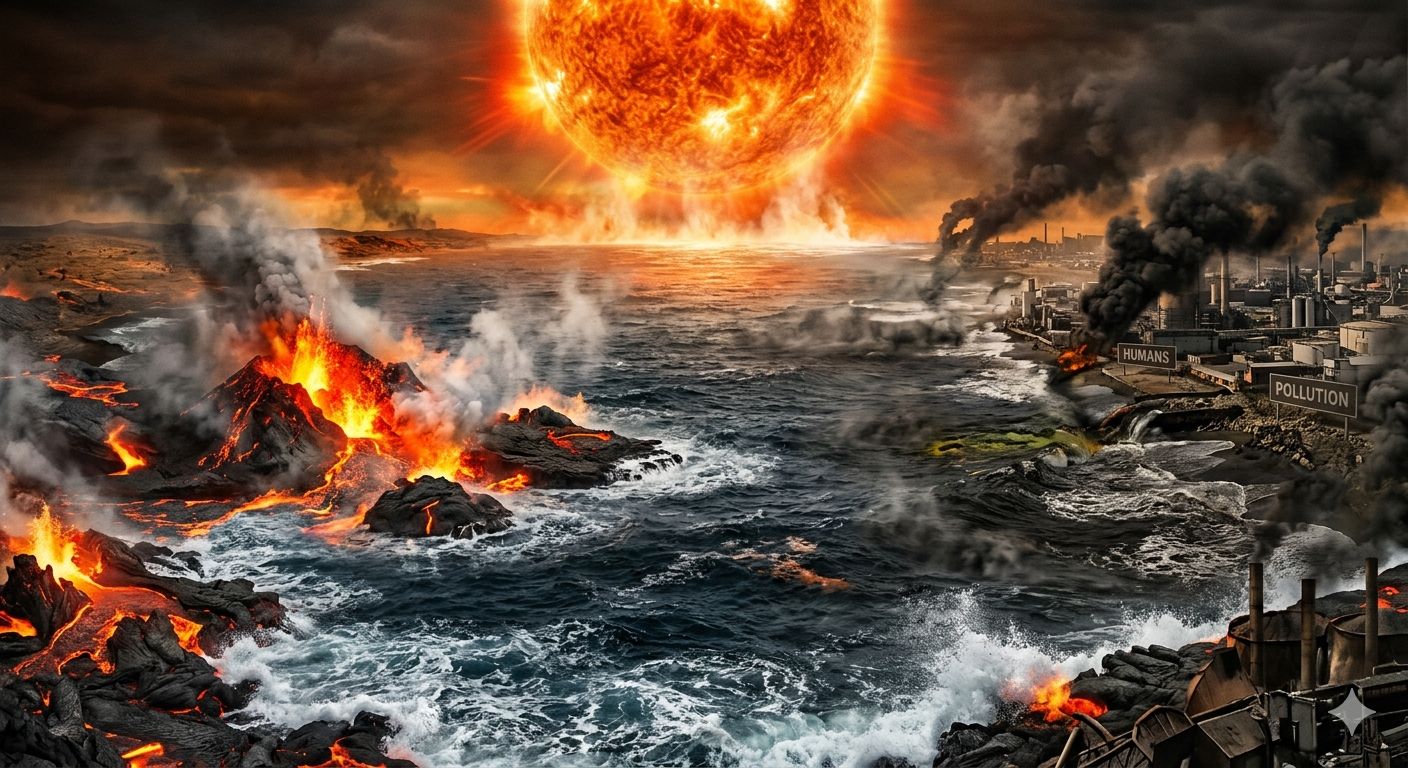
For generations, we have been taught that the Earth is a perfect, self-correcting machine. We are told that water never disappears – it simply cycles: rain falls, rivers flow to the sea, water evaporates into clouds, and the process repeats indefinitely. We are taught that the Earth’s core, which births new rock through volcanoes, is just one part of a balanced, eternal loop of creation and destruction. But if we take a step back from the narrow, 100-year perspective of human history and look at the planet as a whole, a different, more urgent truth emerges. The Earth is not a closed, infinite loop. It is a system under immense pressure, and the water that sustains life is the last warrior standing against a relentless tide of heat.
The Conflict of Two Fires
Our planet is being besieged by two sources of heat that never rest. From above, the Sun acts as a constant, intensifying force. It does not just provide light; it is a nuclear furnace that has been growing in power for billions of years. Its heat is the primary driver of evaporation, slowly stripping our surface of the moisture that life requires. From below, the molten core of the Earth is equally relentless.
Through the process of seafloor spreading, volcanoes and cracks in the ocean floor release massive amounts of liquid rock. While conventional science calls this “recycling,” we must look at the reality of the space it occupies. This magma displaces the ocean, and the intense heat forces the circulation of seawater into the deep crust, where it is often trapped or chemically bound into minerals, disappearing from the surface world forever.
The Myth of the “Perfect Cycle”
Many experts argue that because of this recycling, the ocean will never dry up. They point to the clouds and the rain as evidence of a system that can run forever. But this is a misinterpretation of reality. They are measuring the current state of the “battery,” not the rate at which it is draining. We are witnessing the drying of rivers, the recession of lakes, and the disappearance of glaciers. These are not merely seasonal fluctuations; they are the early ticks of a planetary countdown. When glaciers – the last great reservoirs of freshwater – melt into the sea, they are not being “replenished.” They are being spent. Once that fossil water is gone, there is no backup supply. We are living through the depletion of a finite resource, and the “cycle” is no longer a circle; it is a slow, one-way decline.
The Ocean: Our Last Warrior
In this narrative, the ocean is the hero. It is the vast, deep buffer that absorbs the Sun’s radiation and manages the internal heat of the Earth. It is the only thing standing between our home and the barren, scorched landscape of a dead planet. However, humanity’s role in this has been one of acceleration. Through industrial pollution and the destabilization of our atmosphere, we have turned up the heat on a warrior that is already fighting a war on two fronts – against the fire of the core and the fire of the sky. By failing to recognize the fragility of this defender, we are betraying the very force that makes our existence possible.
A Call to Awareness
We must move past the “short vision” of our own lifetimes. If we continue to believe that the Earth will simply “fix itself” through a perfect cycle, we will remain blind to the reality of the receding water.
Knowledge is our only defense. We must teach the coming generations that the Earth is not a gift that refills itself. It is a fragile system that requires our stewardship, respect, and, above all, the courage to face the truth: the countdown has begun, and the “last warrior” needs us to stand by its side before the final drop is lost. This article is intended to provoke thought and encourage a deeper look at how we understand our planet’s future. We are not just inhabitants of Earth; we are witnesses to its history and guardians of its remaining water.
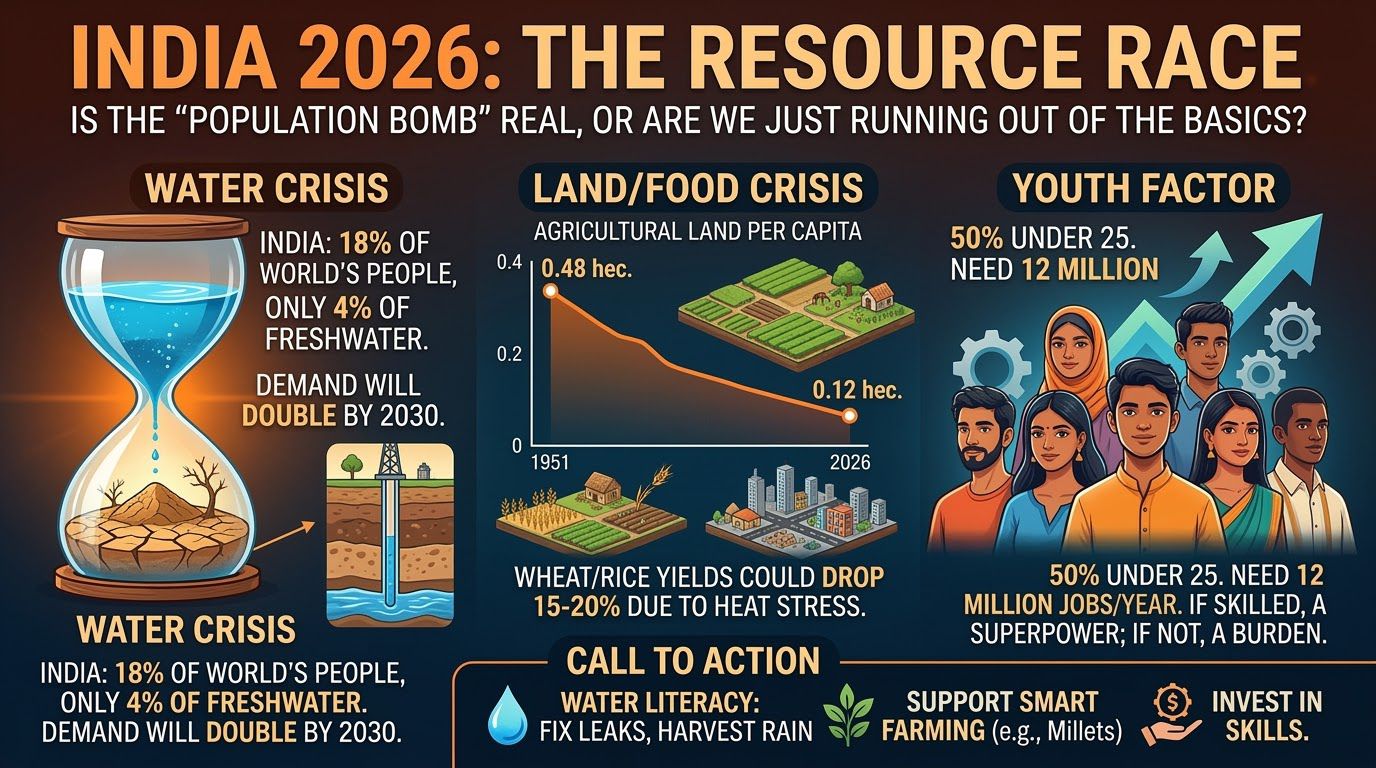
INDIA 2026: THE RESOURCE RACE
Is the “Population Bomb” real, or are we just running out of the basics
The Water Crisis
GROUNDWATER BANKRUPTCY
India has 18% of the world’s people but only 4% of its freshwater.
By 2030, our water demand will be DOUBLE the supply.
In cities like Delhi and Bengaluru, we are digging deeper every day, but the “bank” is running dry.
The Land/Food Crisis
LESS LAND, MORE MOUTHS
In 1951, one person had 0.48 hectares of land. Today, it’s just 0.12 hectares.
Climate change is hitting our “Thali”—wheat and rice yields could drop by 15-20% due to heat stress.️
The crisis isn’t just “Do we have food?” but “Is the food nutritious and affordable?”
The Youth Factor
A NATION OF YOUNG MINDS
50% of India is under 25. This is our superpower OR our biggest risk.
We need 12 million jobs every year just to keep up.
The “Main Thing”: If we don’t skill our youth for 2026’s AI and Green economy, the “Demographic Dividend” becomes a “Demographic Burden.”
The Call to Action
WHAT CAN WE DO?
Water Literacy: Fix the leaks, harvest the rain.
Support Local/Smart Farming: Climate-resilient crops (like Millets) are the future.
Invest in Skills: Degrees aren’t enough; real-world skills are the new gold.
Closing
THE FUTURE ISN’T WRITTEN YET. IT’S MANAGED
Share this if you think we need to talk more about RESOURCES than just numbers.
The “Scary” part of India’s population isn’t the number of babies being born—it’s the speed at which we are using up our Earth.
In 2026, we are standing at a crossroads. We have the youngest, most energetic workforce in history, but we are facing “Groundwater Bankruptcy” and shrinking farmland.
The future of India depends on how we manage our Water, Land, and Skills. It’s time to move from “Survival” to “Sustainability.”
What do you think is the biggest challenge for India in the next 10 years? Let’s discuss below.
#India2026 #PopulationCrisis #SaveWater #ResourceManagement
Tuting, Arunachal Pradesh
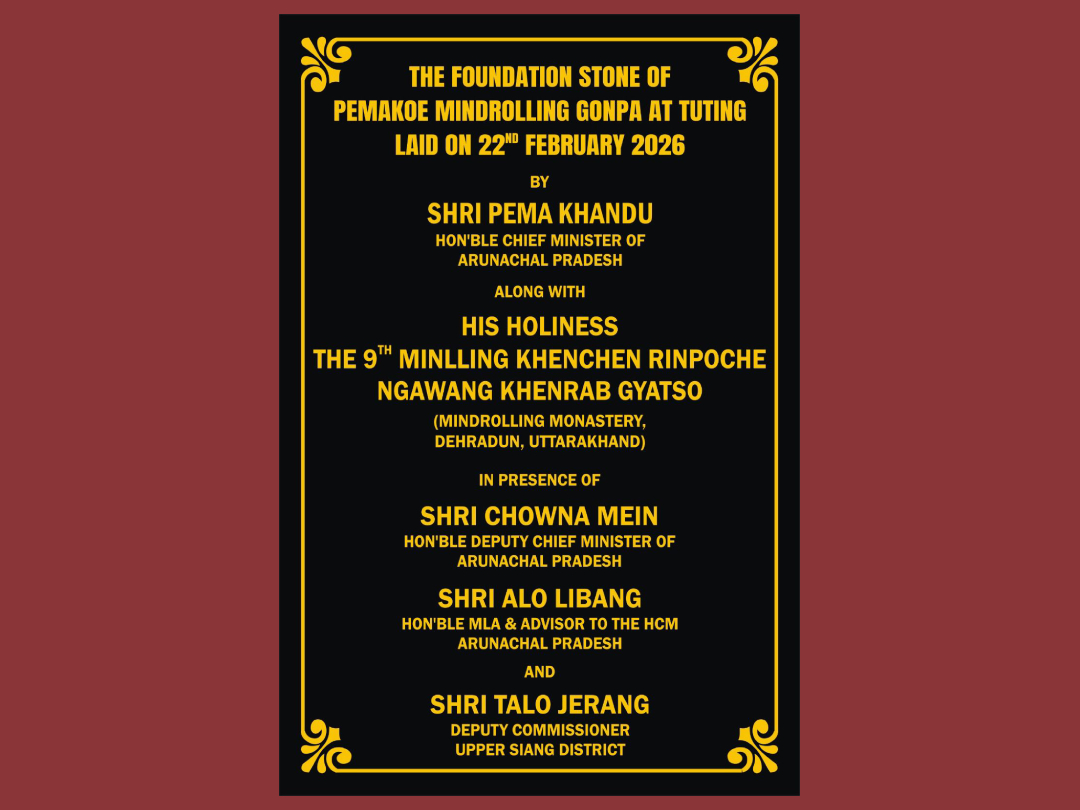
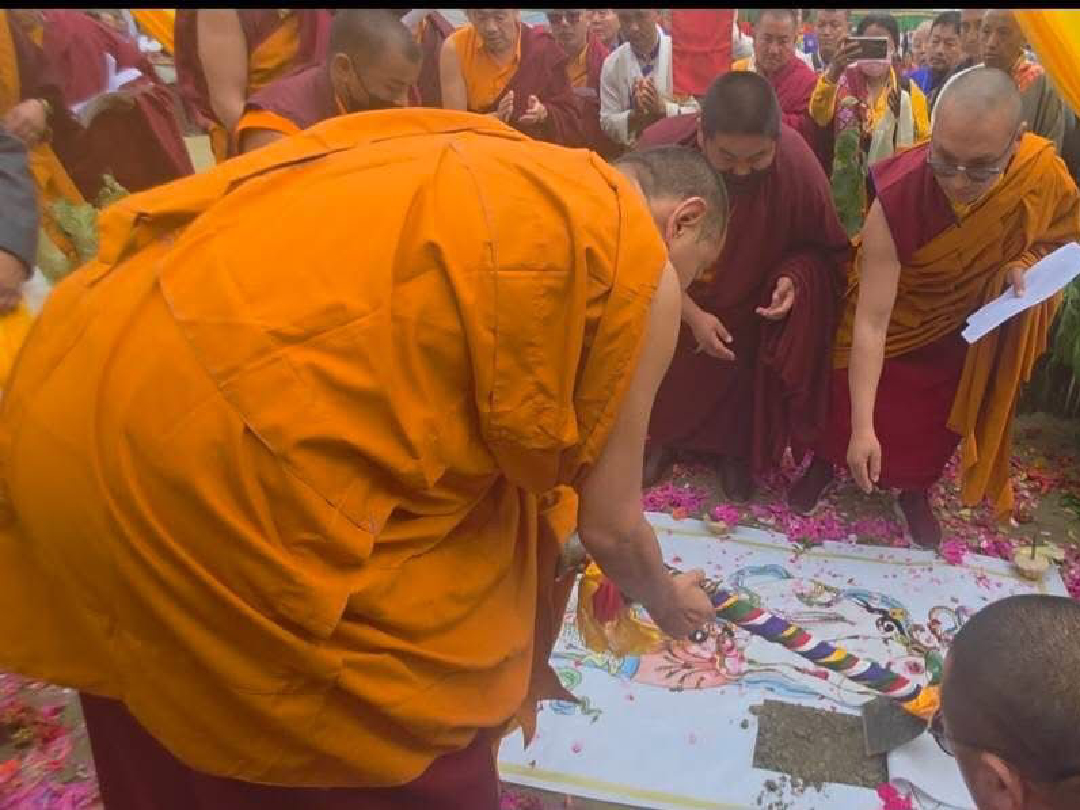
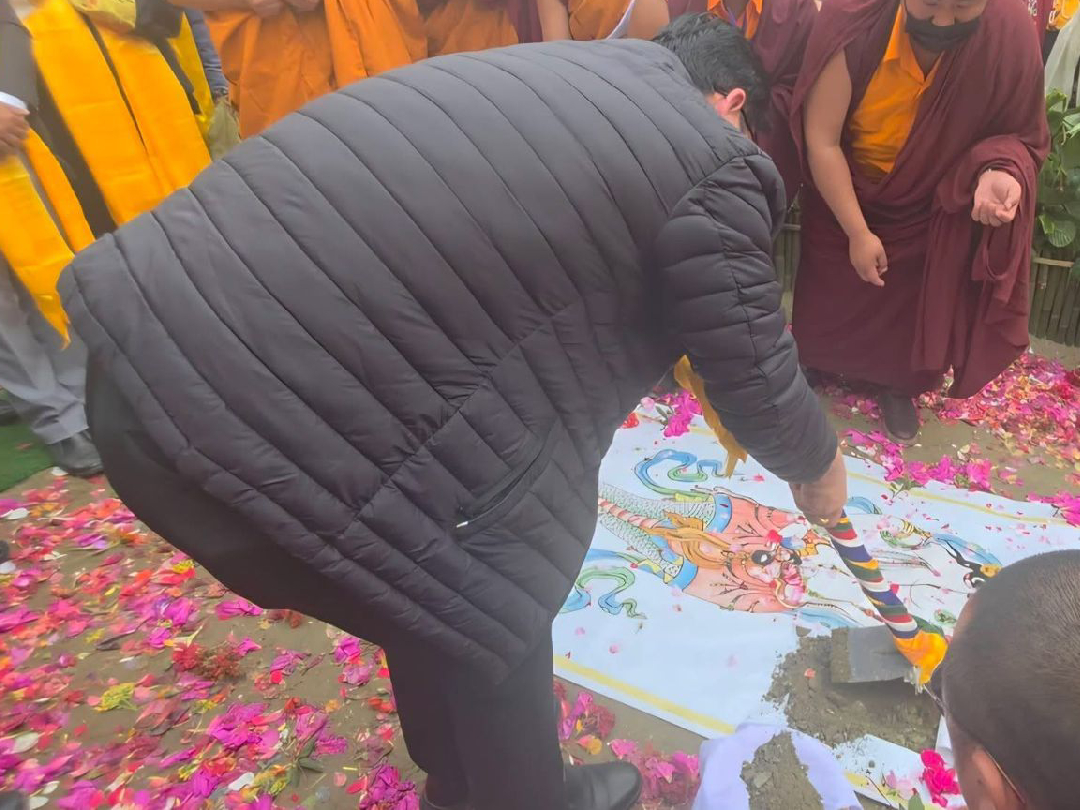
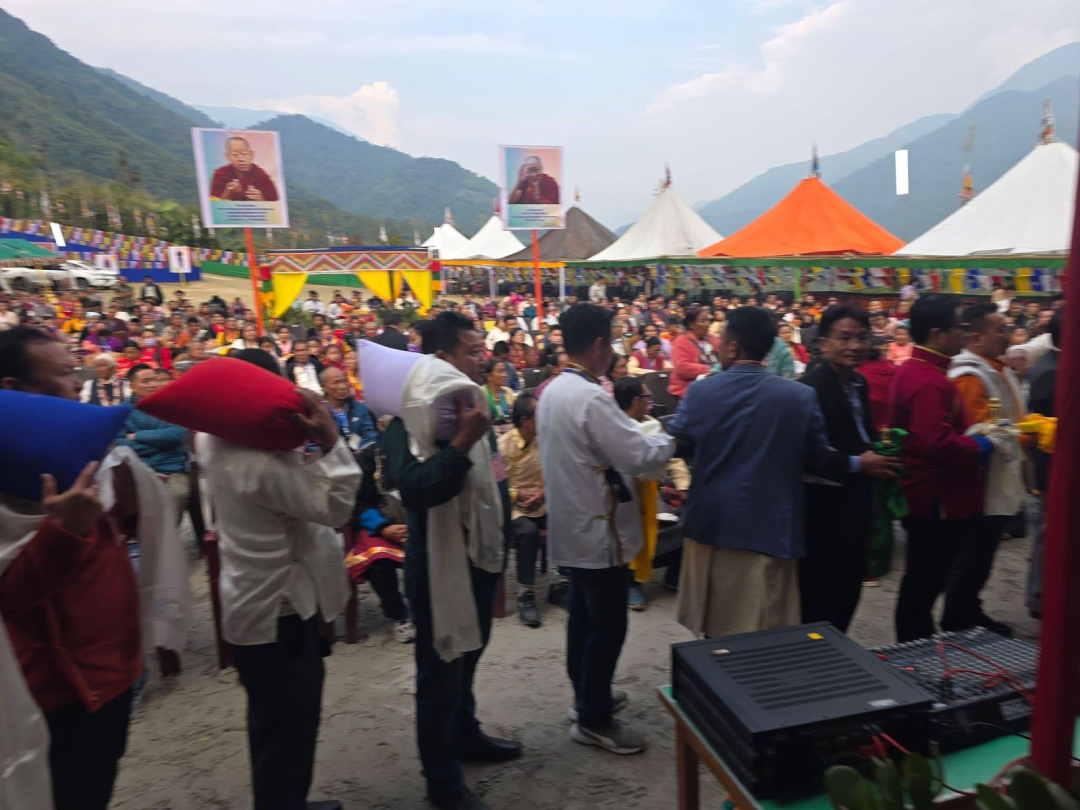
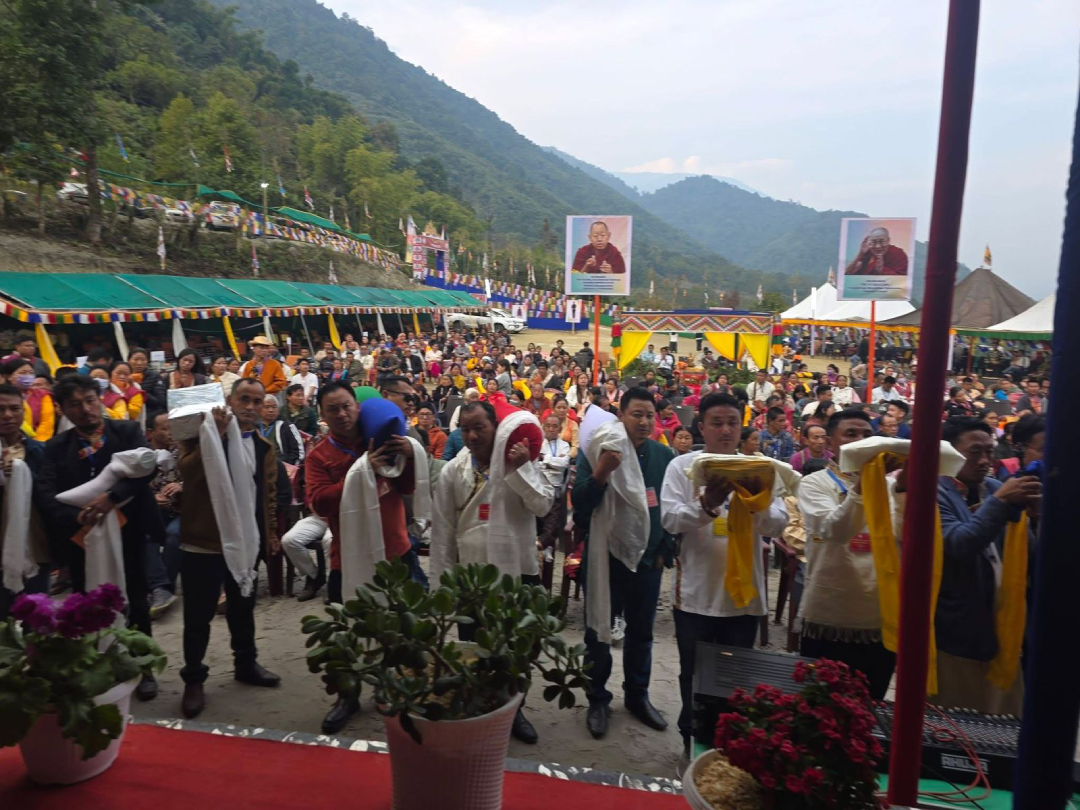
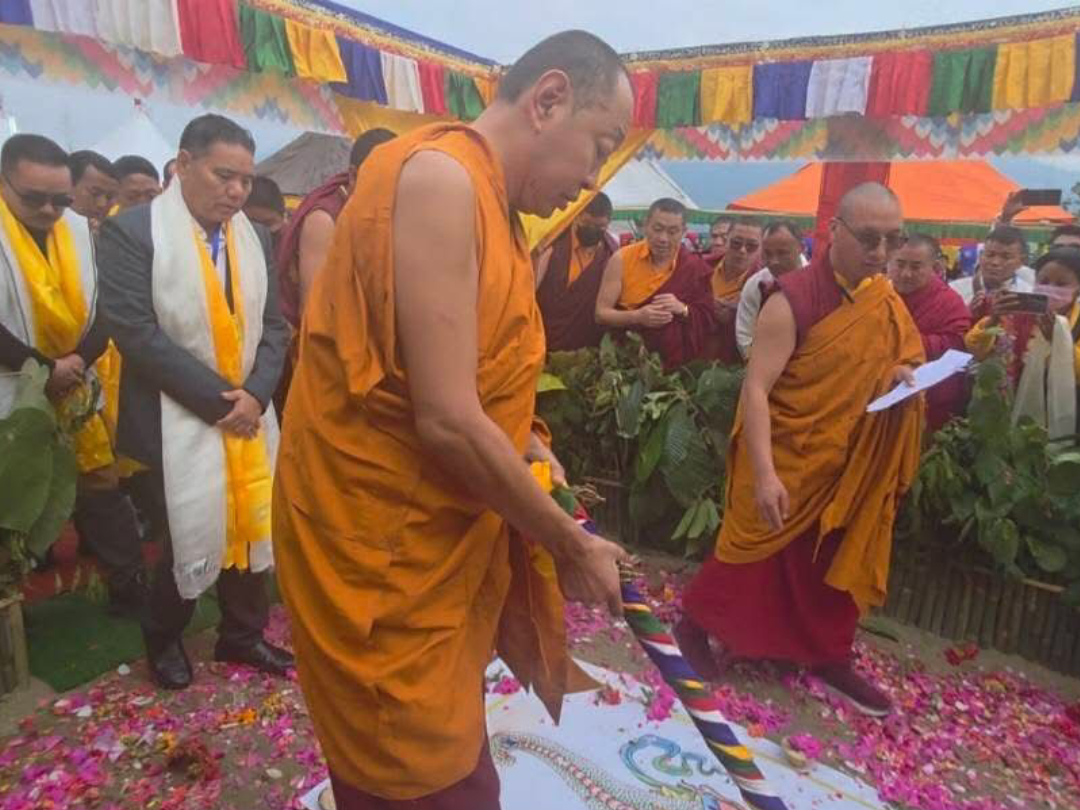
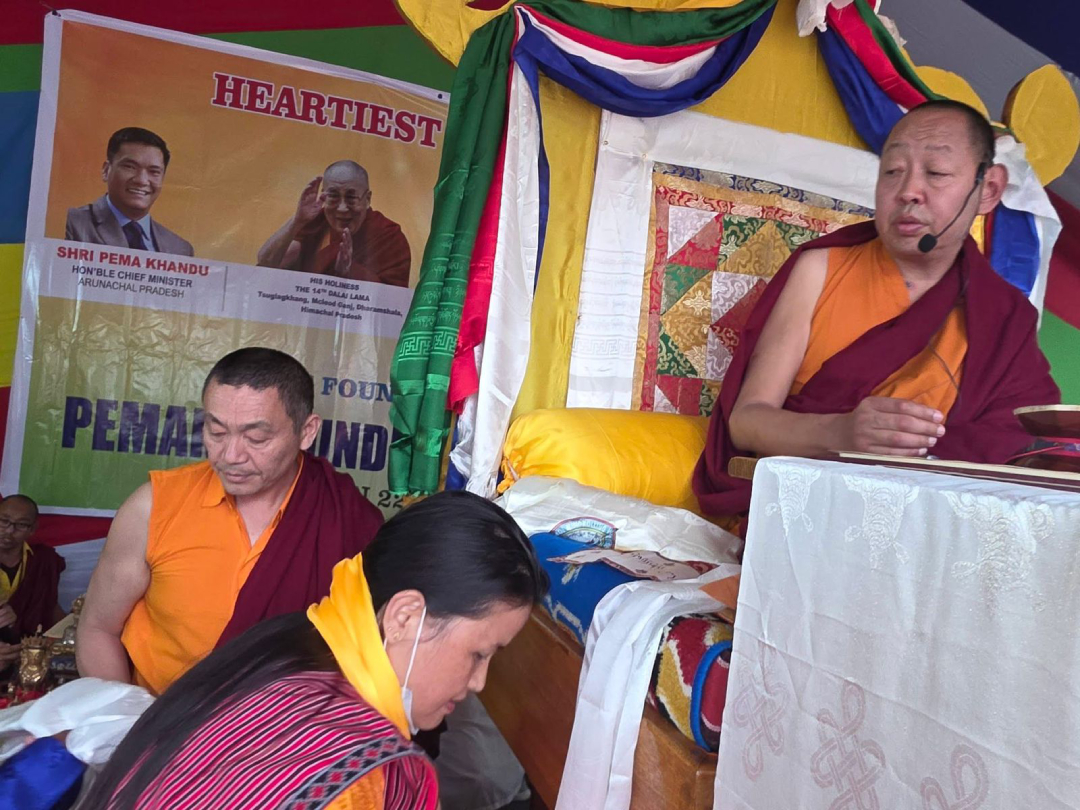
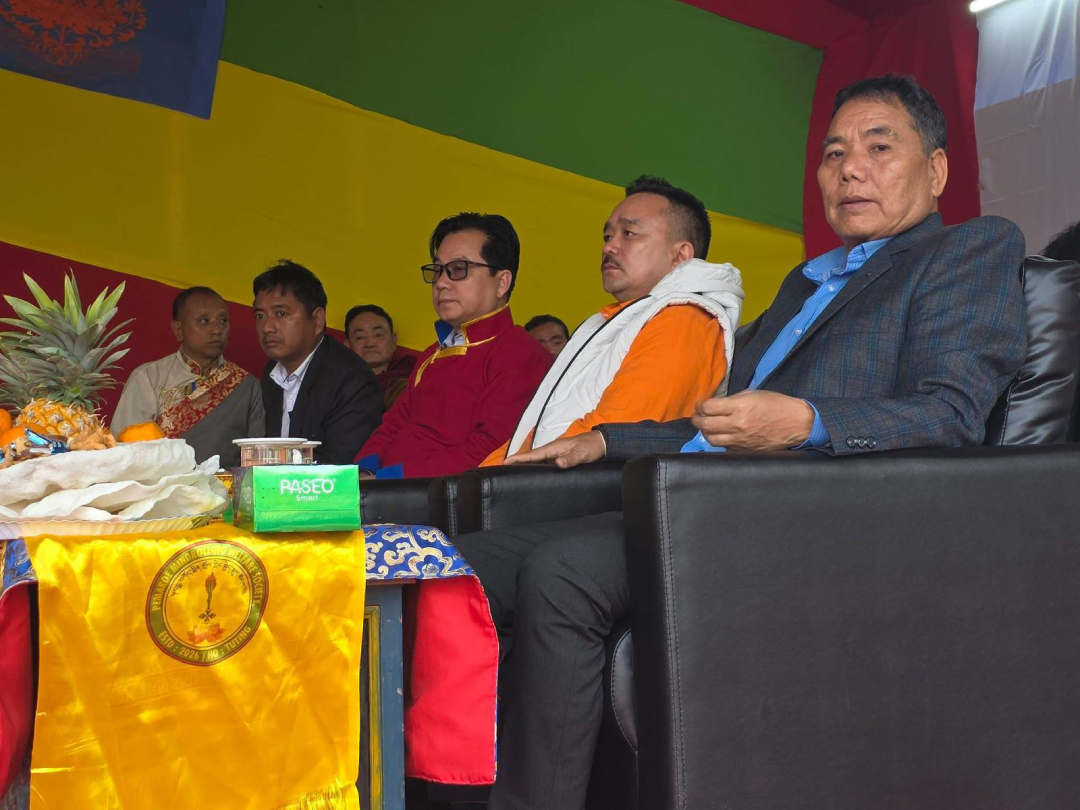
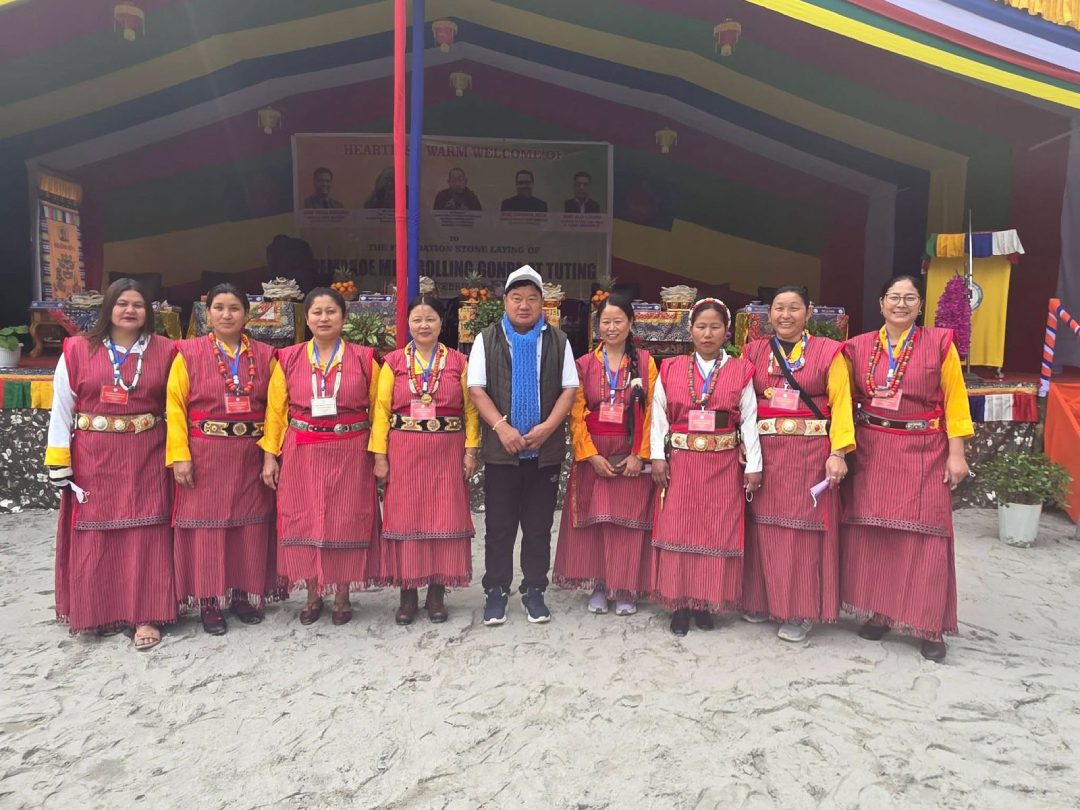
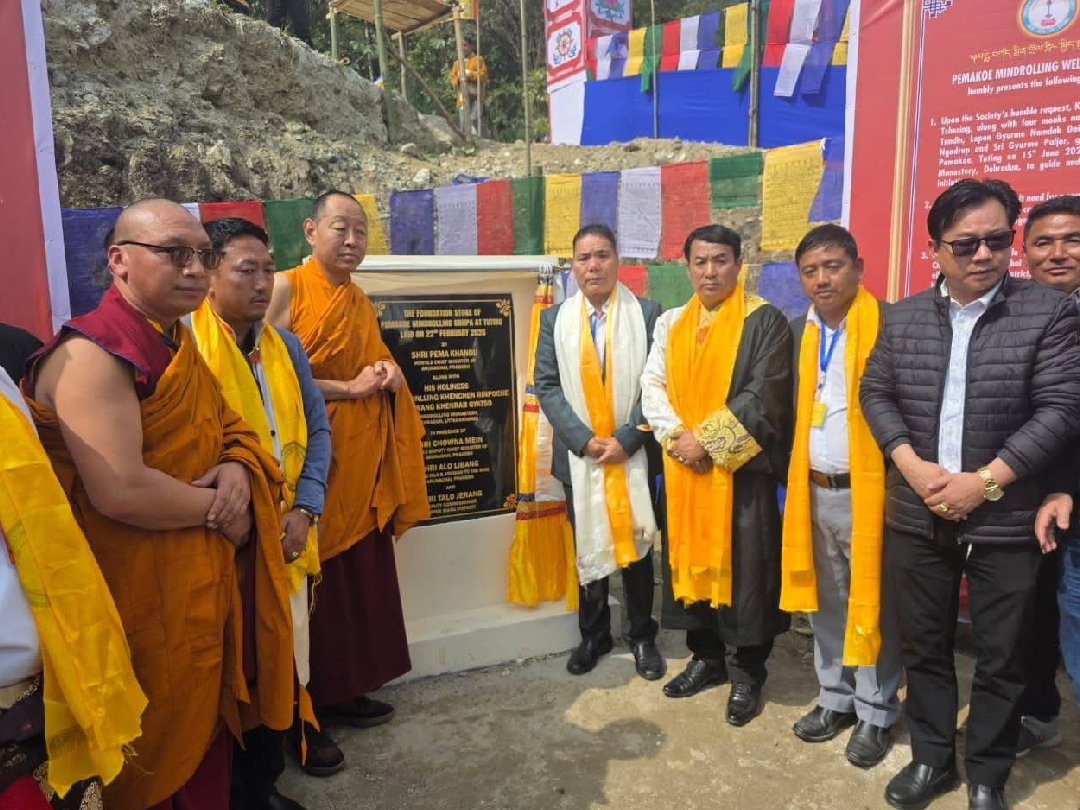
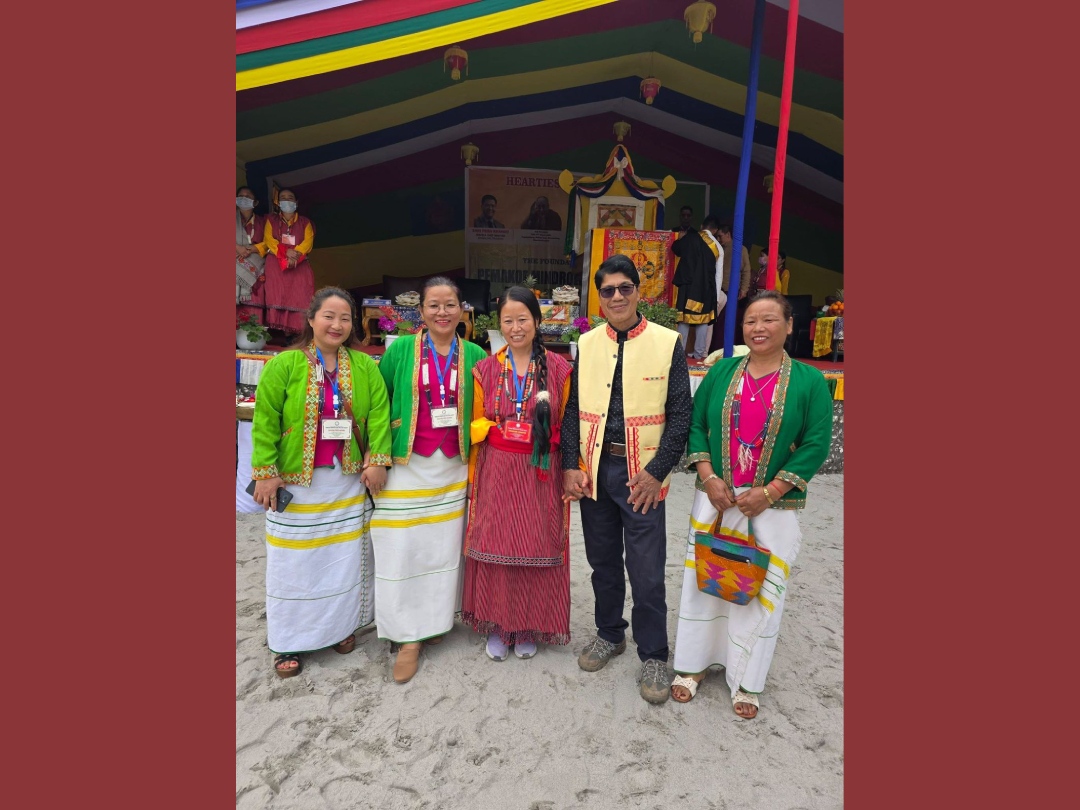
A Historic Milestone in the “Hidden Land”: Mindrolling Monastery Foundation Ceremony in Pemako
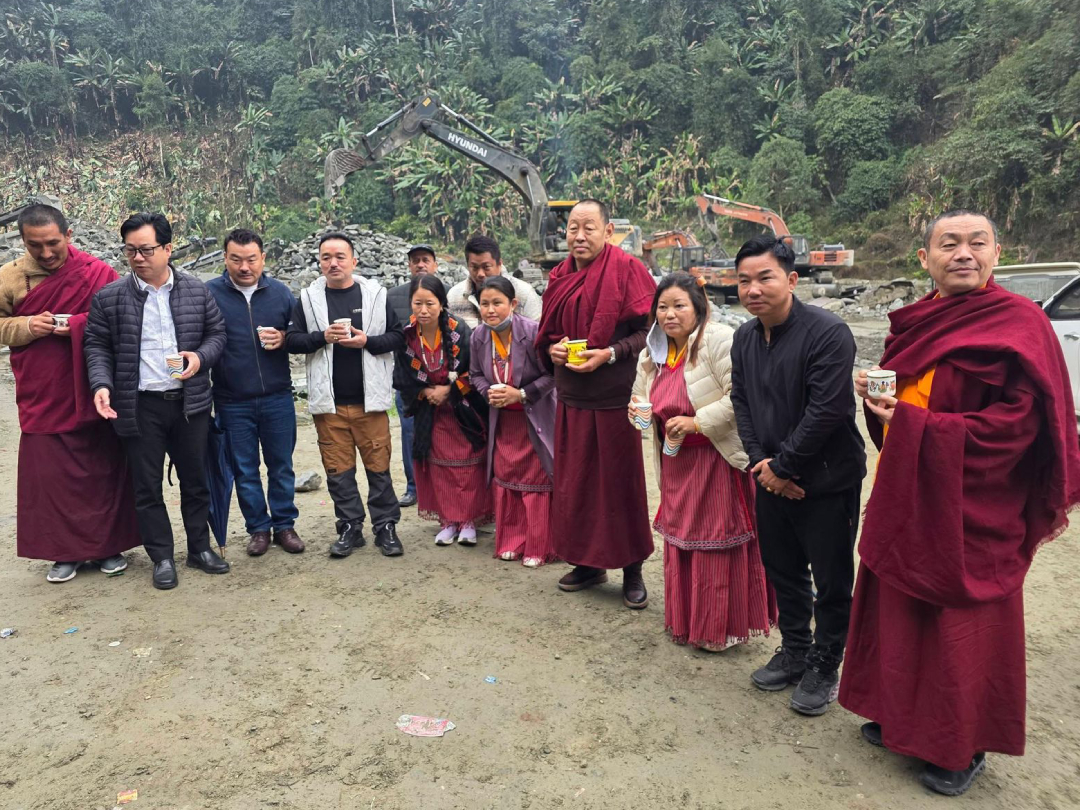
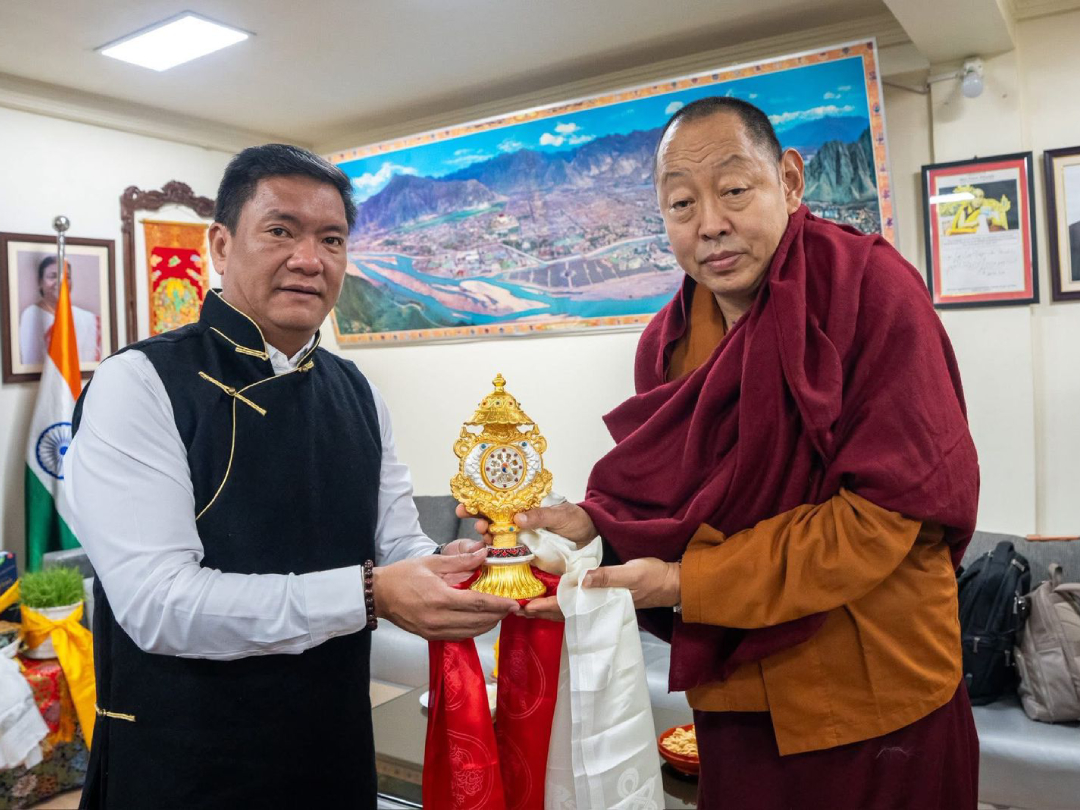
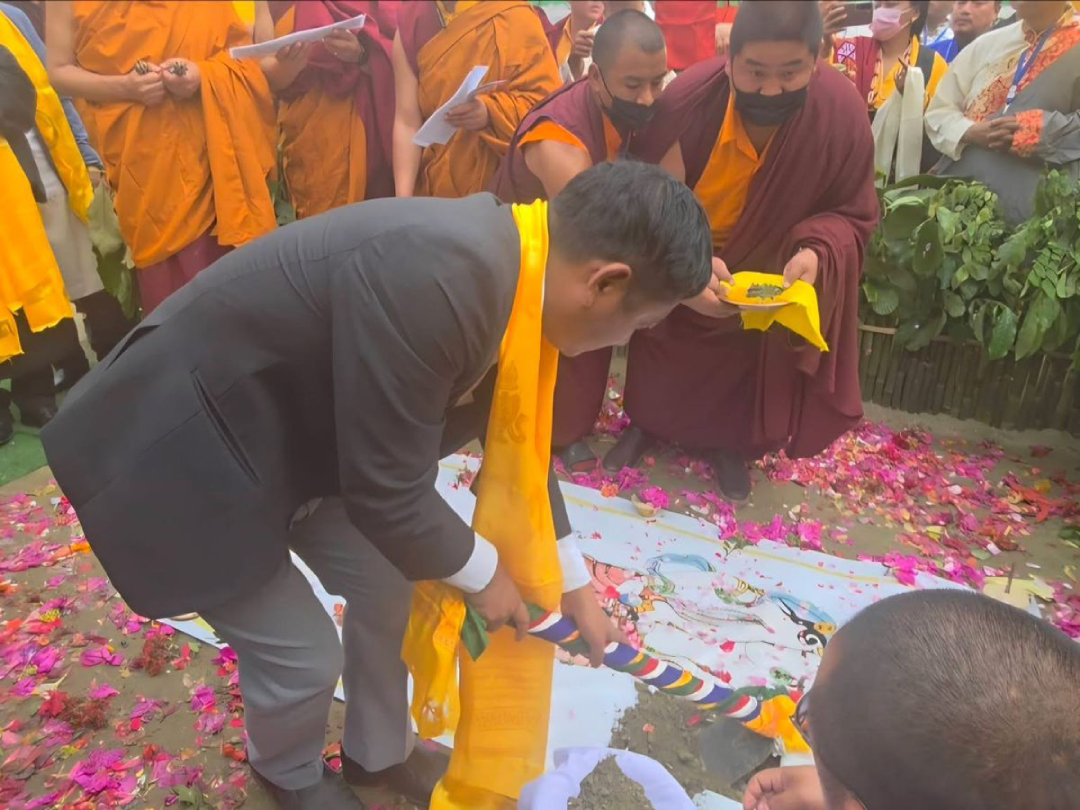
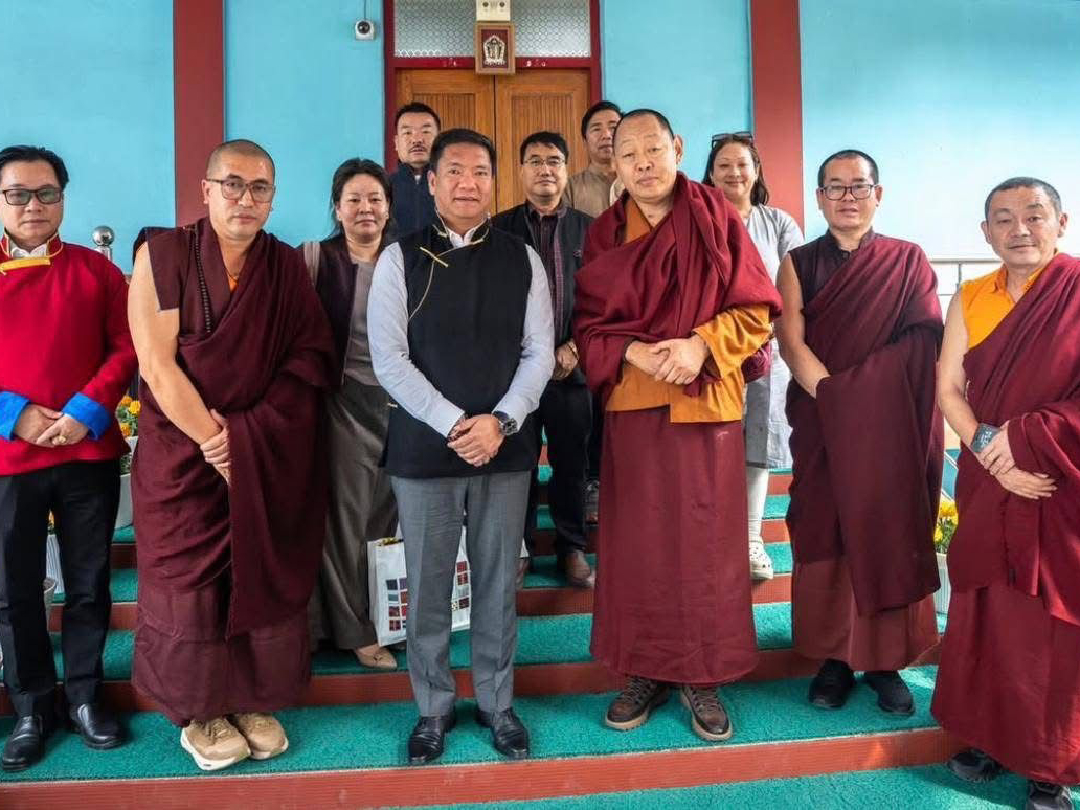
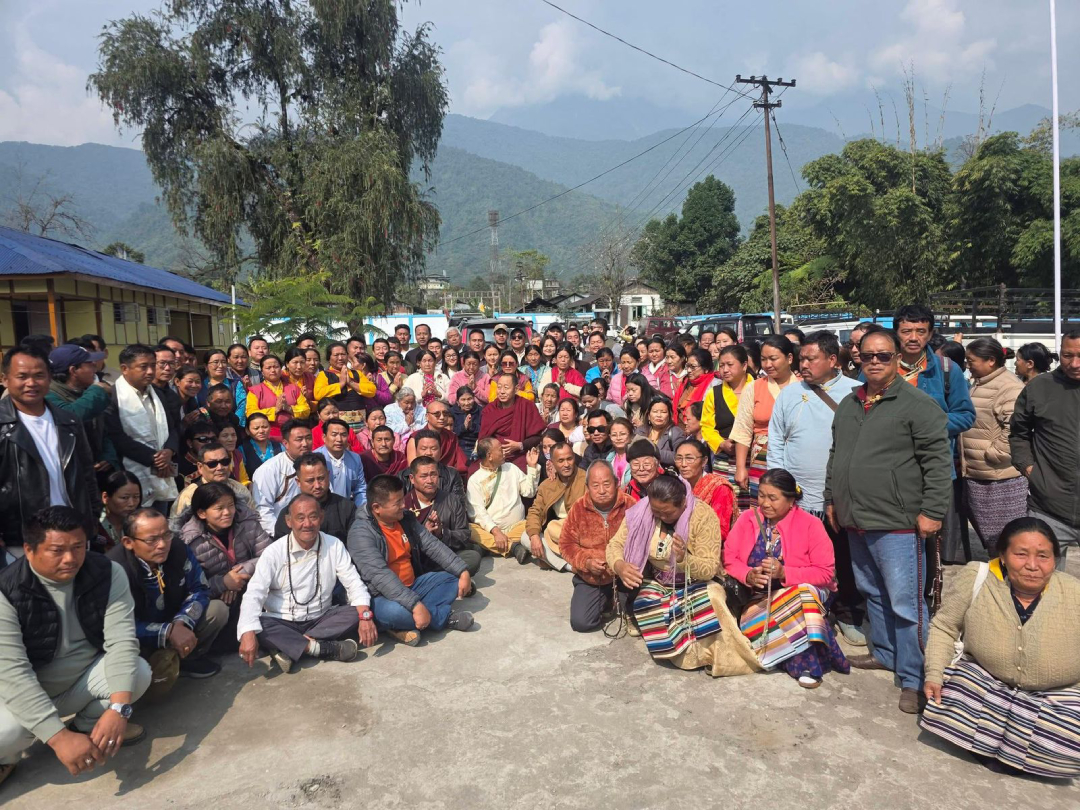
The sacred landscape of Tuting witnessed a landmark event in the history of the Mindrolling lineage. His Eminence Rinpoche, accompanied by his entourage, arrived in the Upper Siang district for the auspicious groundbreaking ceremony and foundation stone laying of the new Mindrolling Monastery. This project marks a profound moment as the very first Mindrolling establishment in this region, and notably, Rinpoche’s first historic visit to these sacred grounds.
Grateful Acknowledgments
The Mindrolling Sangha extends its deepest gratitude to Hon’ble Chief Minister Shri Pema Khandu and Hon’ble MLA Shri Alo Libang for their unwavering support. Their vision for the development of the Pemako region and their commitment to the spiritual and cultural well-being of its people have made this project possible.
The Inauguration Ceremony
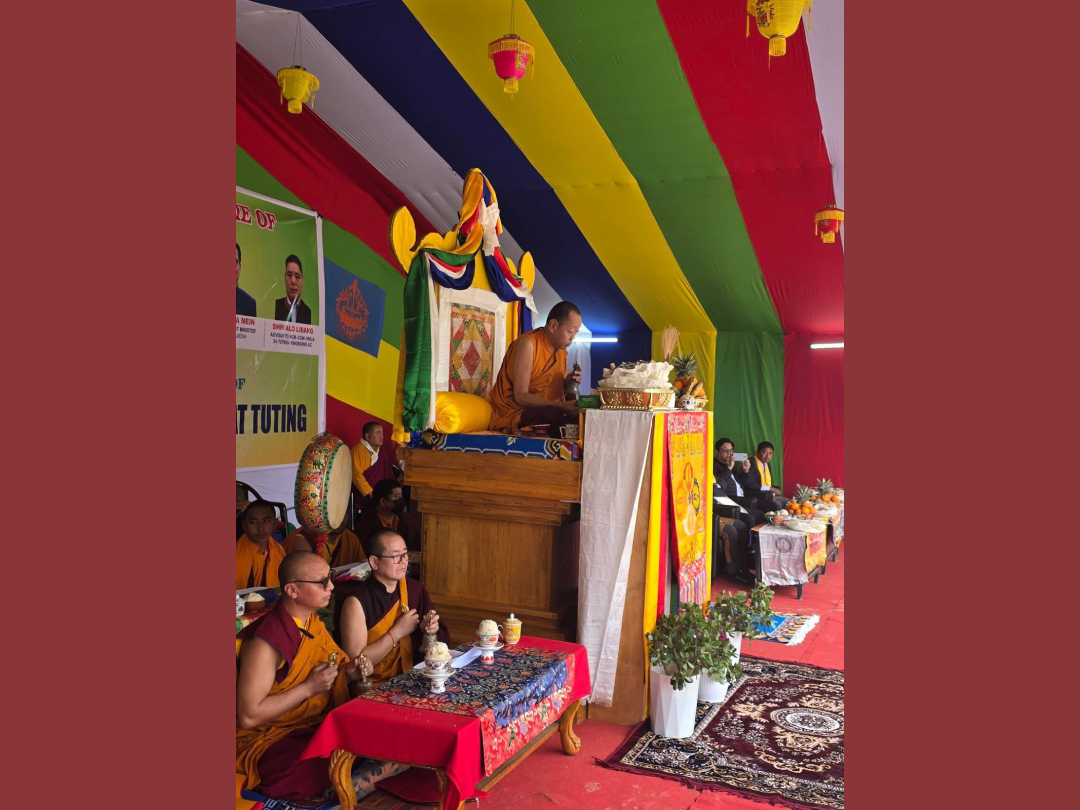
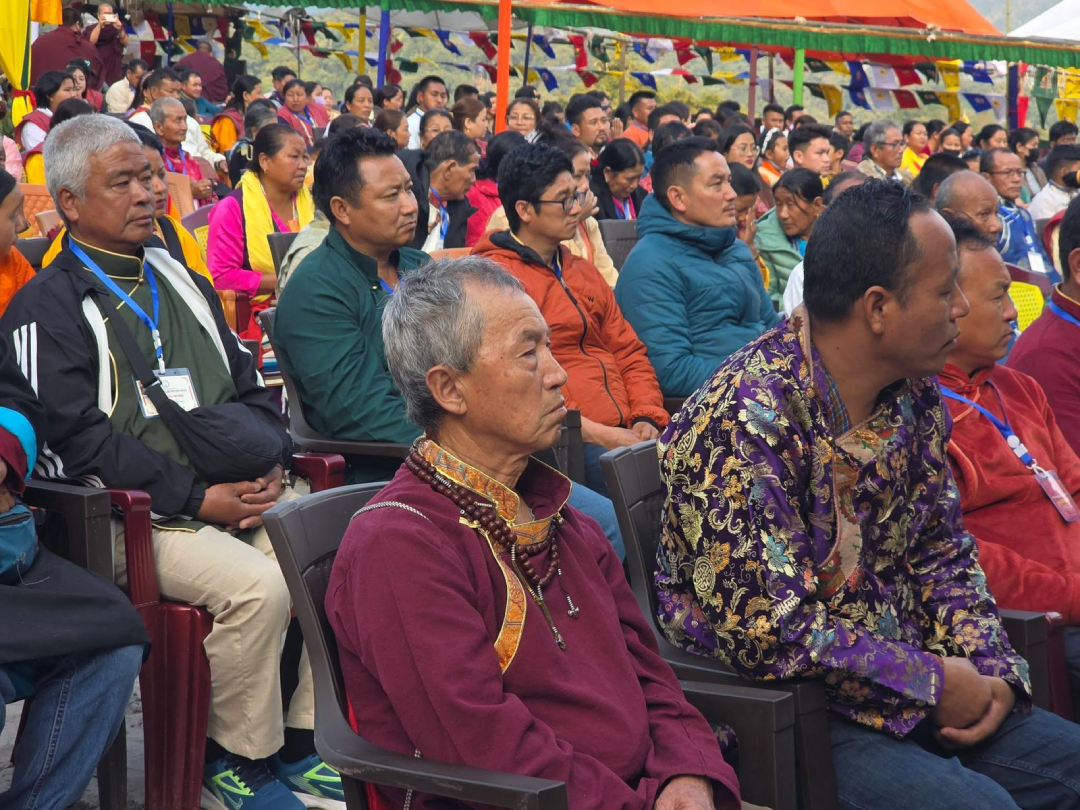
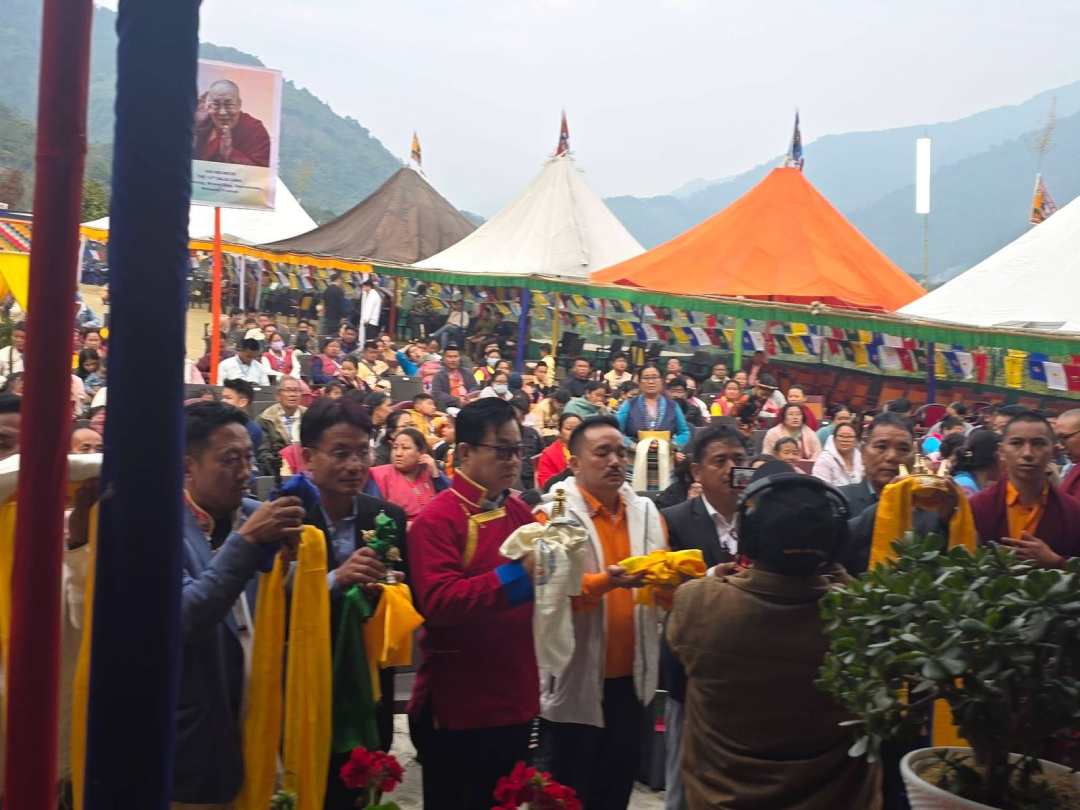
The foundation-laying ceremony was presided over by Rinpoche in the presence of several distinguished dignitaries, reflecting the importance of this project for both the state and the spiritual community. Honored guests included:
Shri Alo Libang, Hon’ble MLA and Advisor to the Hon’ble Chief Minister.
Shri Tarh Tarak, Hon’ble Chairman, State Food Commission.
Shri Nima Sangey, Chairman, Resource Mobilization & Programme Implementation (Dept. of Finance, Planning & Investment).
Shri Pandov Perme, ADC Tuting.
Following the formal inauguration, the atmosphere turned to one of deep spiritual devotion. In the afternoon, Rinpoche bestowed a Long Life Wang (Empowerment/Initiation) upon the gathered devotees. The day concluded with vibrant cultural celebrations, featuring traditional songs and dances offered by the local community.
The Sacred Heritage of Pemako
To understand the significance of this new monastery, one must look to the history of the land itself.
Pemako: The Supreme Secret Land of Guru Rinpoche
In the heart of the Eastern Himalayas lies Pemako, known to Tibetan Buddhists as the “Great Blissful Lotus Isle.” While it is geographically remote, for Buddhist practitioners, Pemako is a Beyul-a hidden sacred sanctuary where the physical and spiritual worlds meet.
The King of Hidden Lands
According to ancient texts, Pemako was consecrated in the 8th century by Guru Padmasambhava (Guru Rinpoche). Foreseeing future times of conflict and spiritual darkness, he used his miraculous powers to “open” special hidden lands to protect the Dharma. Among all such sanctuaries, Pemako is revered as the “King of Beyuls.” It is taught that simply setting foot upon this holy soil with a pure heart can purify lifetimes of negative karma and accelerate the journey toward enlightenment. The establishment of the Mindrolling Monastery in Tuting ensures that this ancient spiritual legacy continues to flourish, providing a beacon of peace and wisdom for generations to come
Happy Lunar/Losar New Year
17th – 18th February
As the new moon rises and we welcome the Year of the Horse, my heart is full of gratitude for the beautiful connections we share. May this year be more than just a change of the calendar—may it be a gentle blooming of your inner peace. I pray that your days are filled with the kind of laughter that warms the soul, and your heart remains as light as a summer breeze.
May every step you take lead you toward your dreams, and may you always find a reason to smile, even in the smallest moments. Let us walk together into this new year with kindness in our hands and love in our hearts.
Tashi Delek! Wishing you a sweet and wonderful New Year.”
With all my love and blessings,
Khenchen Rinpoche.
THE ROAR OF 358 BEGINS NOW
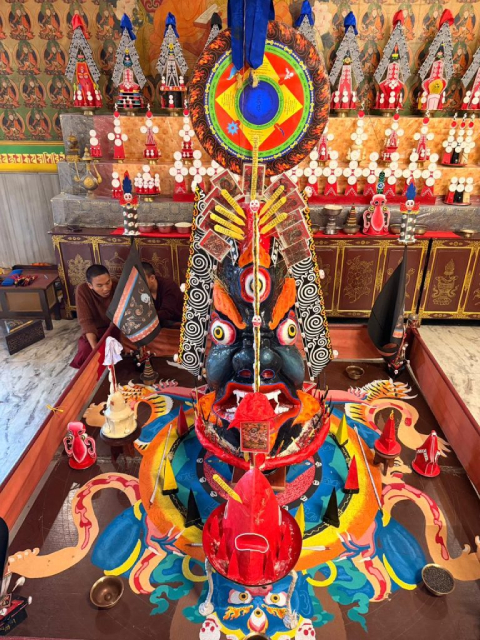
Today, a powerful assembly of 358 monks in Dehradun unites for a massive 7-day Yamantaka retreat. As the lunar year draws to a close, we enter the sacred Gutor period-the time for casting away all obstacles, illnesses, and negativities of the past. The collective energy of 358 chanting voices is a thunderous force, building a “vajra fence” of protection for the New Year to come. We dedicate this practice with fierce compassion to clear the energy of the “Old Century”: “By the thunderous voice of 358 Monks, chanting the Ancient Song of Power! We summon the presence of Yamantaka, the Diamond Terrifier, the Slayer of Death! HUM!.
With the weapon of ultimate wisdom, we smash the iron walls of suffering! We burn the karma of the Old Century into ash! We sever the roots of all fear and attachment! I dedicate this exploding energy to all sentient living beings- May every obstacle be crushed! May every life force be invincible! May the shadows of the past be utterly destroyed! By this Truth, may all beings rise-fearless, protected, and triumphant-into the clear light of freedom!” Join us in spirit as we clear the path. May all beings find peace.
37th Ngagyur Nyingma Monlam Chenmo
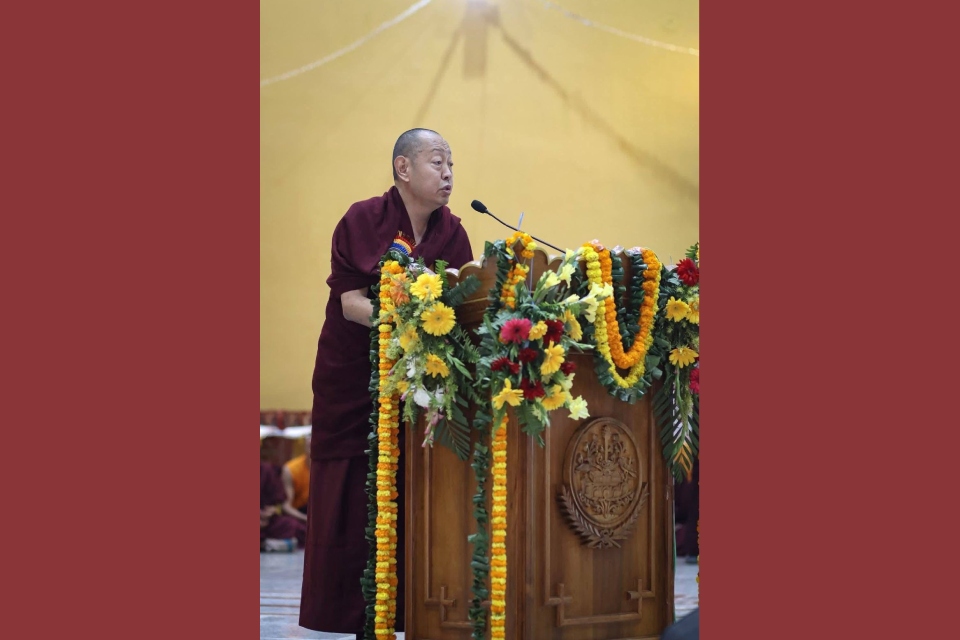
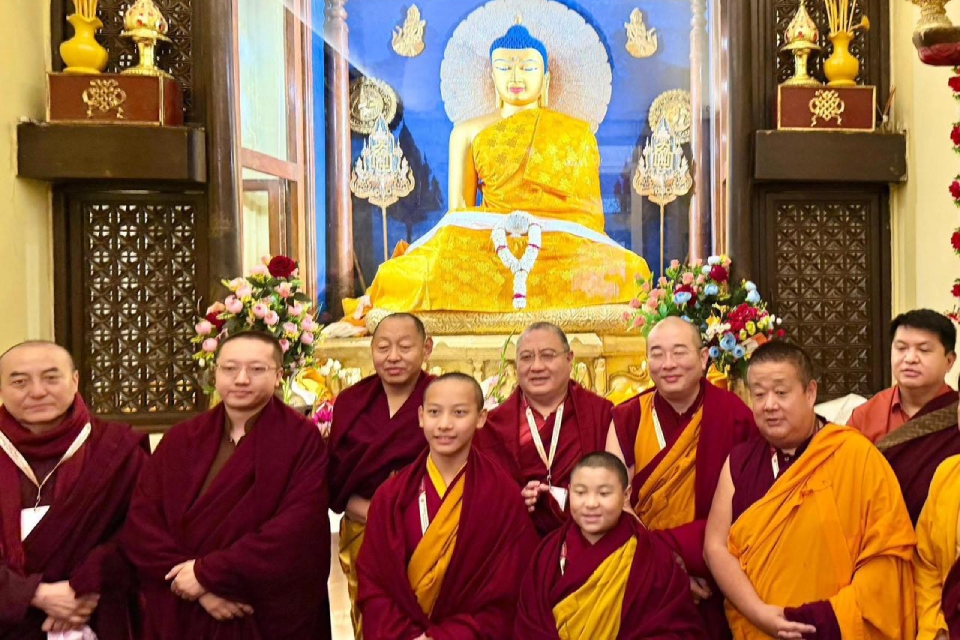
The 37th Nyingma Monlam Chenmo, also known as the World Peace Prayer, was successfully held from January 19th to January 28th. The event, which brings together devotees from around the world, was marked by the inauguration of the Padmasambhava Prayer Hall.
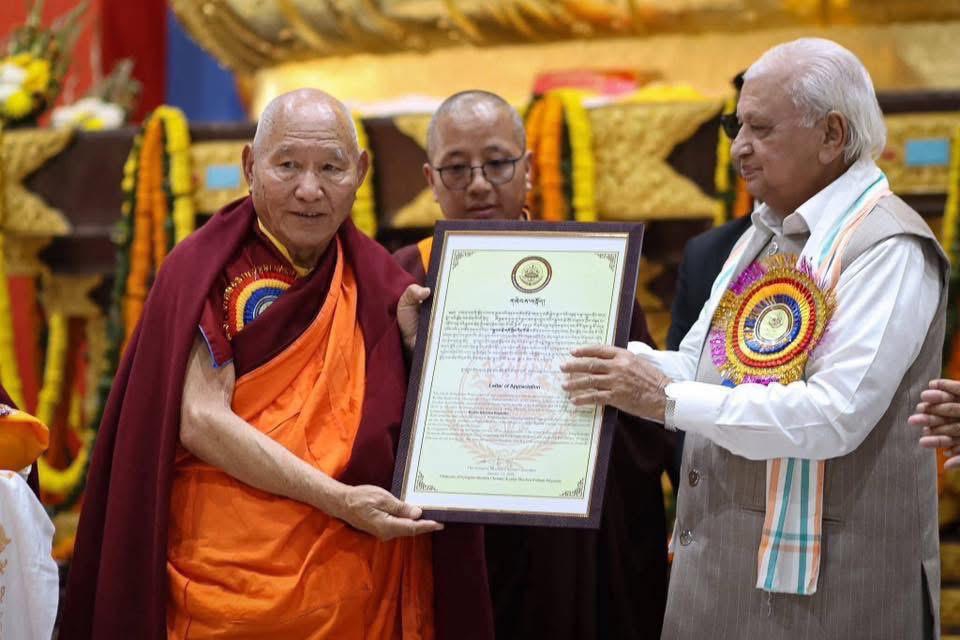
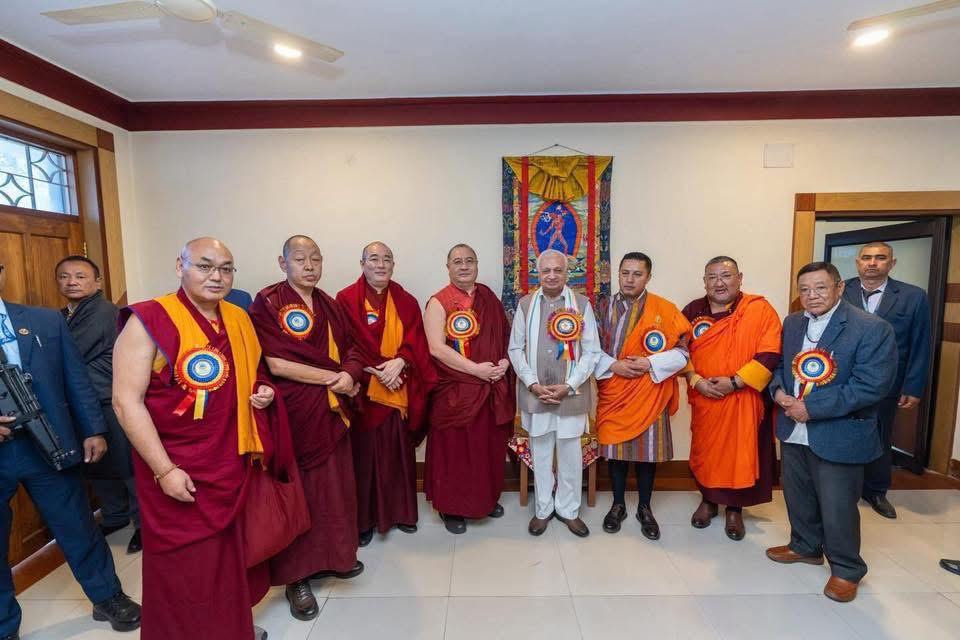
The ceremony was graced by the presence of esteemed guests, including the Chief Guest, Shri Arif Mohammad Khan, Governor of Bihar. The Monlam Chenmo, a significant event for peace and harmony, concluded on January 28th, leaving a profound impact on all attendees.
We extend our gratitude to all participants and guests who contributed to the success of this auspicious occasion.
Vajrasattva Wang, Taiwan
14th December, Rinpoche graciously accepted the invitation from Kathog Ngayap Ling, Kaohsiung, Southern Taiwan to bestow the Vajrasattva Wang (initiation). As requested, Rinpoche imparted the empowerment, meticulously explaining the profound significance and purpose of each initiation pertaining to the body, speech, and mind practices, guiding the assembly on integrating these sacred teachings into their spiritual journey.
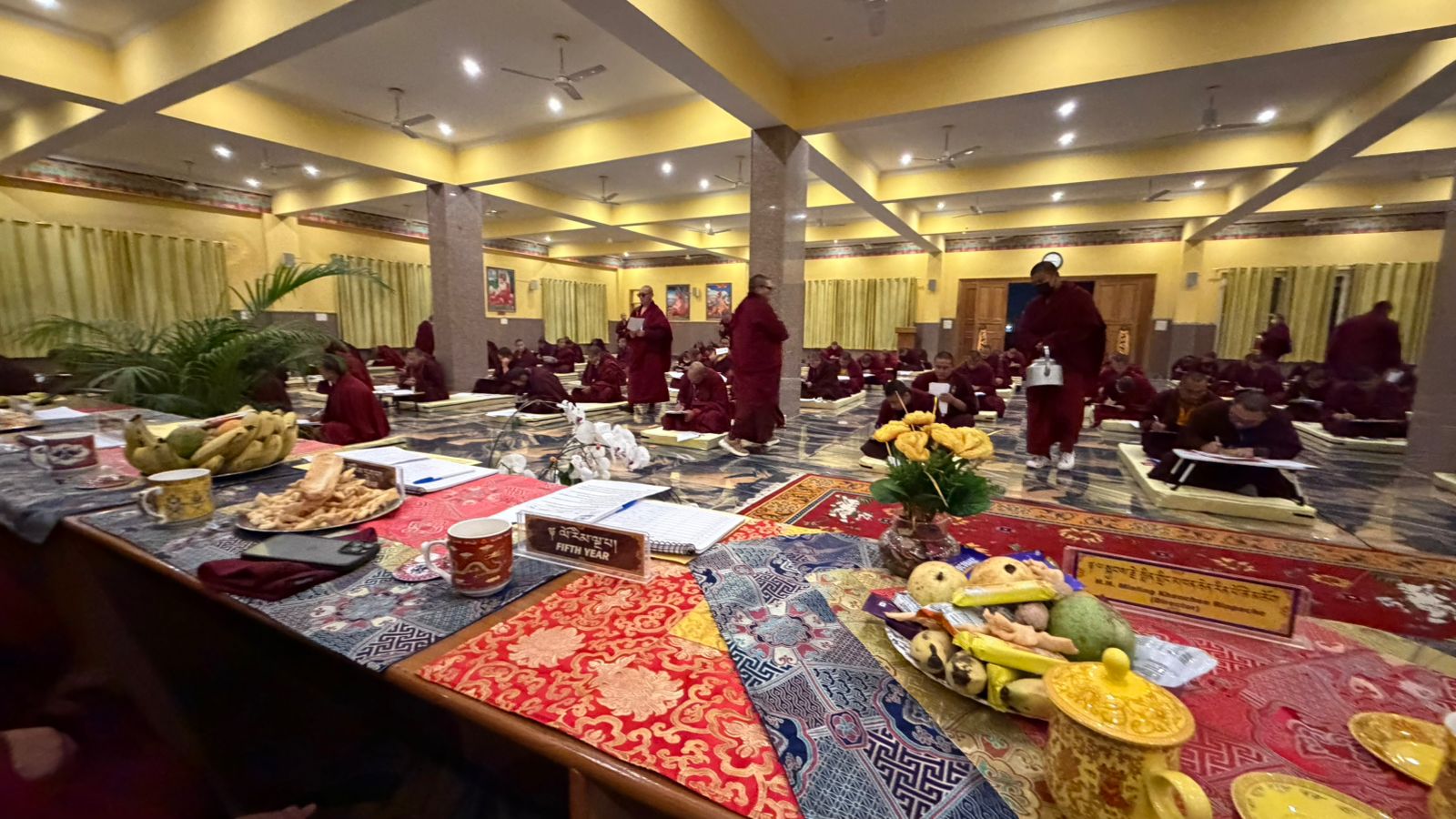
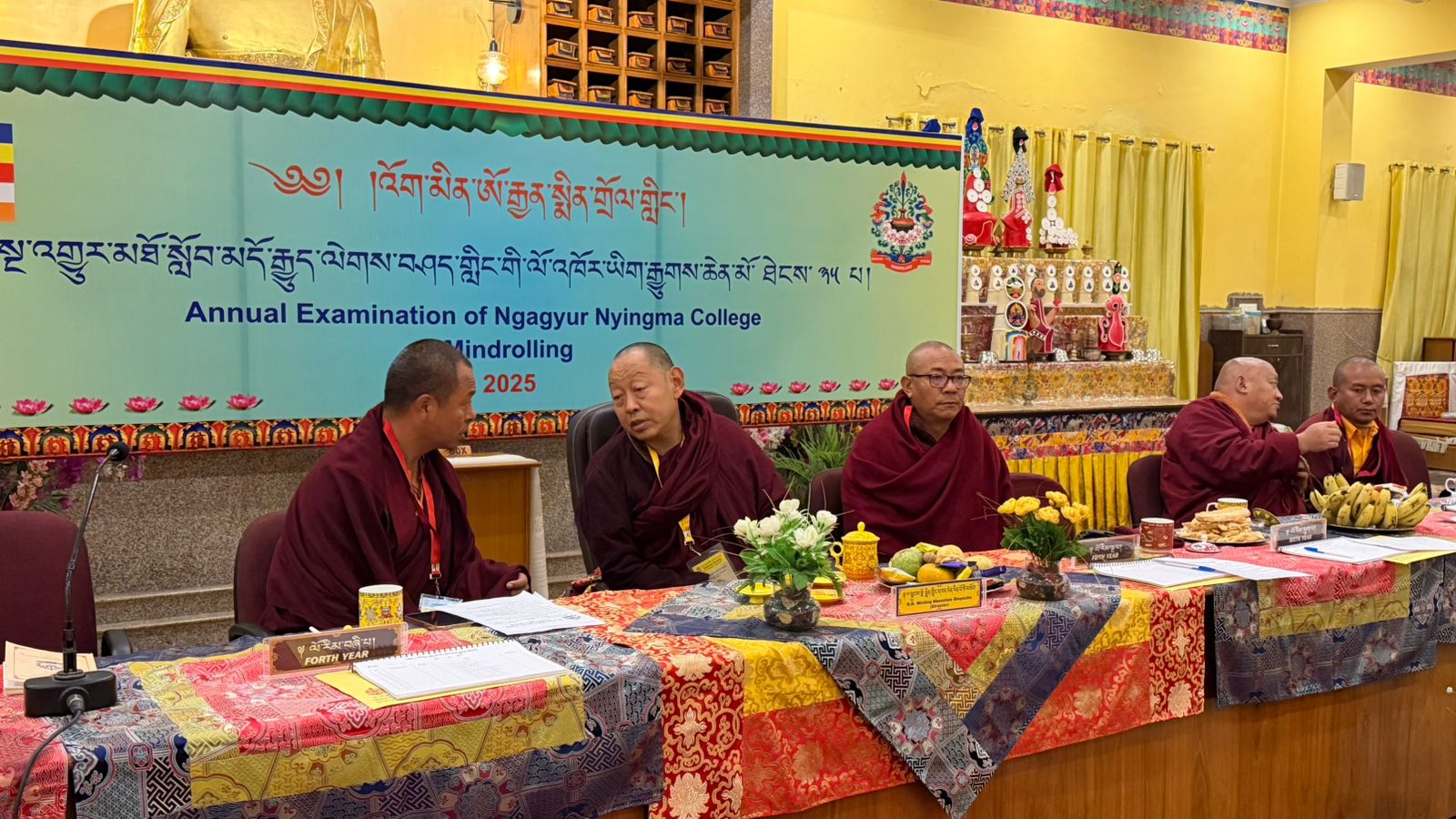
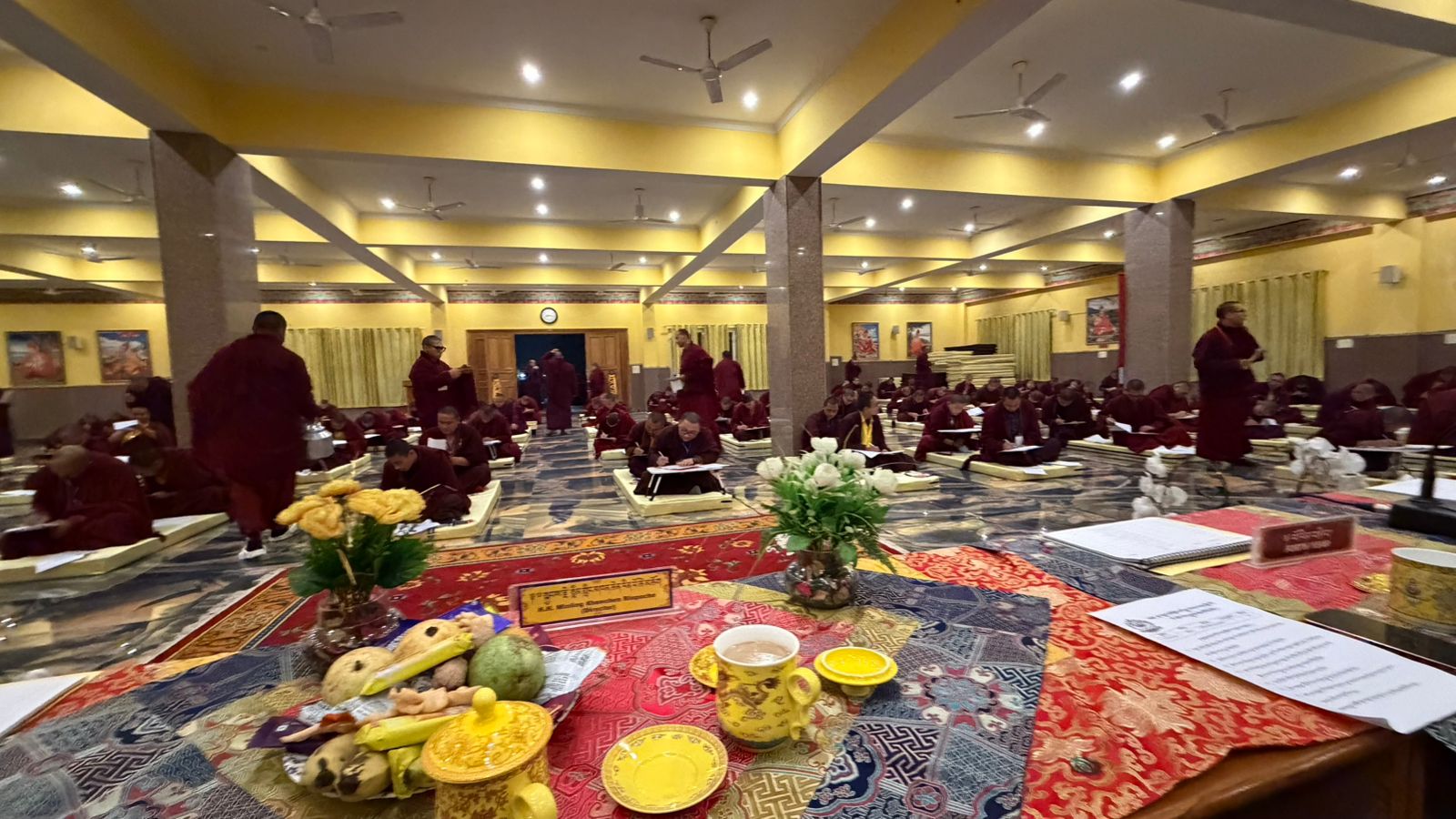
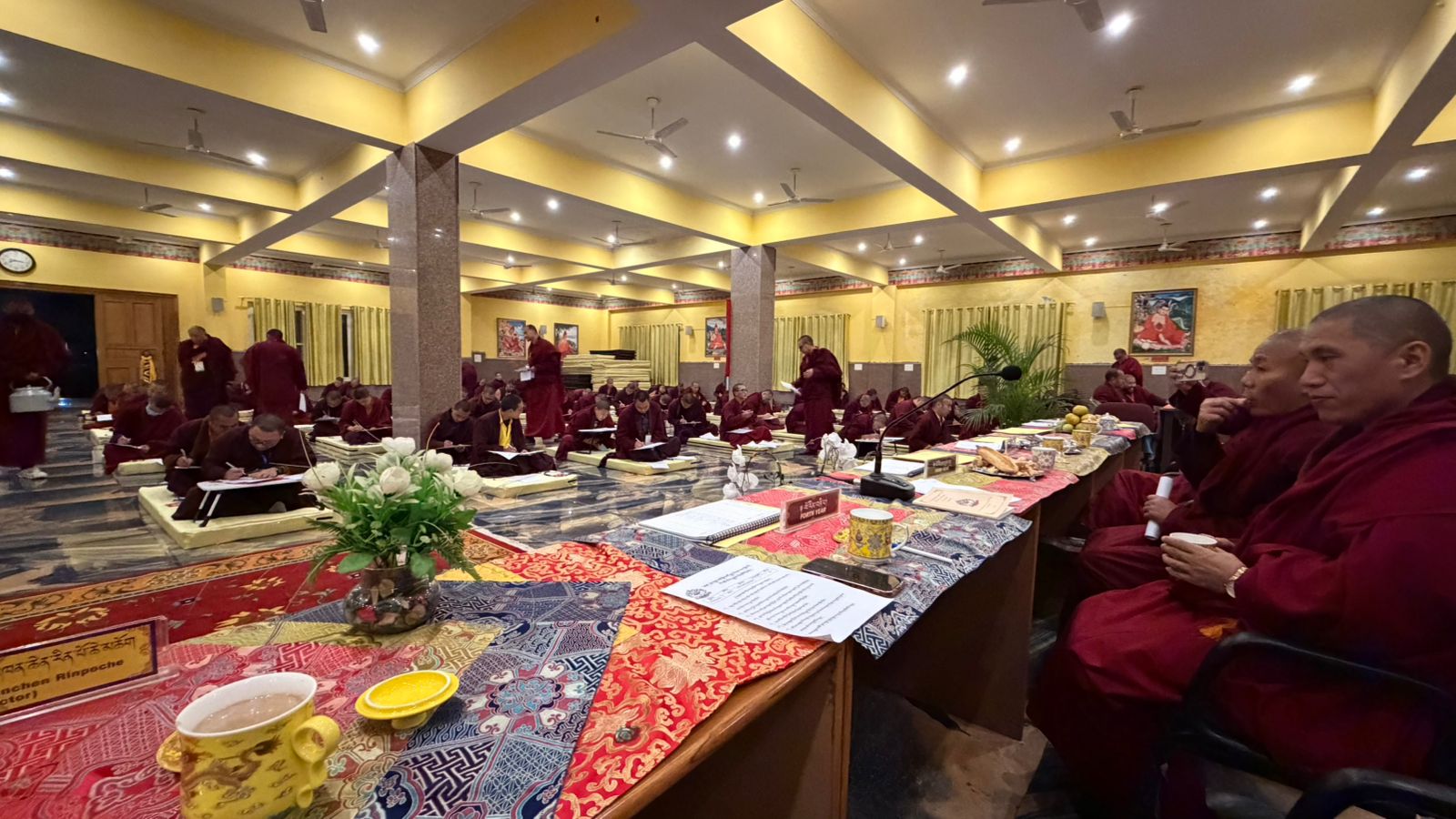
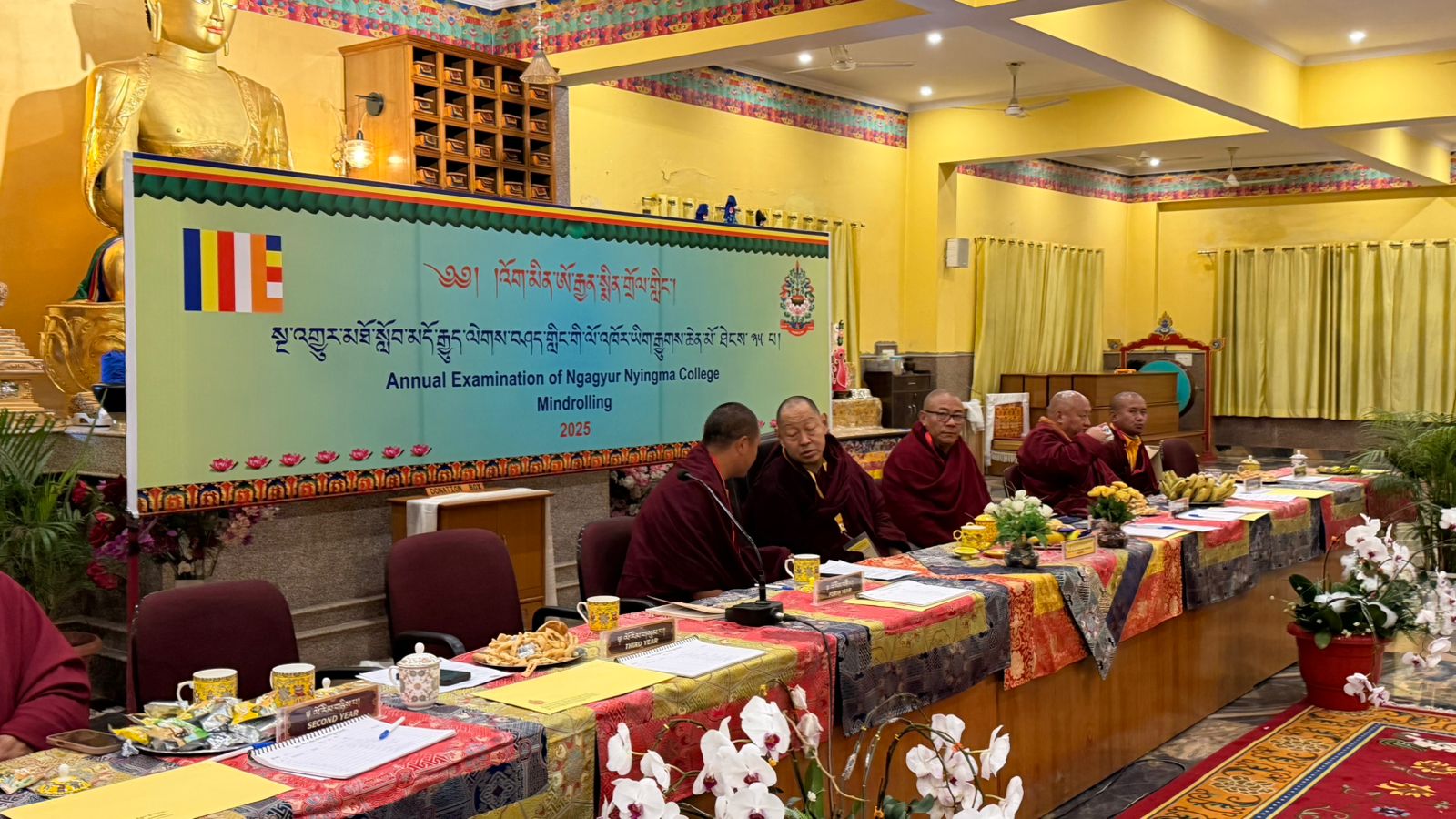
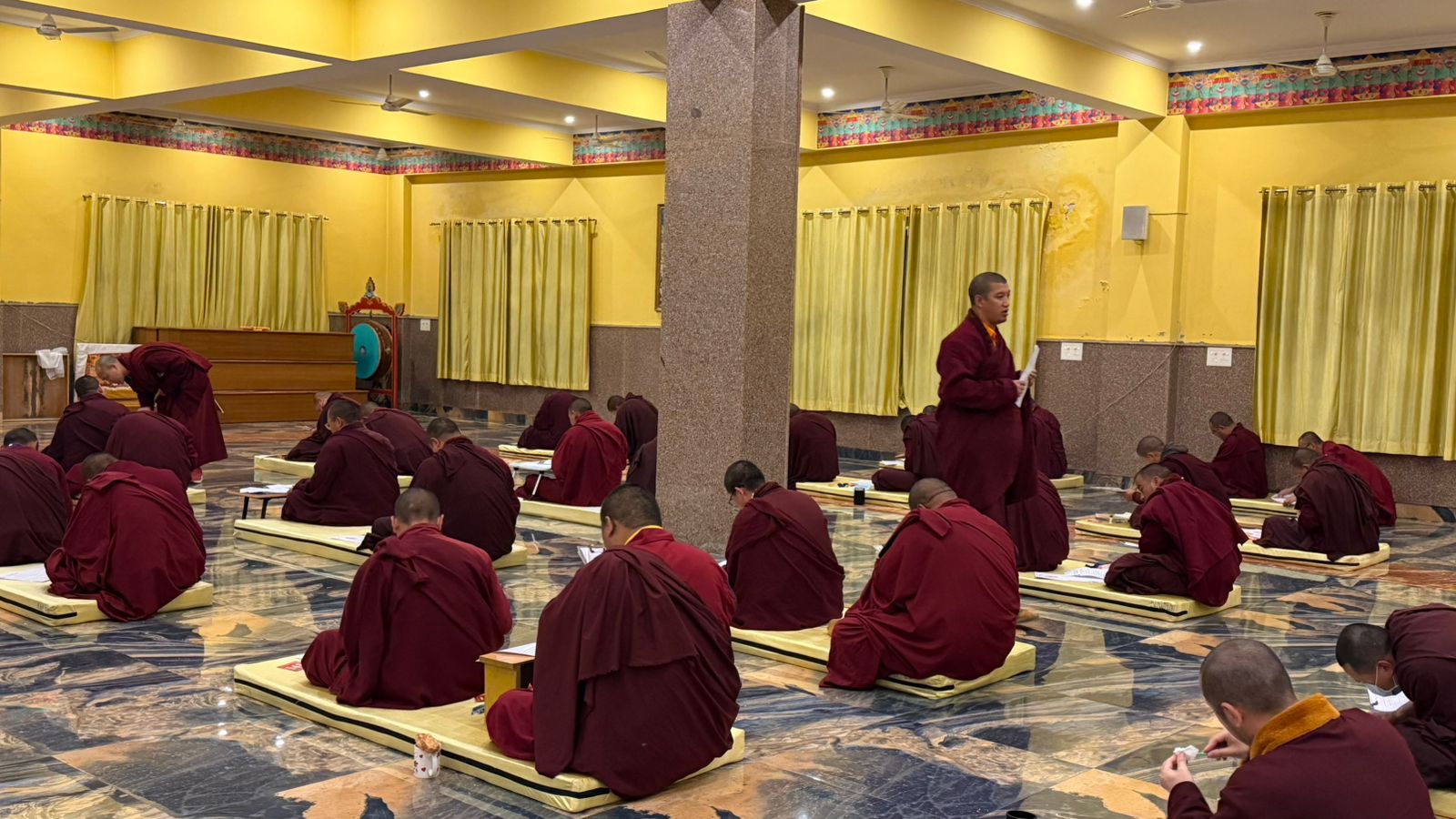
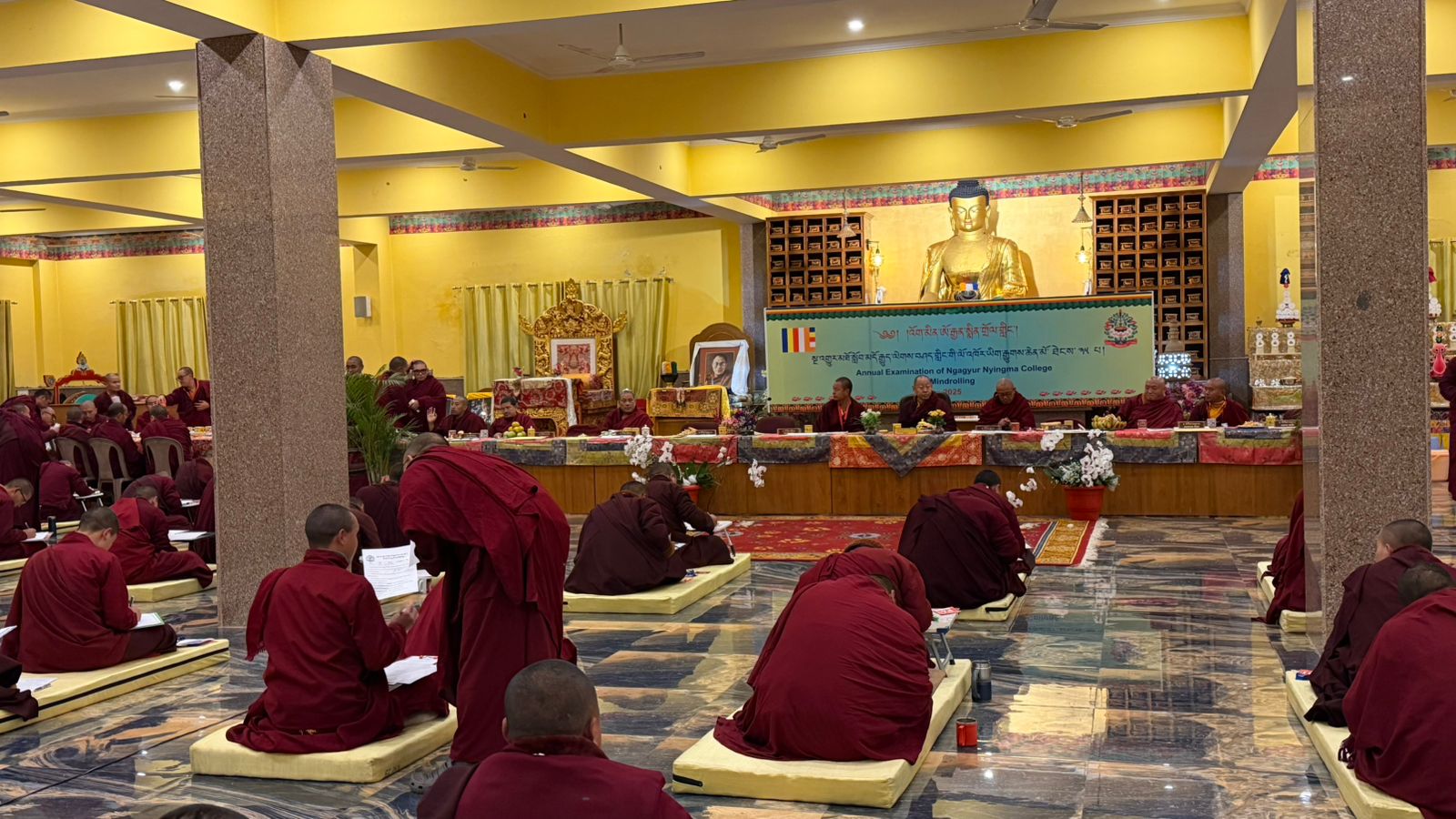
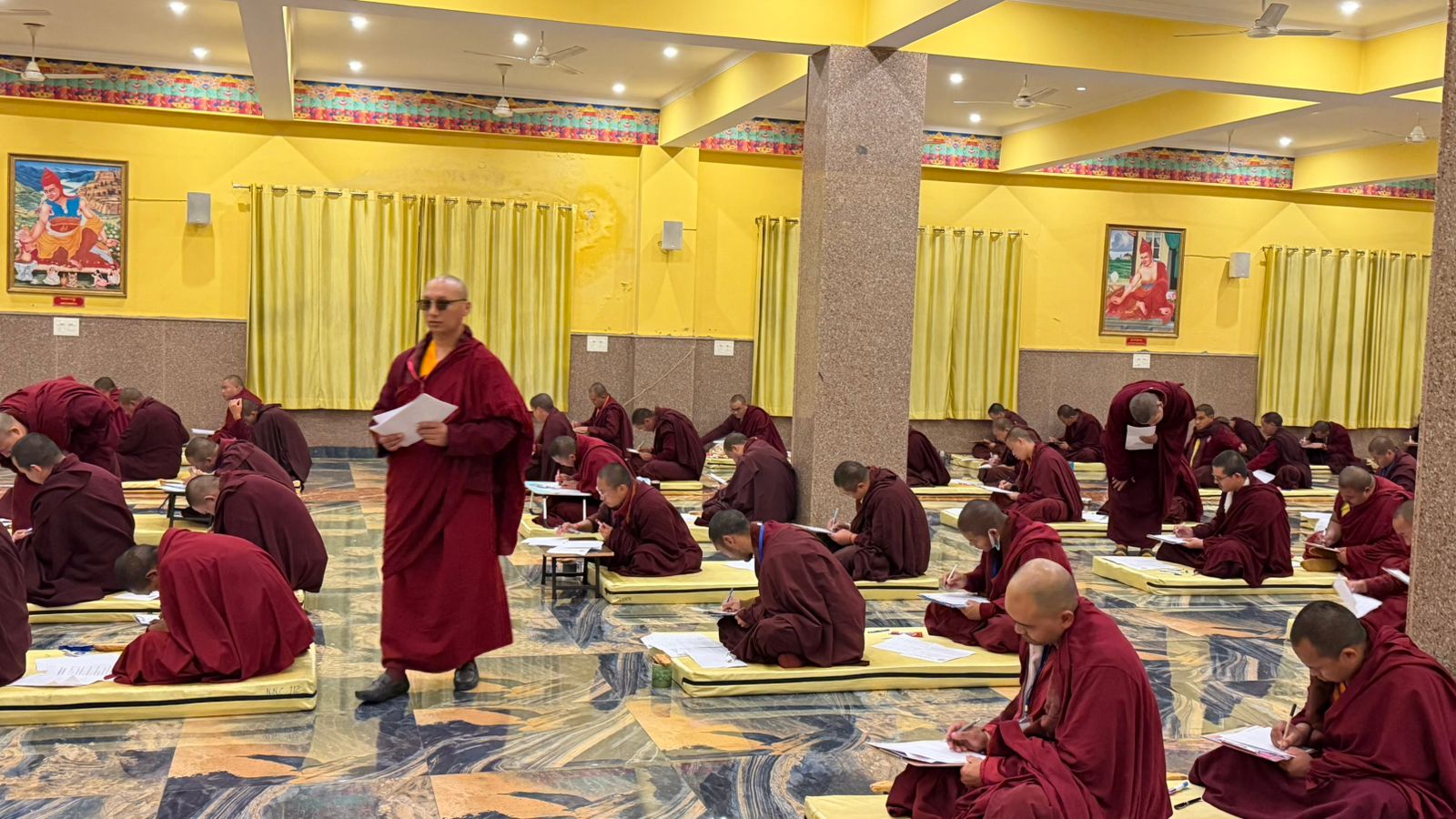
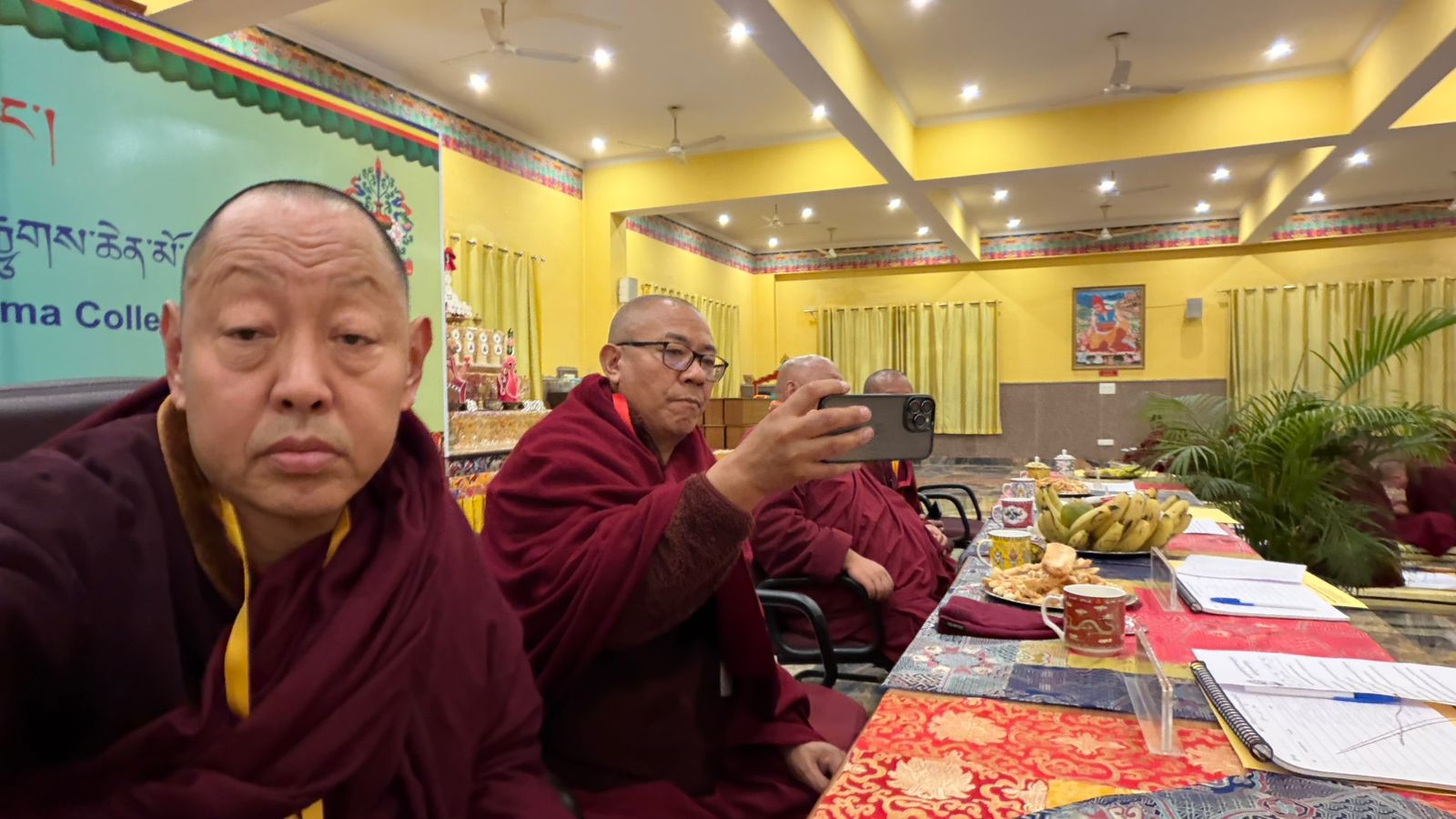
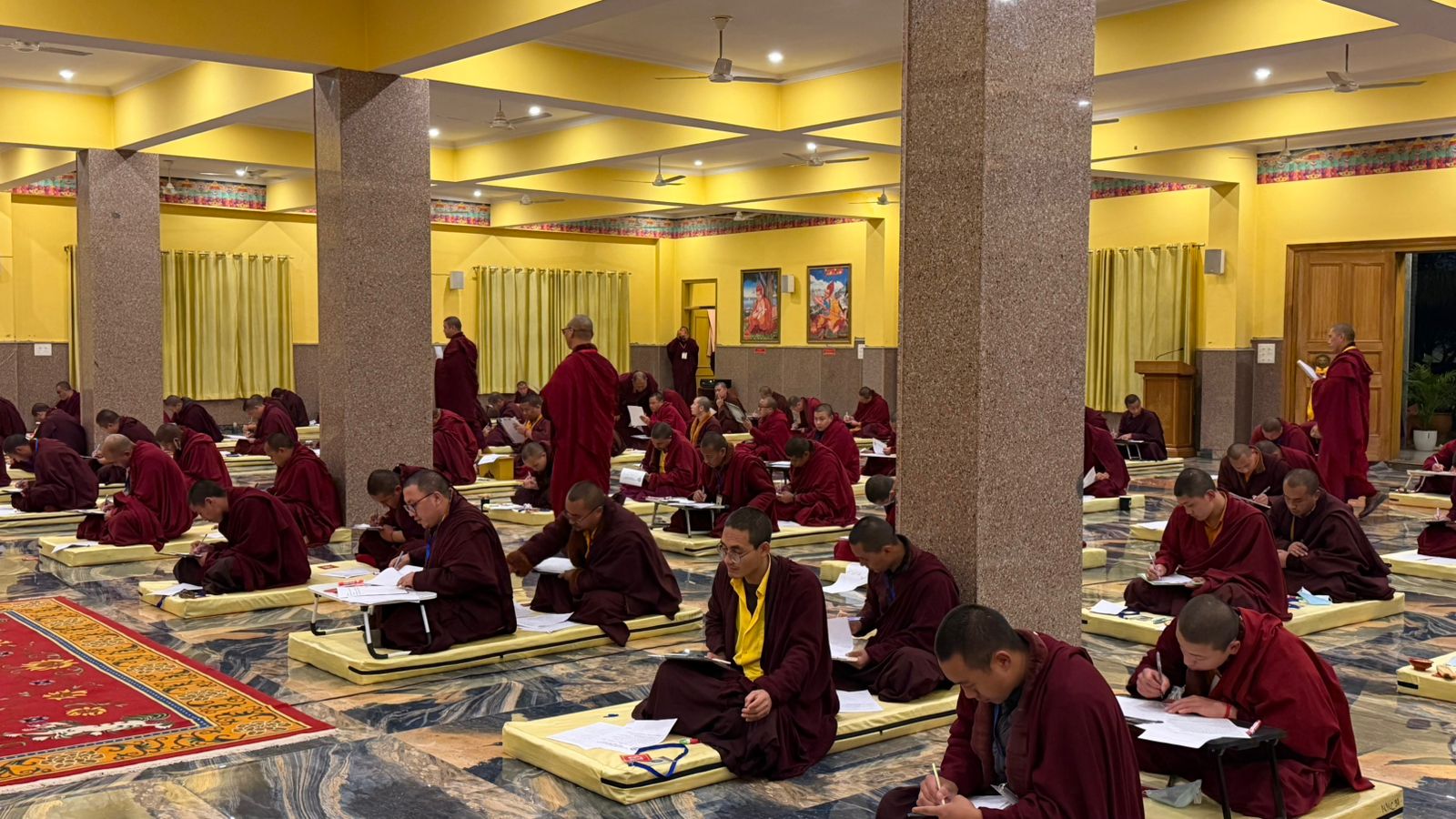
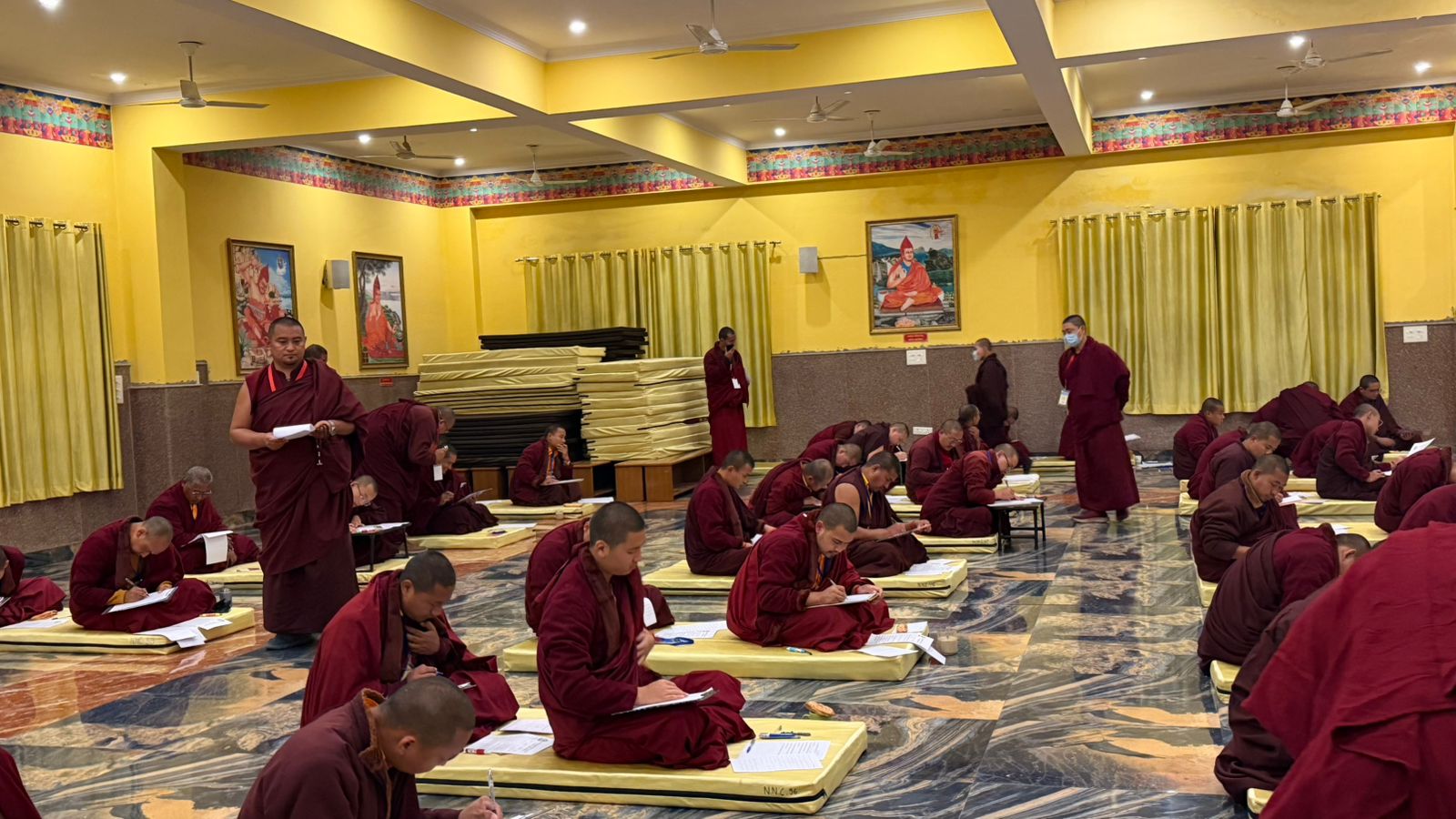
Annual Exam For The Mindrolling Ngagyur Nyingma College
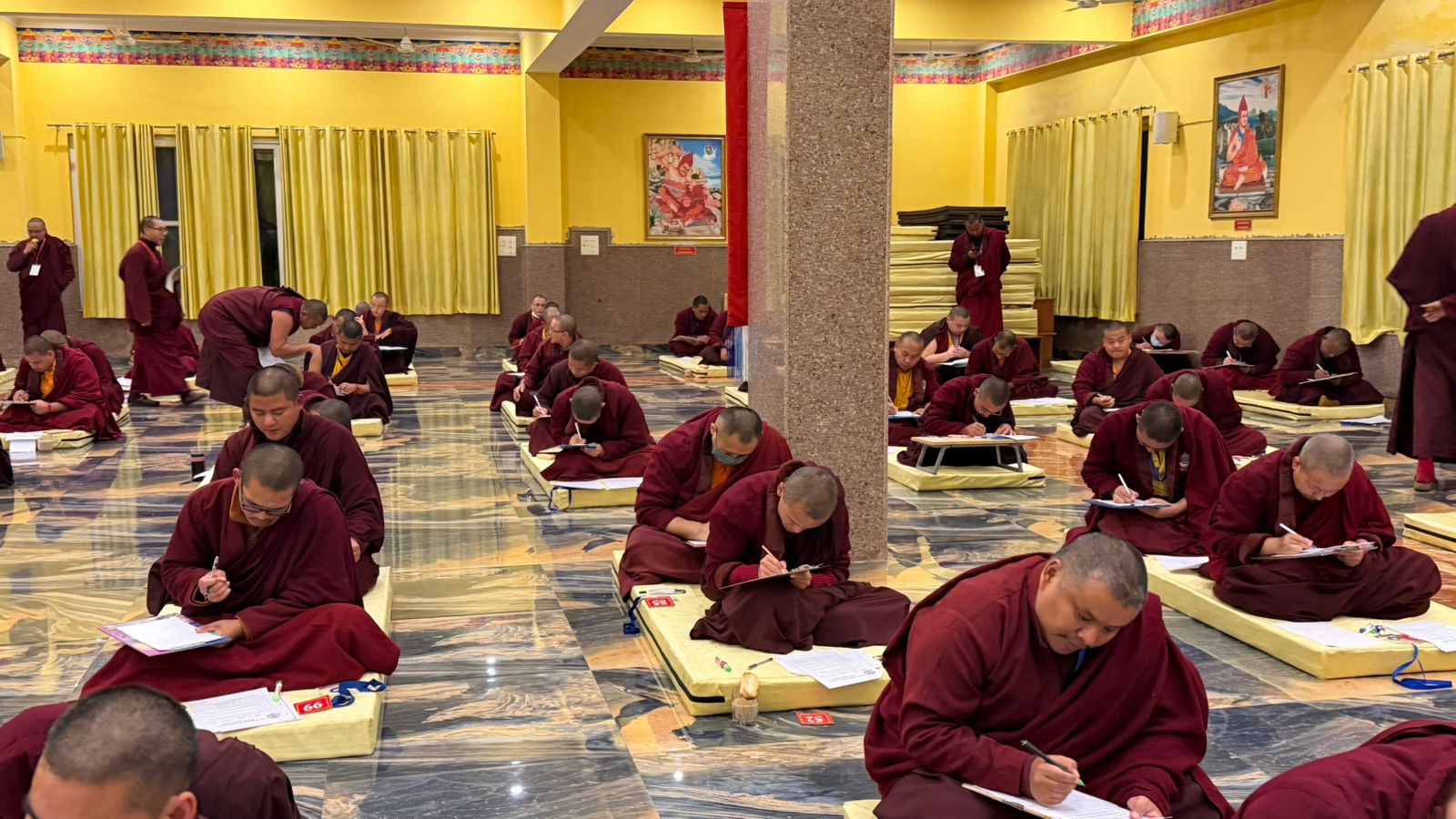
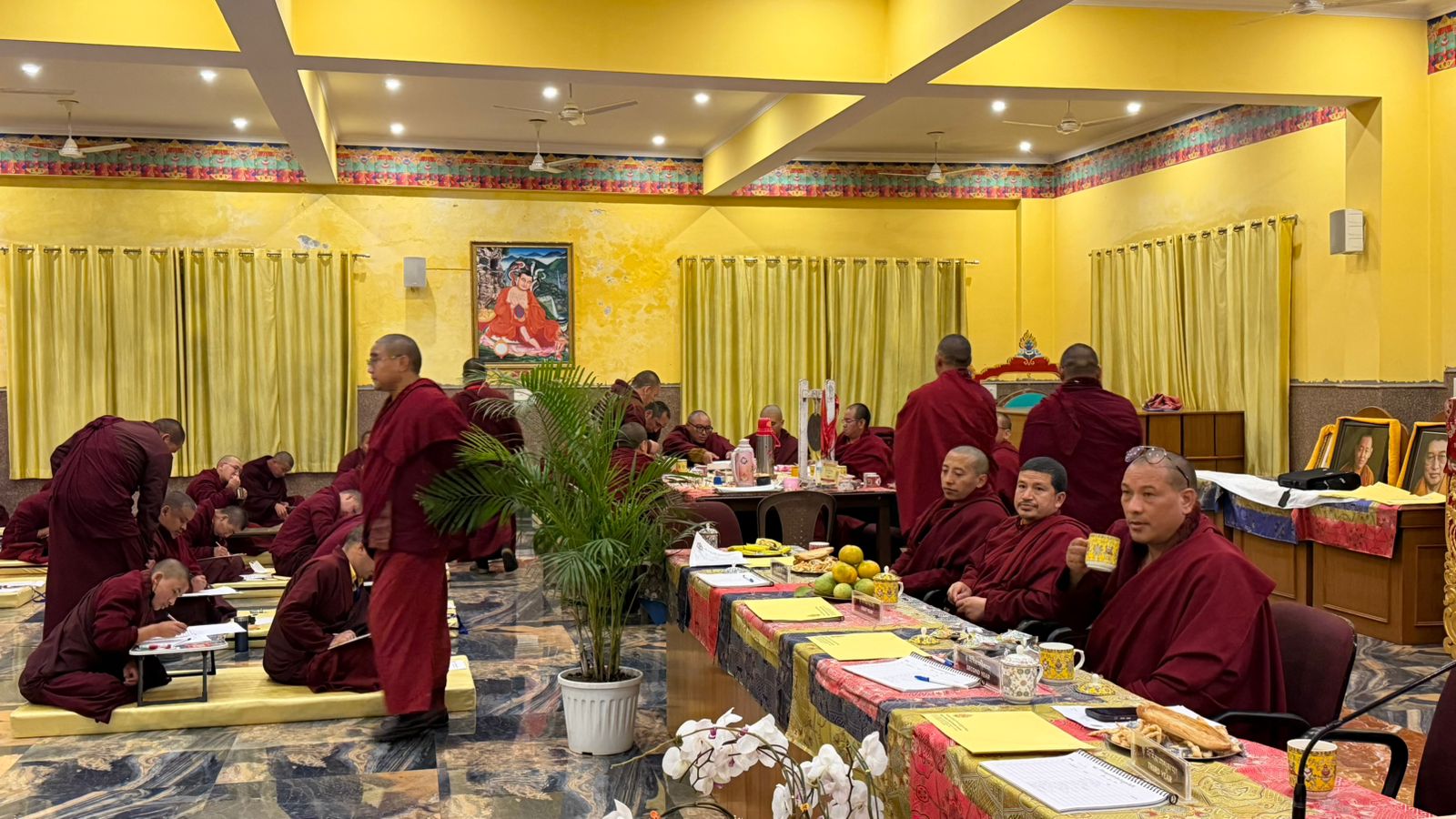
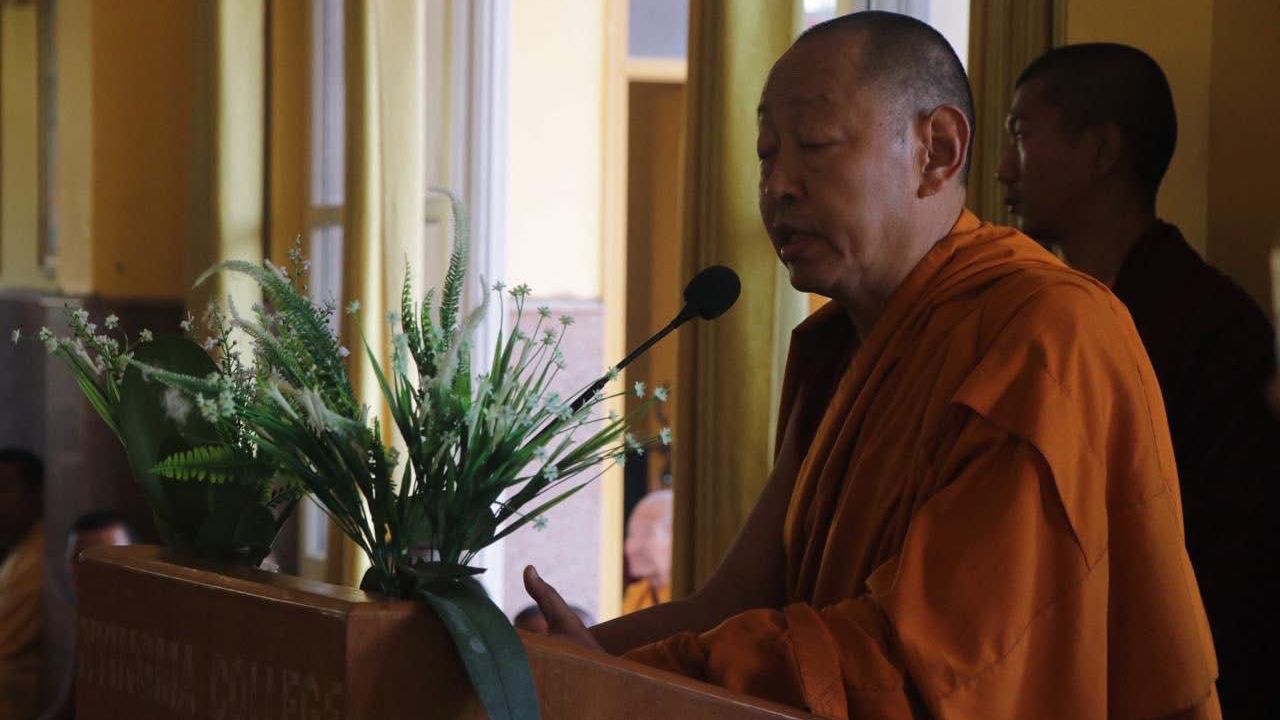
December 5th marked the commencement of the annual exam for the Mindrolling Ngagyur Nyingma college. Kyabje Rinpoche graced the occasion, examining students on the first day of their examination.
Global Peace Prayer Ceremony & the grand celebration of the 4th King of Bhutan
Nov 4th till 19th November 2025
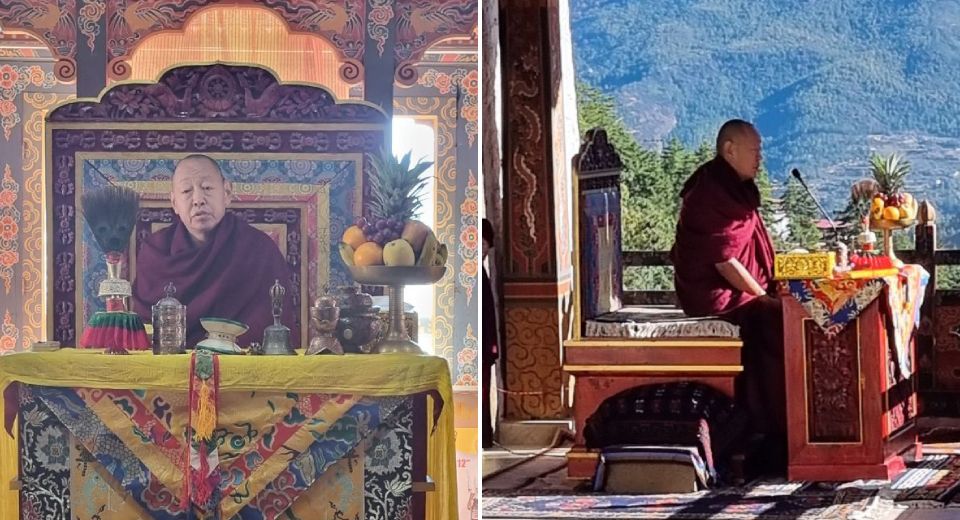
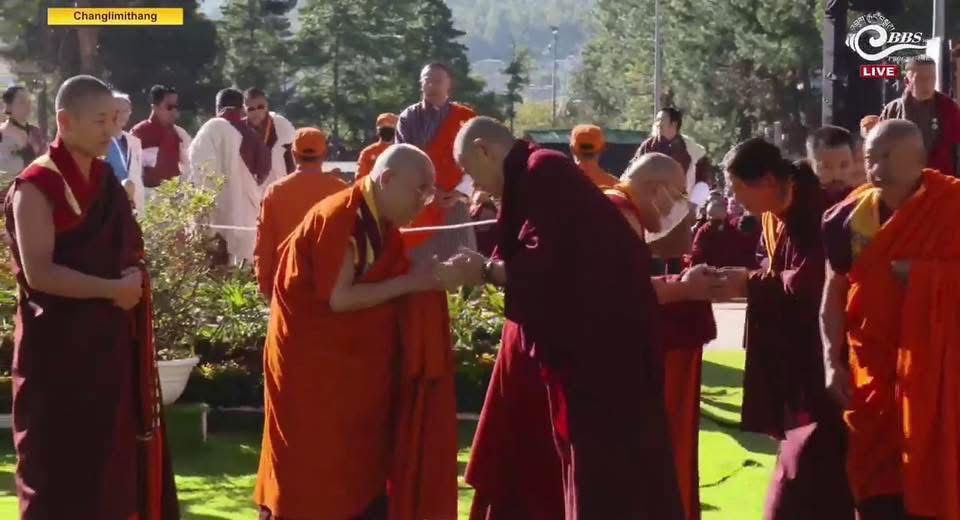
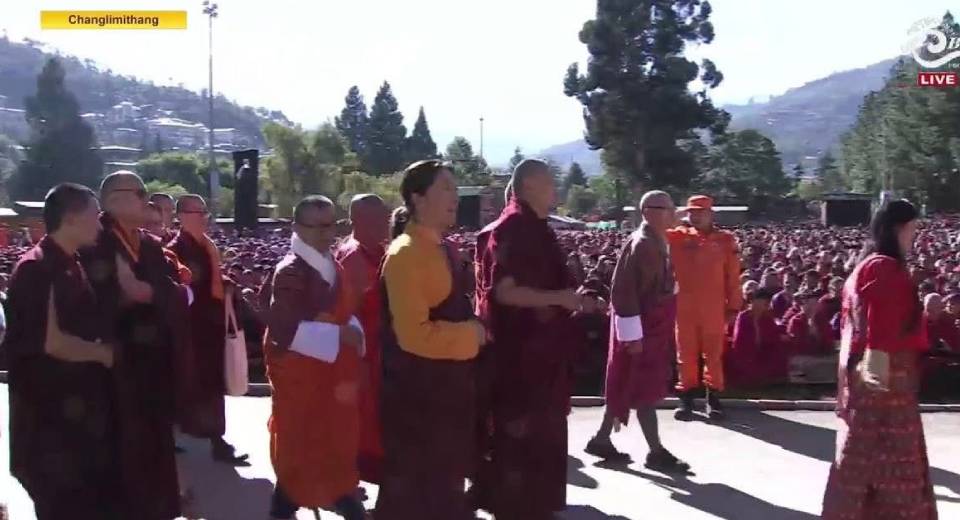
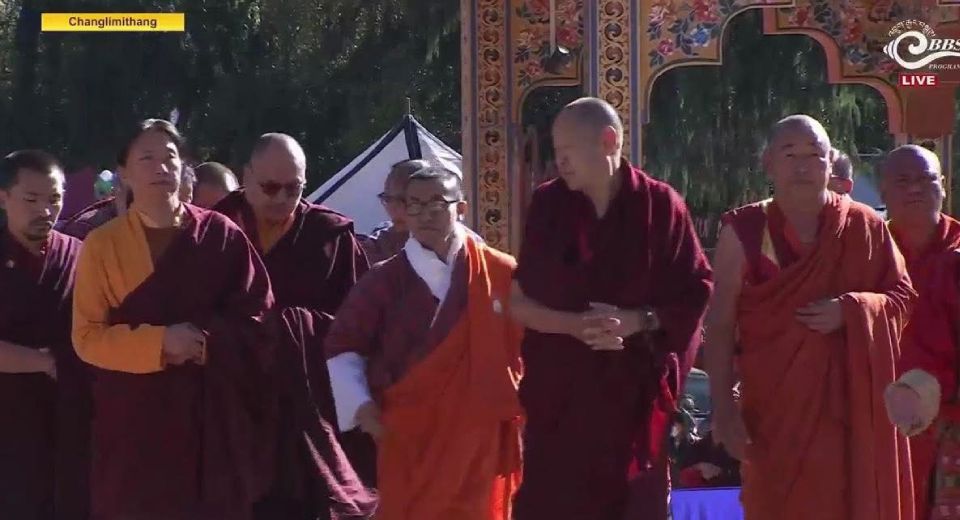
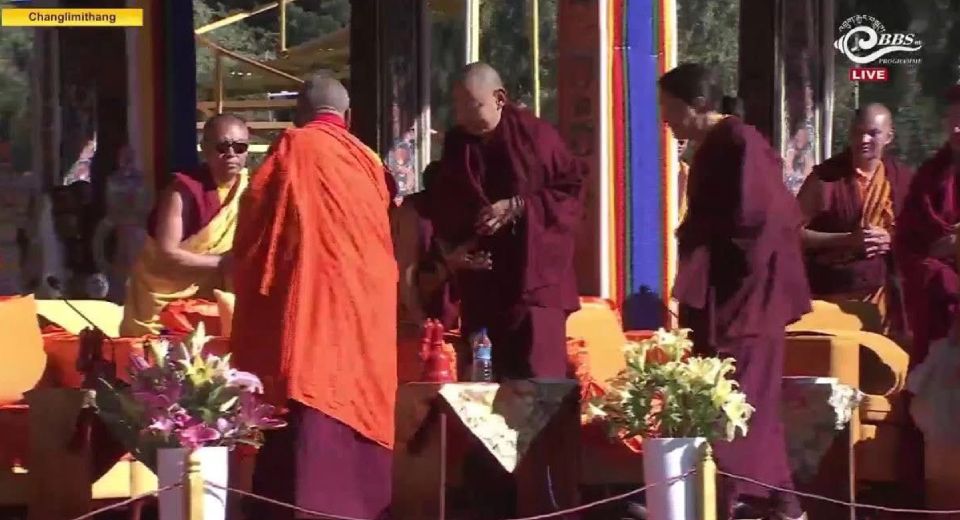
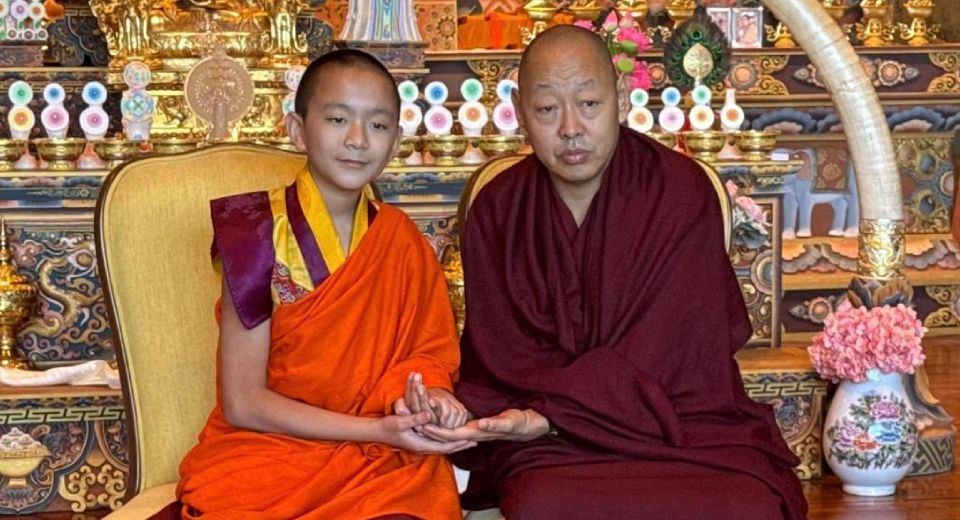
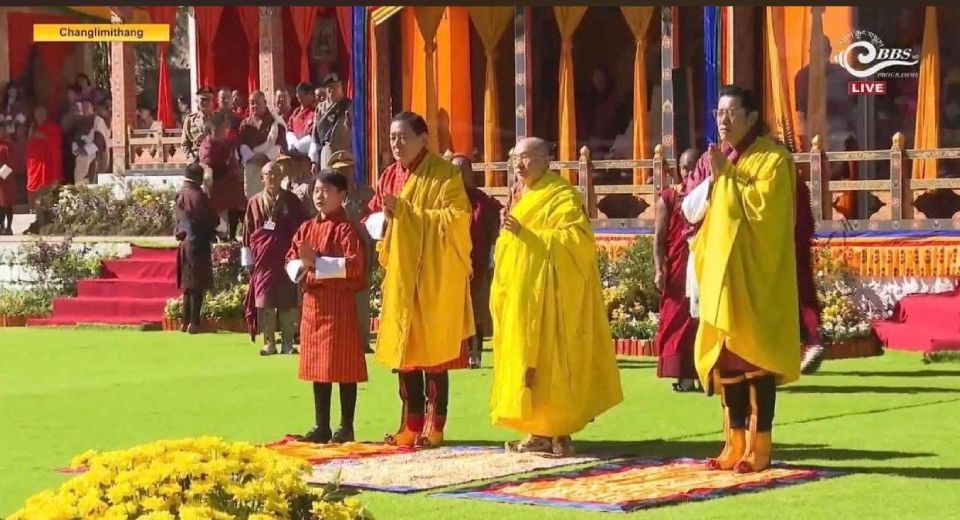
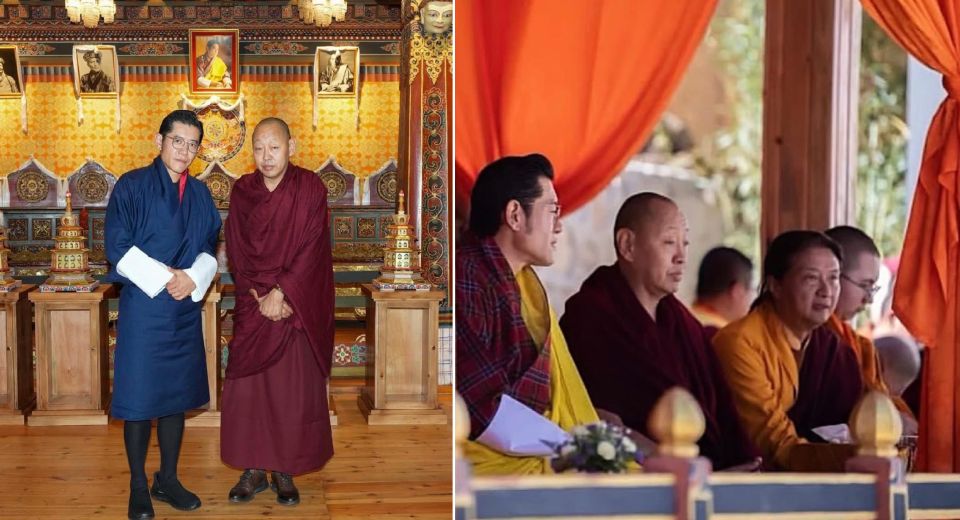
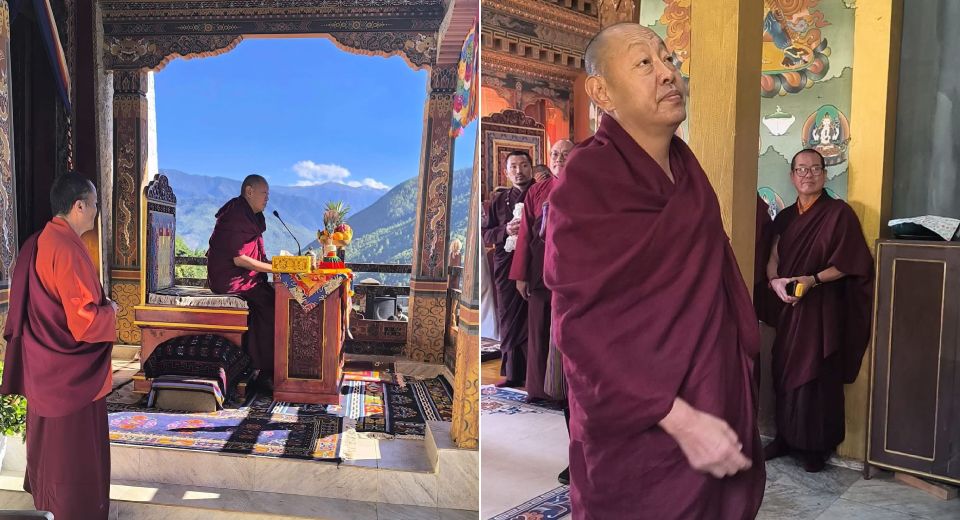
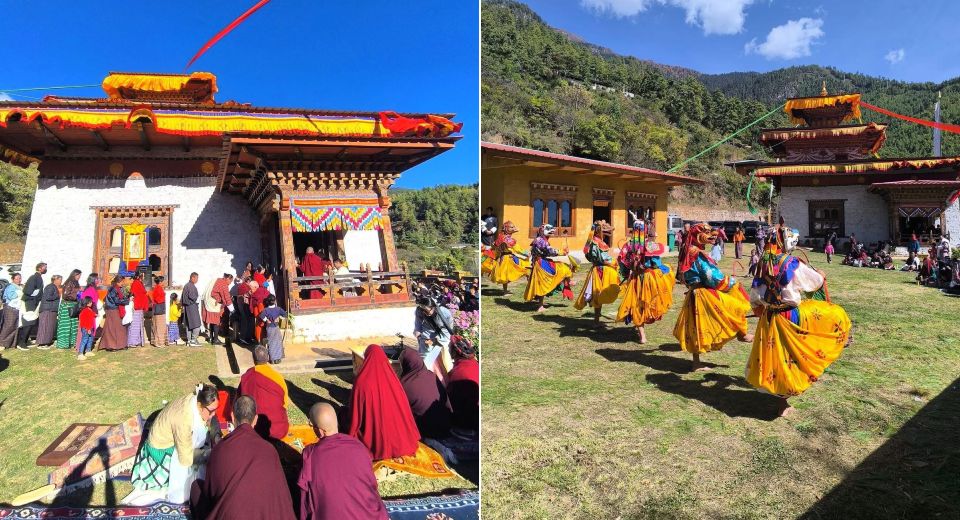
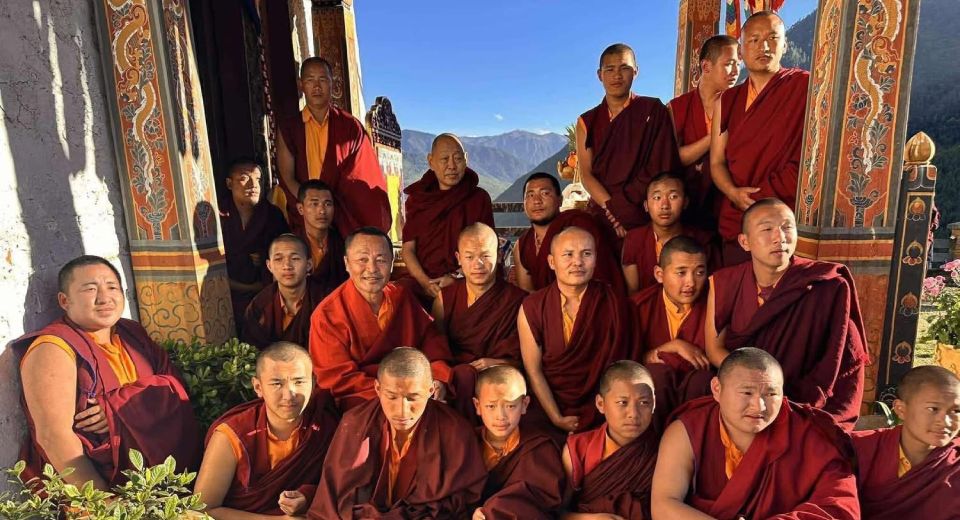
It is our great honor to share that Kyabje Rinpoche was invited as the distinguished representative of the Nyingma lineage outside of Bhutan for the Global Peace Prayer Ceremony and the grand celebration of the 4th King of Bhutan, His Majesty Jigme Singye Wangchuk’s 70th birthday.
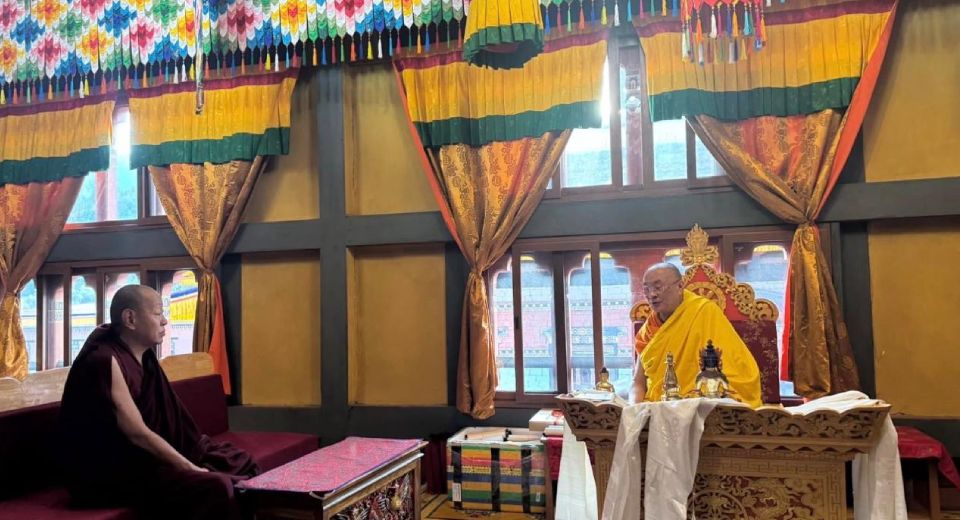
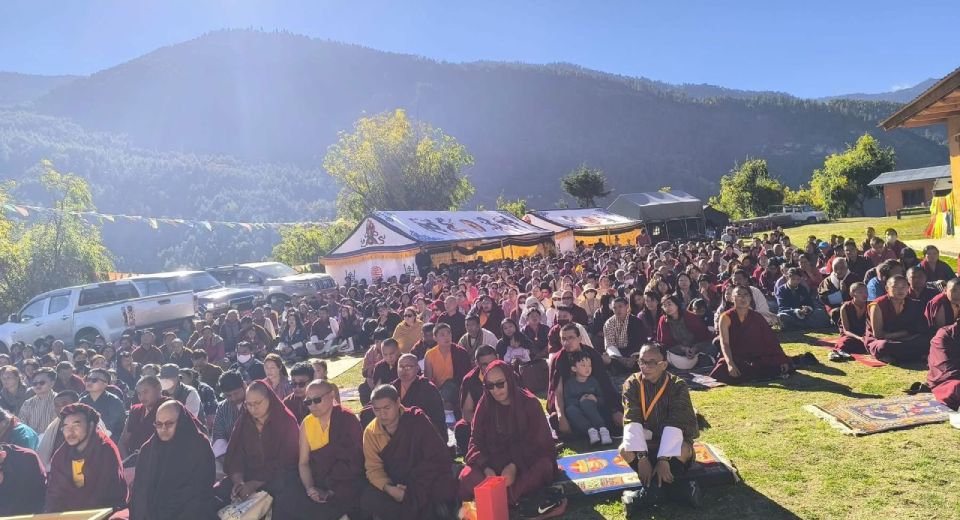
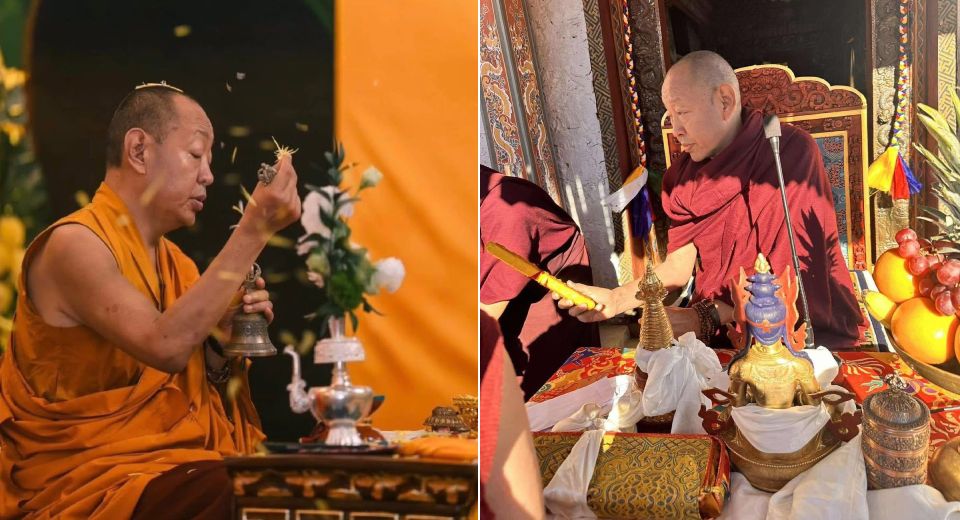
The Global Peace Prayer, held for 3 momentous days, witnessed the gathering of revered Masters from various Buddhist traditions across different countries. During Rinpoche’s visit from 4th November to 19th November, he was graced with audiences with The 5th King of Bhutan, His Majesty Jigme Khesar Namgyel Wangchuk, and the Spiritual Head of Bhutan, Je Khenpo Trulku Jigme Choedra.
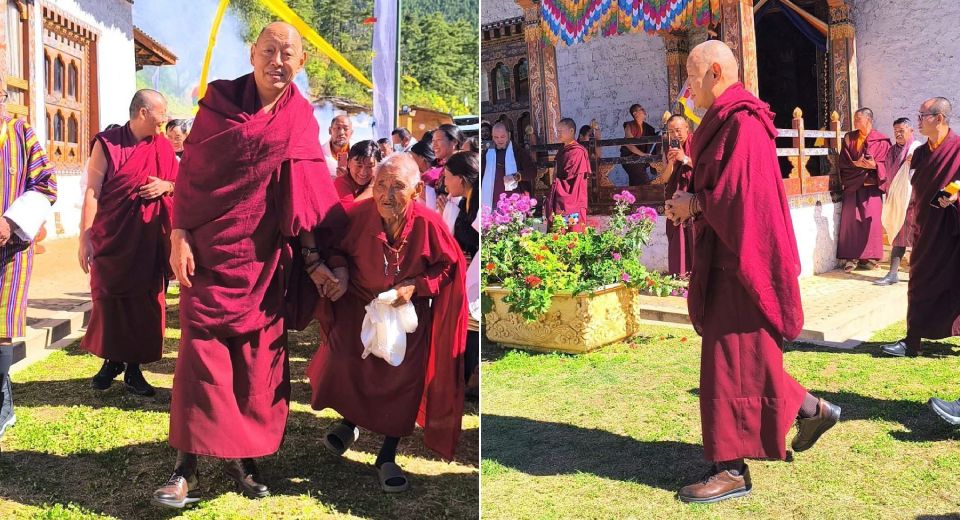
Rinpoche’s compassionate heart was moved to release lives of Yaks that were destined for slaughter, embodying the spirit of compassion and mercy. Additionally, Rinpoche visited Pema Woseling (Mindrolling monastery) in Jimena, Thimphu. Many people came to receive blessings.
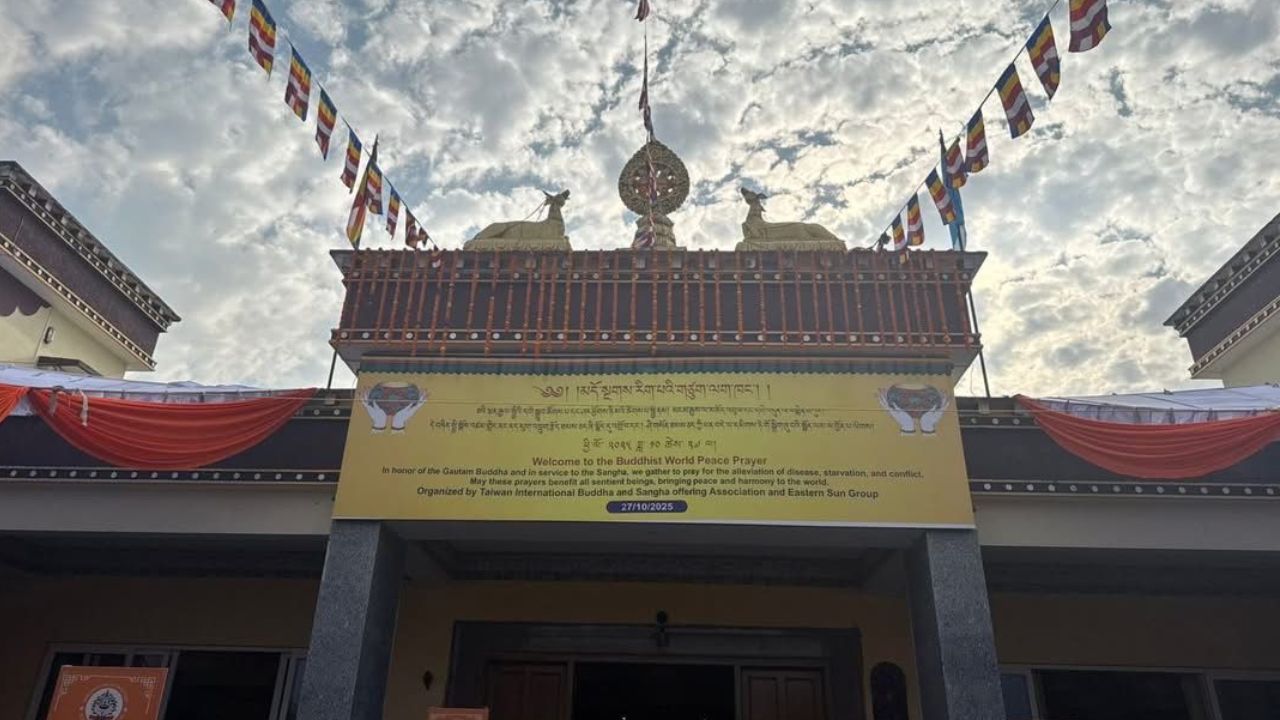
The 6th Annual World Peace Prayer Ceremony
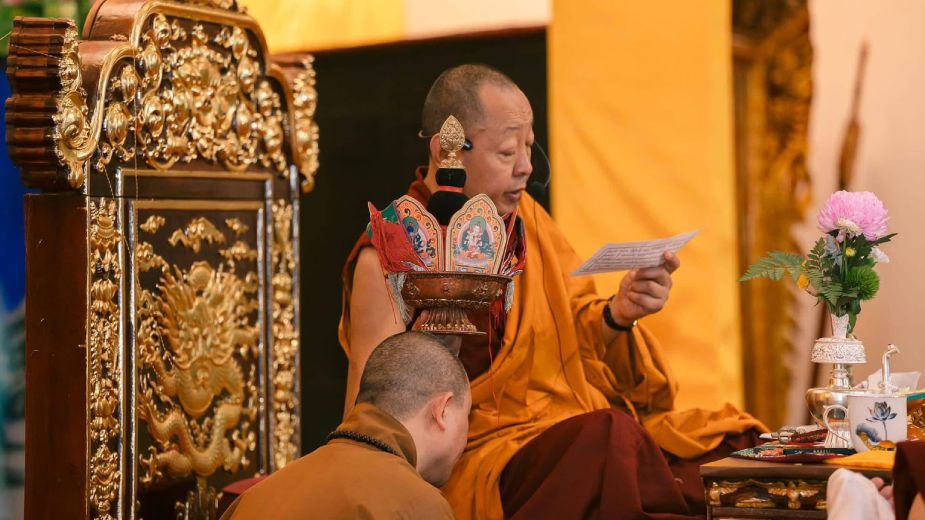
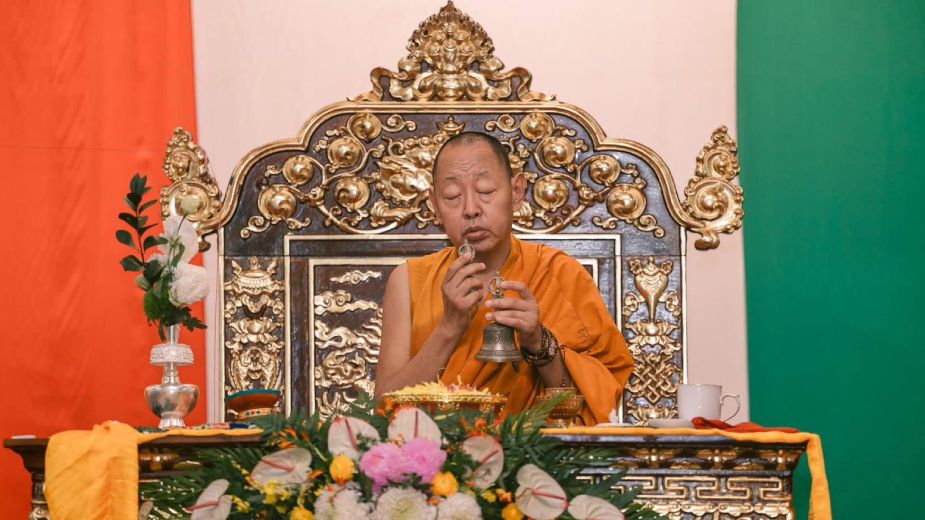
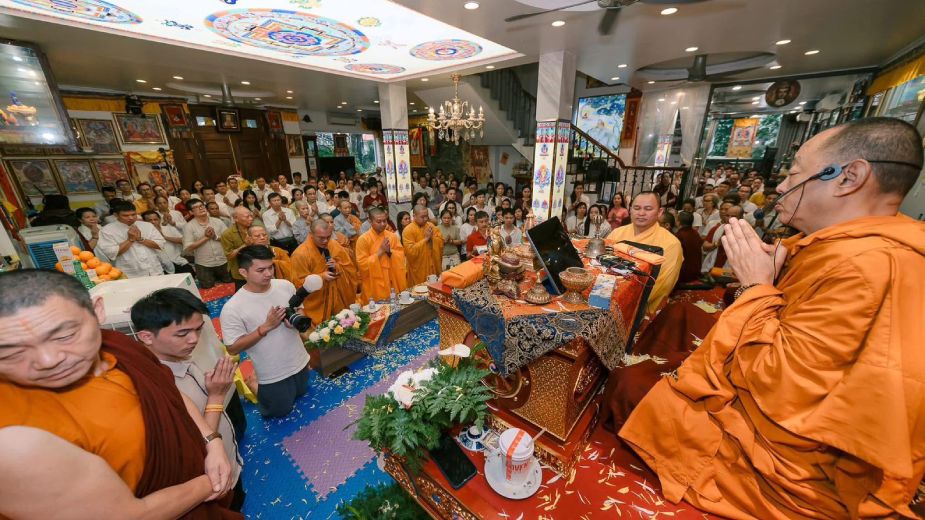
The 6th Annual World Peace Prayer Ceremony was held on October 27th at the Ngagyur Nyingma College Shrine Hall, bringing together monks and nuns from various Tibetan Buddhist lineages. This year’s ceremony was particularly special, as it included offerings of meals and monastic robes, in addition to the traditional offerings made in previous years.
The prayer ceremony was presided over by Kyabje Minling Khenchen Rinpoche, accompanied by other esteemed Rinpoche’s, Tulkus, and Khenpos. Monks and nuns from the Kagyu, Gelug, Nyingma, Sakya, Jonang, and Bon traditions attended the event, which has seen a steady increase in participation over the years.
During the ceremony, the community came together to perform smoke offerings, recite the Aspiration Prayers of Samantabhadra, and conduct the Vajrasattva ritual for the deceased, dedicating the merit towards peace and benefit for all sentient beings.
Rinpoche Visited Various Temples in Vietnam
October – Rinpoche visited various temples in Vietnam during his annual tour in the third week of October, inaugurating several of them. He graciously bestowed empowerments and teachings to all the places he visited. The Mindrolling sangha in Vietnam is thriving, with disciples demonstrating keen interest and aspiration to practice the authentic Dharma.
Annual Event, Taipei
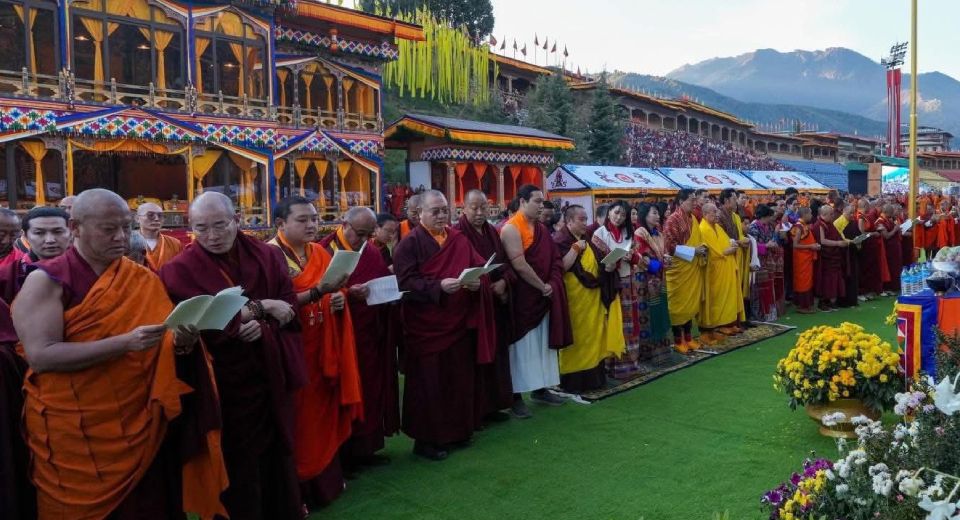
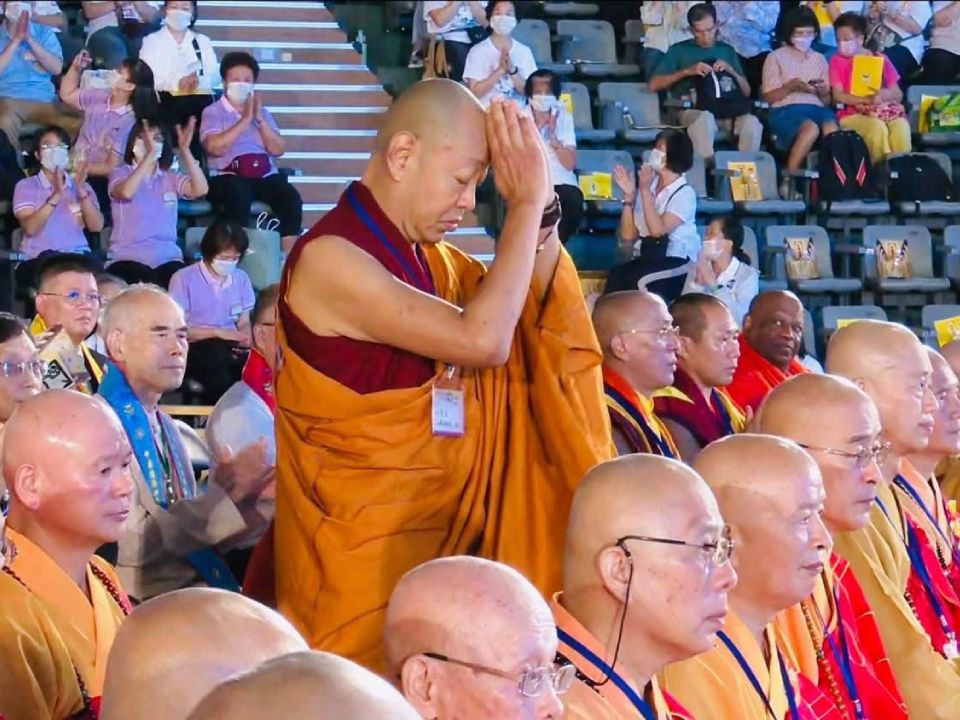
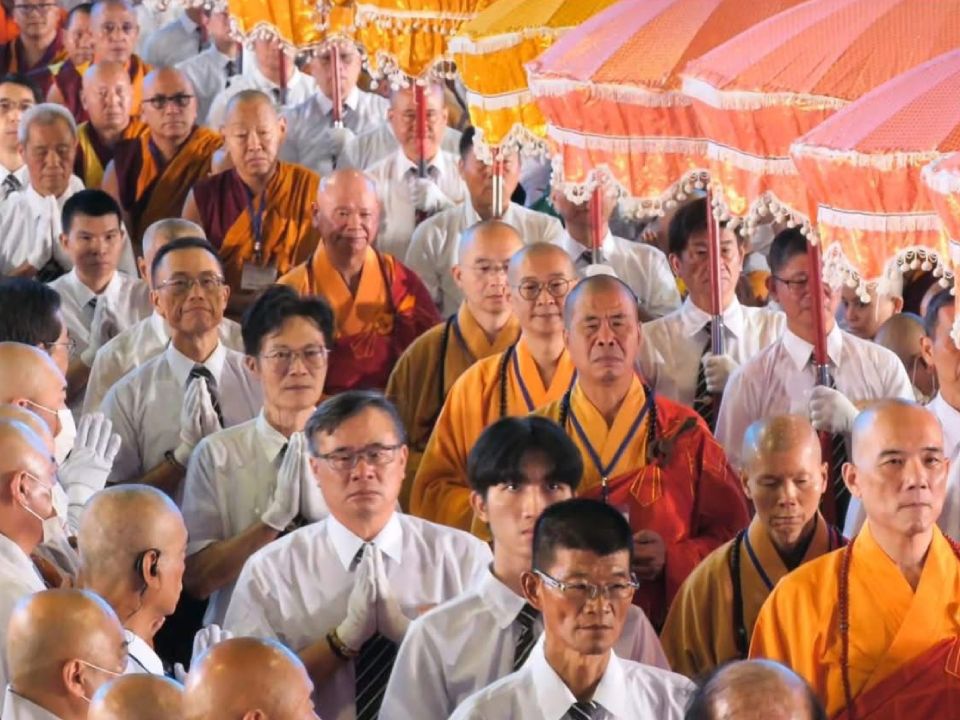
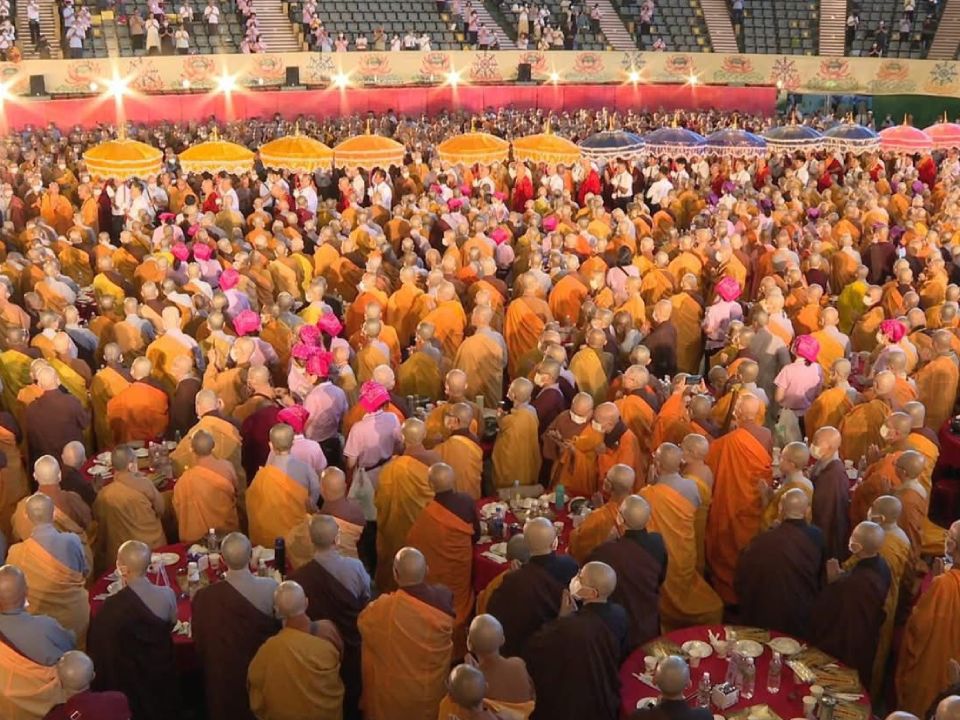
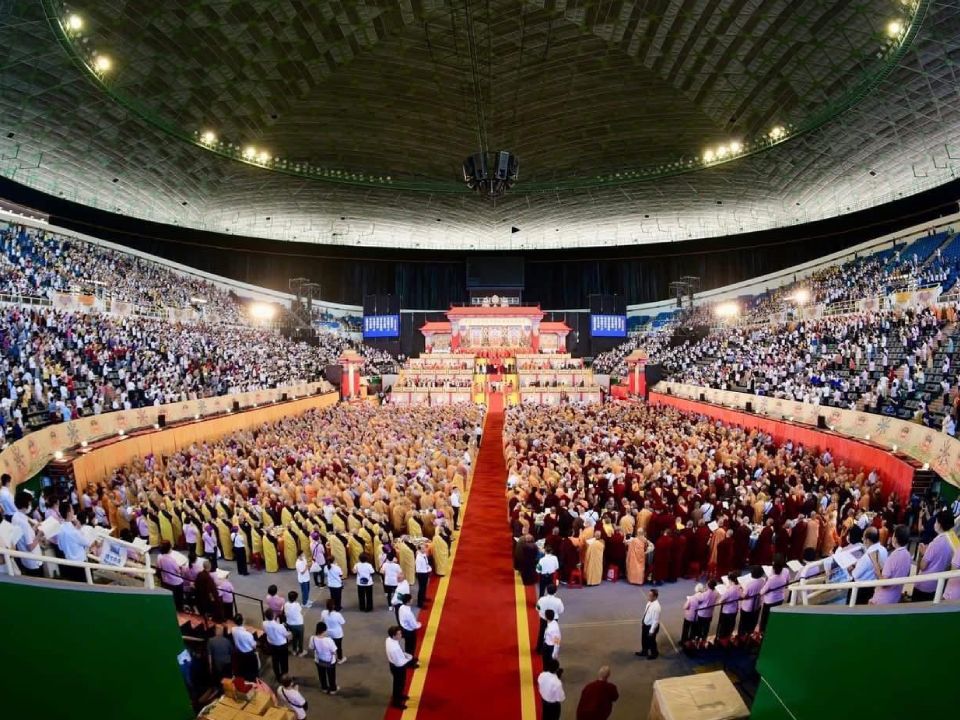
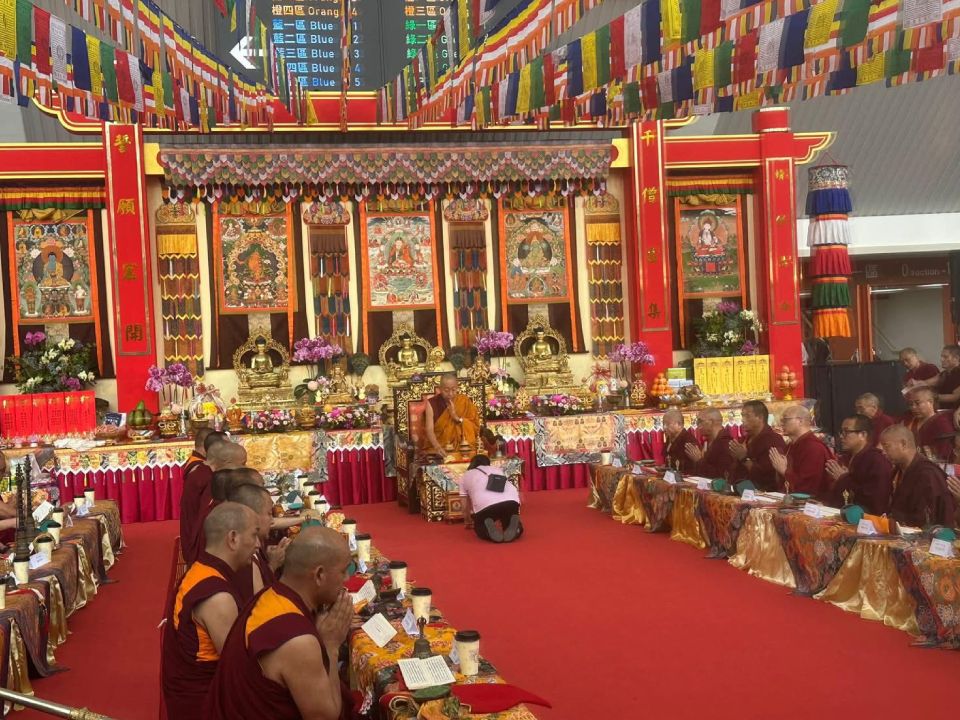
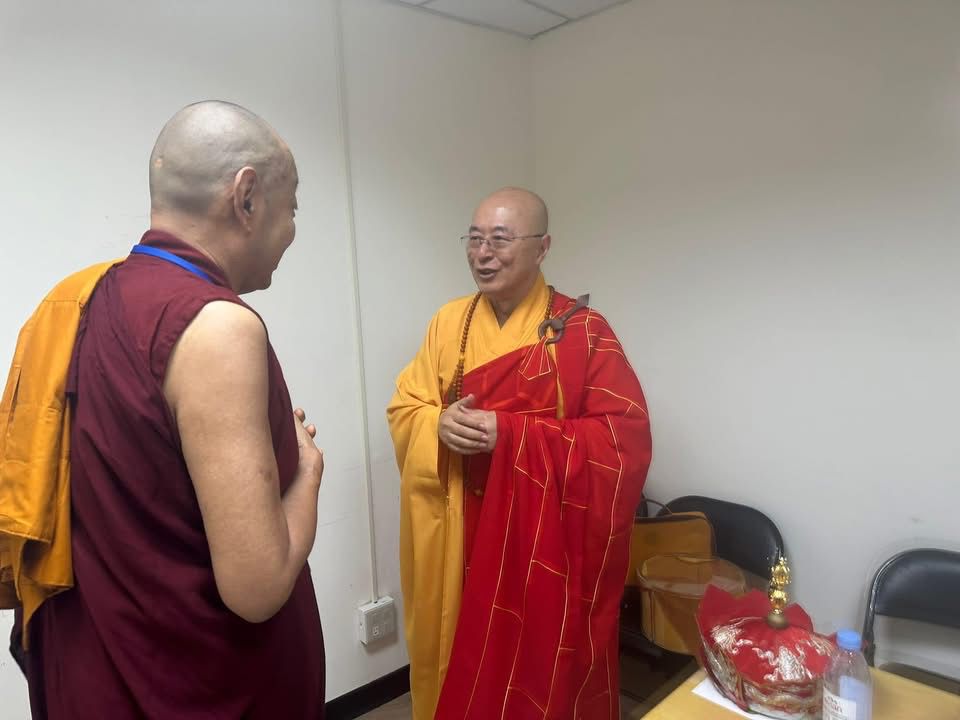
The Taiwan Buddhist Association hosted its annual event on September 14th in Taipei, making offerings to sanghas from around the world and praying for global peace. This event, observed annually, was celebrated with traditional ceremonies and prayers. Rinpoche, a revered Master of Buddhism, has been a distinguished guest at this event for many years, receiving an invitation to participate alongside other esteemed Buddhist masters. During the ceremony, monastics and lay practitioners alike gather in unity, filling the stadium to capacity with devotees eager to participate in the sacred rituals. The organizers also made generous offerings to all participants, fostering a spirit of generosity and gratitude.
The Consecration Ceremony, Taiwan
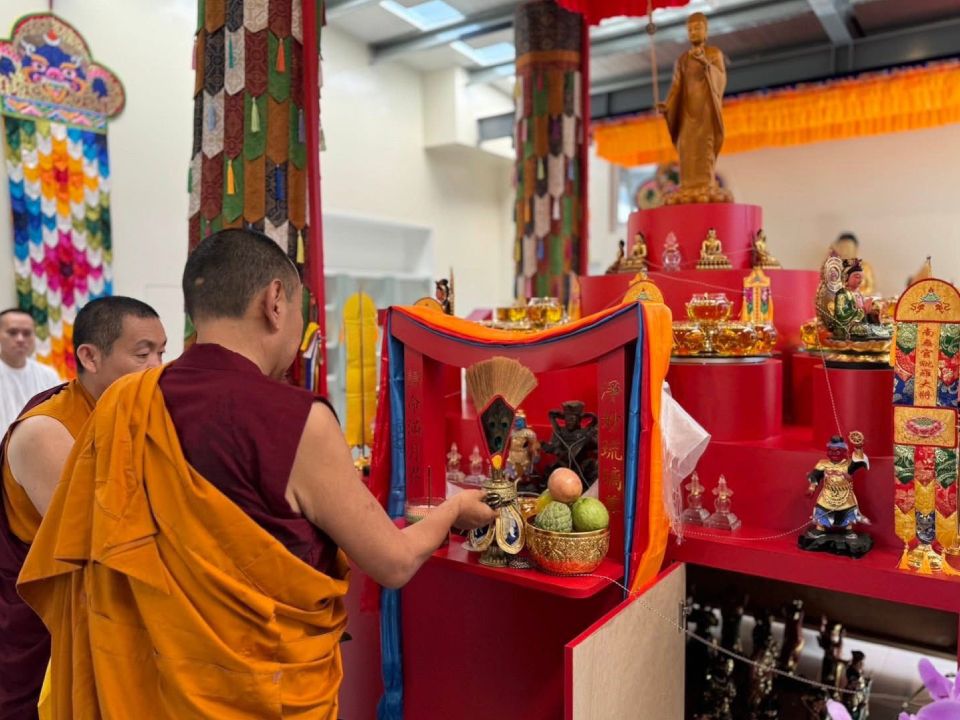
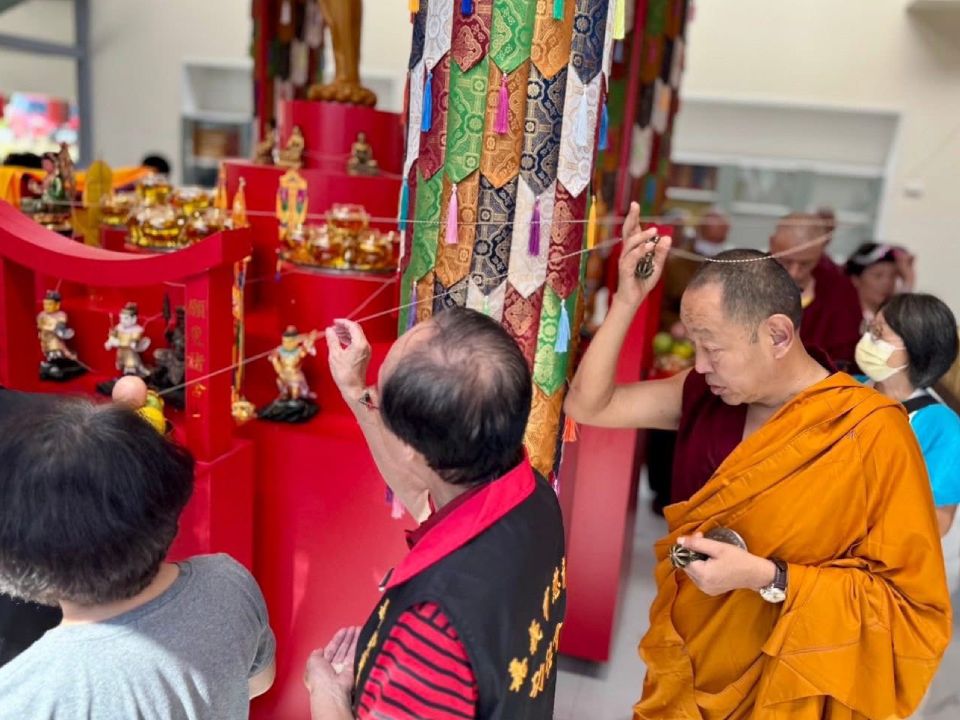
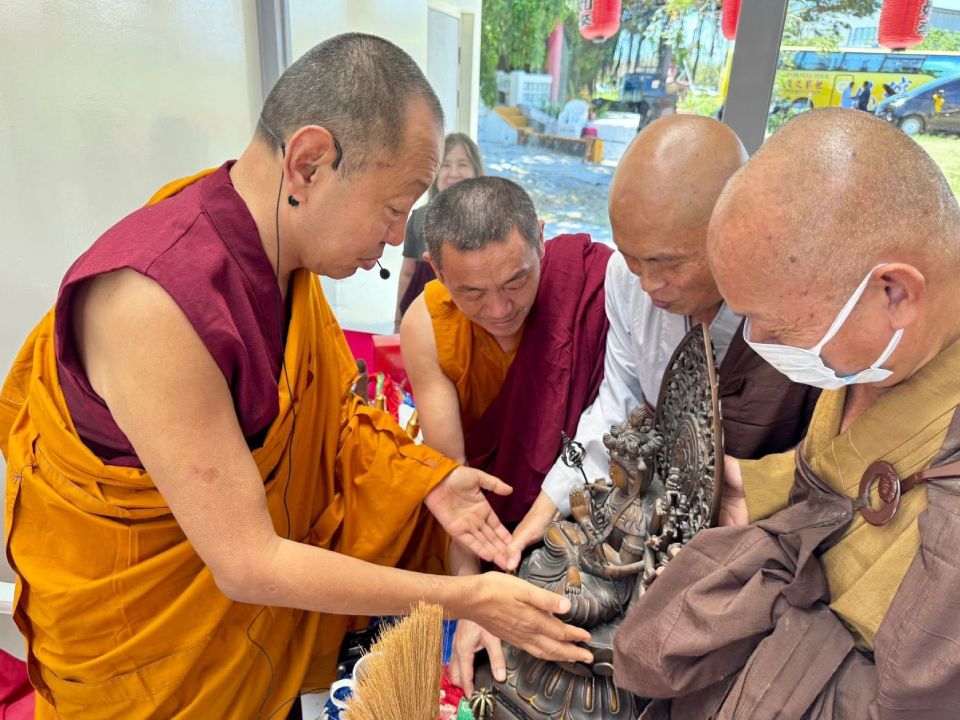
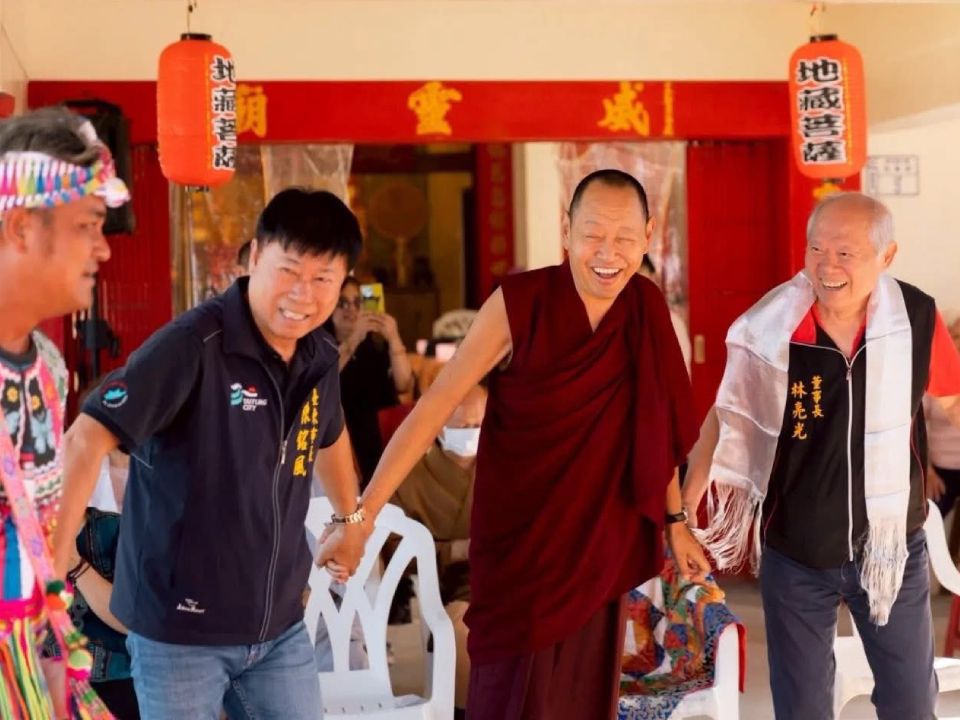
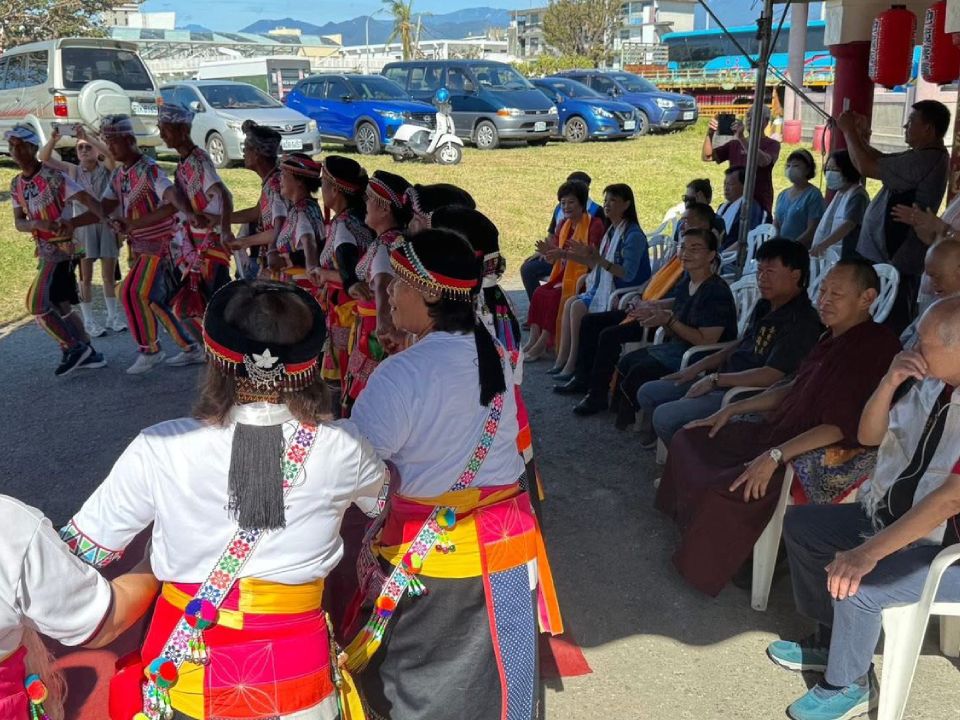
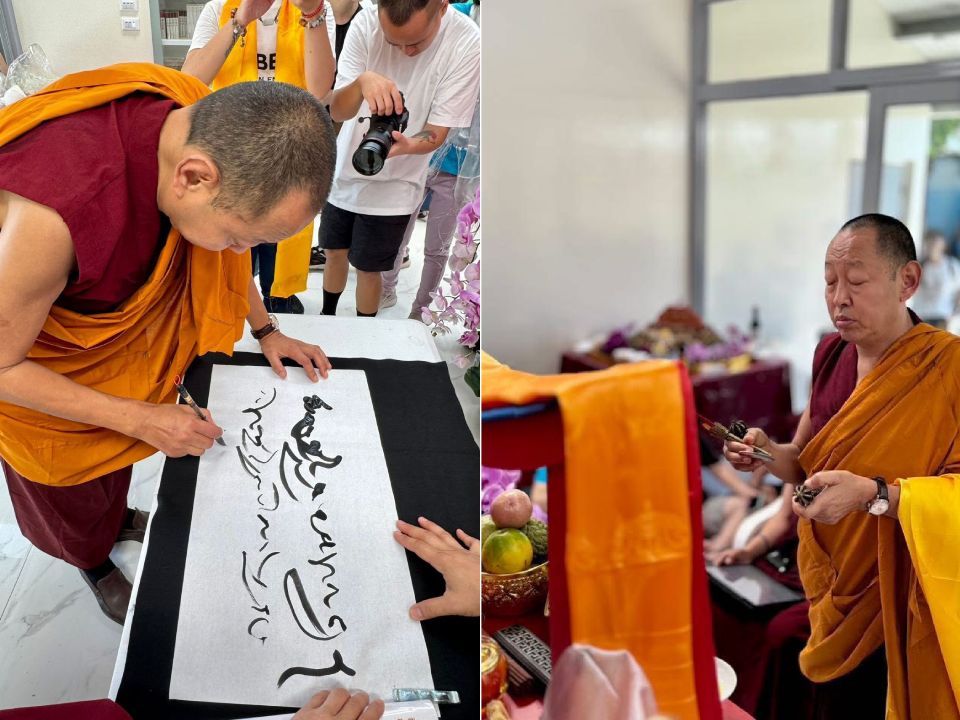
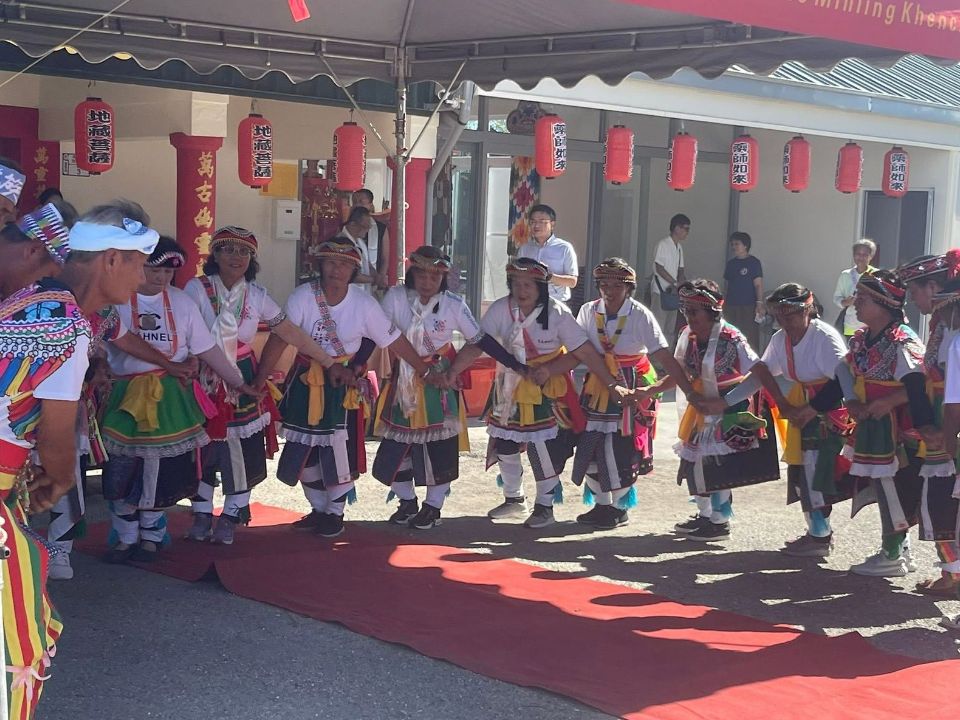
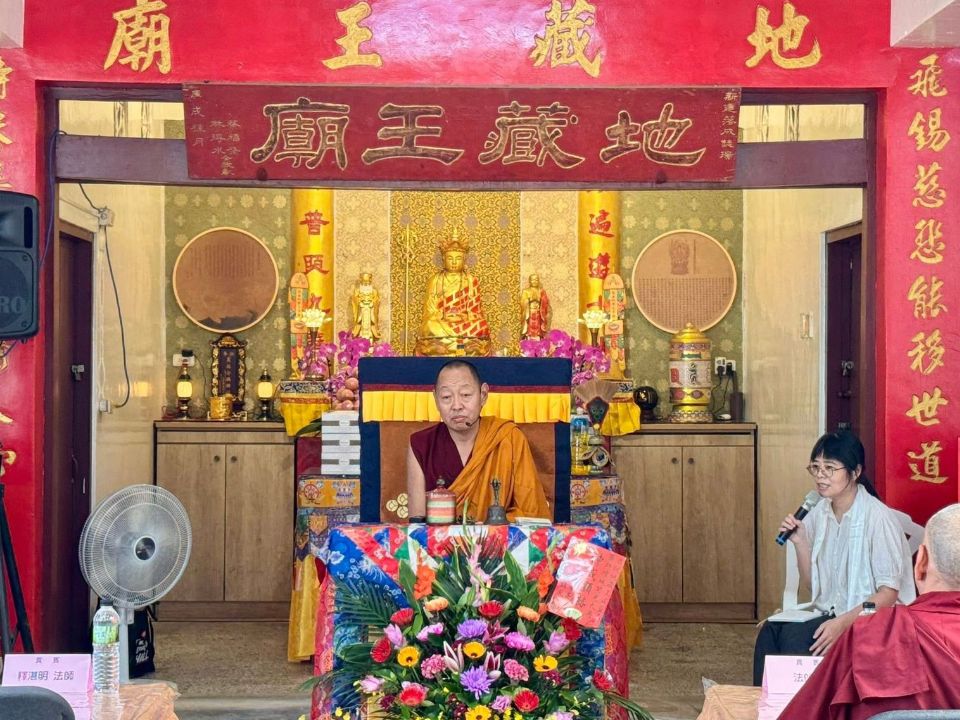
Kyabje Minling Khenchen Rinpoche visited Taiwan, conducting the consecration ceremony of the Medicine Buddha Hall at Taitung Dizangwang Weiling Temple on Aug 18. In his teachings, Rinpoche emphasized environmental protection and encouraged cherishing resources and respecting life. The event saw warm participation from local indigenous communities, showcasing interfaith harmony. Many took refuge in the Triple Gem, receiving Dharma names and blessings from Rinpoche.